





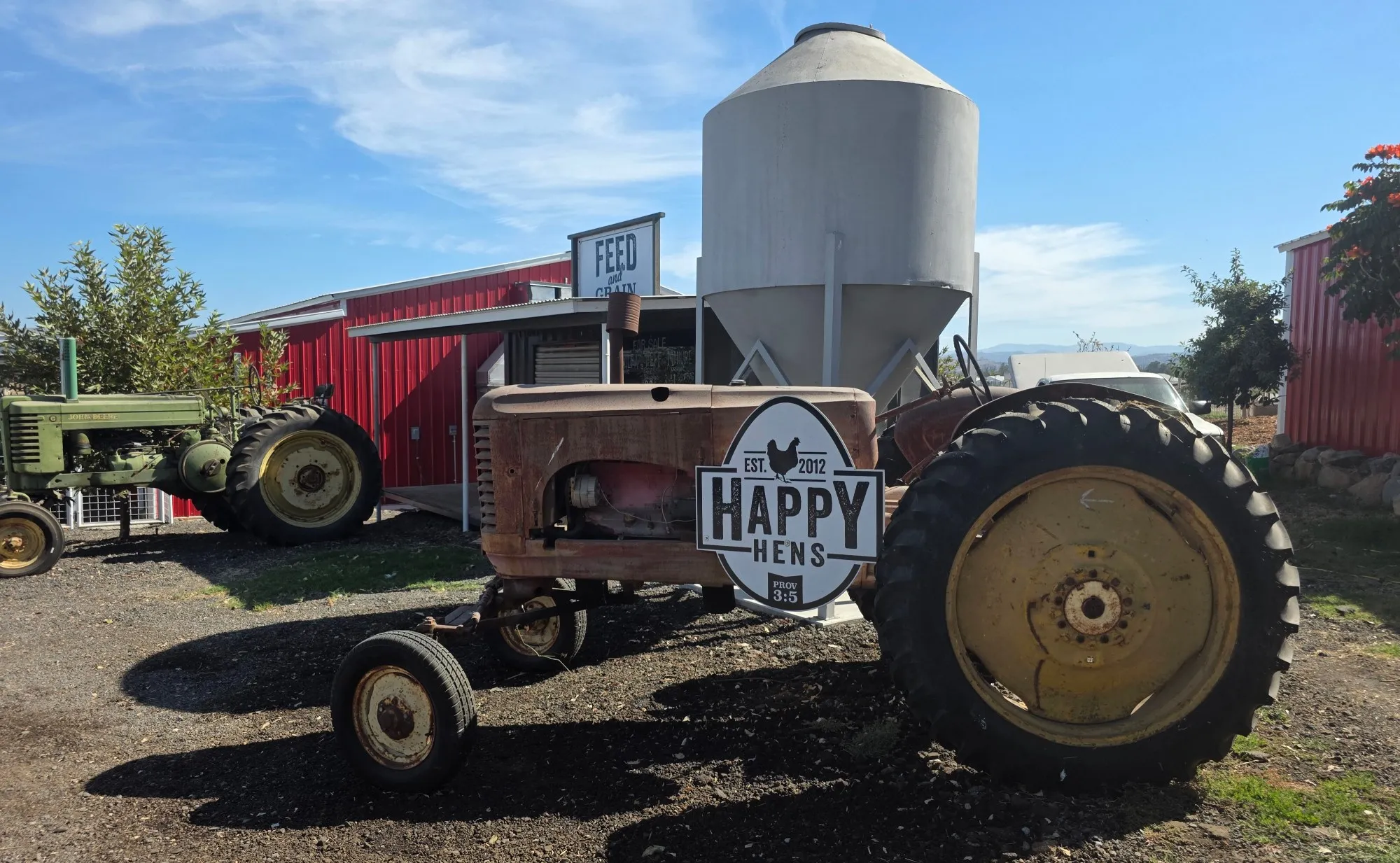
Happy Hens, the Ramona egg ranch linked by San Diego County’s public health department to a salmonella outbreak that generated 23 cases, is pushing back against a recent statement that asserts its owners are resisting a request for a voluntary recall of its products.
Read more San Diego federal prosecutors admit their error led to judge’s decision to release immigrant
On Friday, Sept. 4, the county published a statement that said genetic testing “linked the farm to the strains from ill San Diegans.” Investigators compared samples taken by U.S. Food and Drug Administration inspectors at Happy Hens during a routine inspection in mid-August to test results from local patients who contracted salmonella, most of whom consumed mayonnaise made with raw eggs the county has said came from the ranch.
“The California Department of Public Health shared the FDA results with the owners of Happy Hens and recommended the farm issue an egg recall voluntarily,” the county’s statement said. “As of Sept. 4, 2026, Happy Hens has not voluntarily issued the request to remove eggs from markets.”
Seven of the operation’s 26 barns were tested. Happy Hens states on its website that its flock contains about 14,000 hens.
Reached Friday evening, Chloe Nevarez, the farm’s owner, said that while she believes in the role of public health, the statement leaves out some important context.
FDA inspectors, she said, sampled chicken manure from seven barns, with samples collected in two barns coming back positive. But, Nevarez added, the results were not clear cut.
“There were two positives in one barn and two positives in another barn, and in each of those same barns there were two negative swabs as well,” Nevarez said.
Happy Hens’ operation, she added, is spread across three different properties, none of them sharing a fence line, with moveable barns and free-range chickens that go where they please and choose for themselves where to lay among the shelters on their specific property.
Only two of the three properties, she said, had a barn with positive salmonella results, leaving one property with zero positive salmonella results. Eggs from that clear property have continued to be sold while those from the other two properties have been withheld from the market.
“Since we’ve gotten the positives back, obviously none of those eggs go out for sale; we’ve been holding production from both of those sites, and that’s about 75% of our production,” Nevarez said.
Read more Ballots discounted for late postmarks surged in Washington and Oregon after Postal Service changes
She added Tuesday afternoon that the farm examined its shipping records for the two affected properties and forwarded lot numbers to the state of shipments that occurred before results came back. Eggs have a 30-day shelf life and, thus far, Nevarez said, no retailers had notified Happy Hens of remaining lots.
The situation presents a very real crisis for a business she says has never before had a positive salmonella test in its 14 years of operation. That operation, she adds, has always followed all disease control protocols imposed by the government. That statement could not be verified with the California Department of Food and Agriculture, which runs the state’s Egg Safety and Quality Management program. In an email sent last week, the agency said it “does not comment on specific investigations.”
In order to sell eggs from properties where salmonella tests came back positive, even in cases where half of the samples from a given barn were clean, Nevarez said that the protocol is to hire a laboratory to tests groups of 2,000 eggs every two weeks until 8,000 have been tested. An original estimate of 1,000 eggs every two weeks, the farm learned Tuesday, was considered too few. Regulators, Nevarez said, required 1,000 from each barn.
Happy Hens, Nevarez said, decided to move forward with the testing, estimated to cost more than $130,000, sending its first batch of 2,000 eggs Tuesday.
The alternative, she said, is to kill the 10,000 chickens on the properties with the positive results as humanely and naturally as possible.
Taking such a step, she added, would be devastating for the farm. Buying certified chicks would not only generate significant extra expense, it would also require months of extra investment.
“It would be a six-month process once they arrived on the farm before they even lay eggs,” Nevarez said.
She also said Friday that an FDA representative told her that there was a 97% genetic match between farm and patient samples. While that level of correlation sounds like a lot, it is the case that even a small difference in genetic makeup can produce massive differences. For example, humans and chimpanzees are said to share 99% common DNA.
FDA whole genome sequencing guidance on “what constitutes a ‘match’” between pathogens such as salmonella indicates that two samples with common ancestors “as a general rule” would have “fewer than 20 differences out of 3-5 million base pairs” in their DNA to be considered a match. Research indicates that Salmonella’s genome contains about 5 million base pairs, meaning that just 20 differences between samples would require a match rate of more than 99.9%. However, the county’s statement did not call its observed link between patient and farm samples a match. Officials declined Friday and Tuesday to explain how the correlation that spurred Friday’s notice was calculated.
Read more Prosecutor says man accused of charging toward Ohio governor candidate wanted to ask questions