








San Diego police officers and lifeguards are getting large pay raises despite a city budget crisis that has prompted unpopular cuts and failed experiments like paid parking in Balboa Park.
Read more Trump’s push to restrict mail ballots has failed. Other efforts to reshape the midterms are ongoing
Police officers are getting 11.4% hikes over the next four years, and lifeguards are getting 9.5% raises over the next three years – but none of the pay hikes come during the first two years of either new contract.
City officials say the new deals, which were negotiated by Mayor Todd Gloria and approved unanimously by the City Council on Tuesday, won’t immediately worsen the budget crisis because the pay hikes are delayed.
Police are getting no pay increases in the ongoing fiscal year or the fiscal year that begins next July. They will then get 4% hikes in July 2028, 4% hikes in January 2029 and 3% hikes in July 2029. Cumulatively, the raises add up to 11.4%.
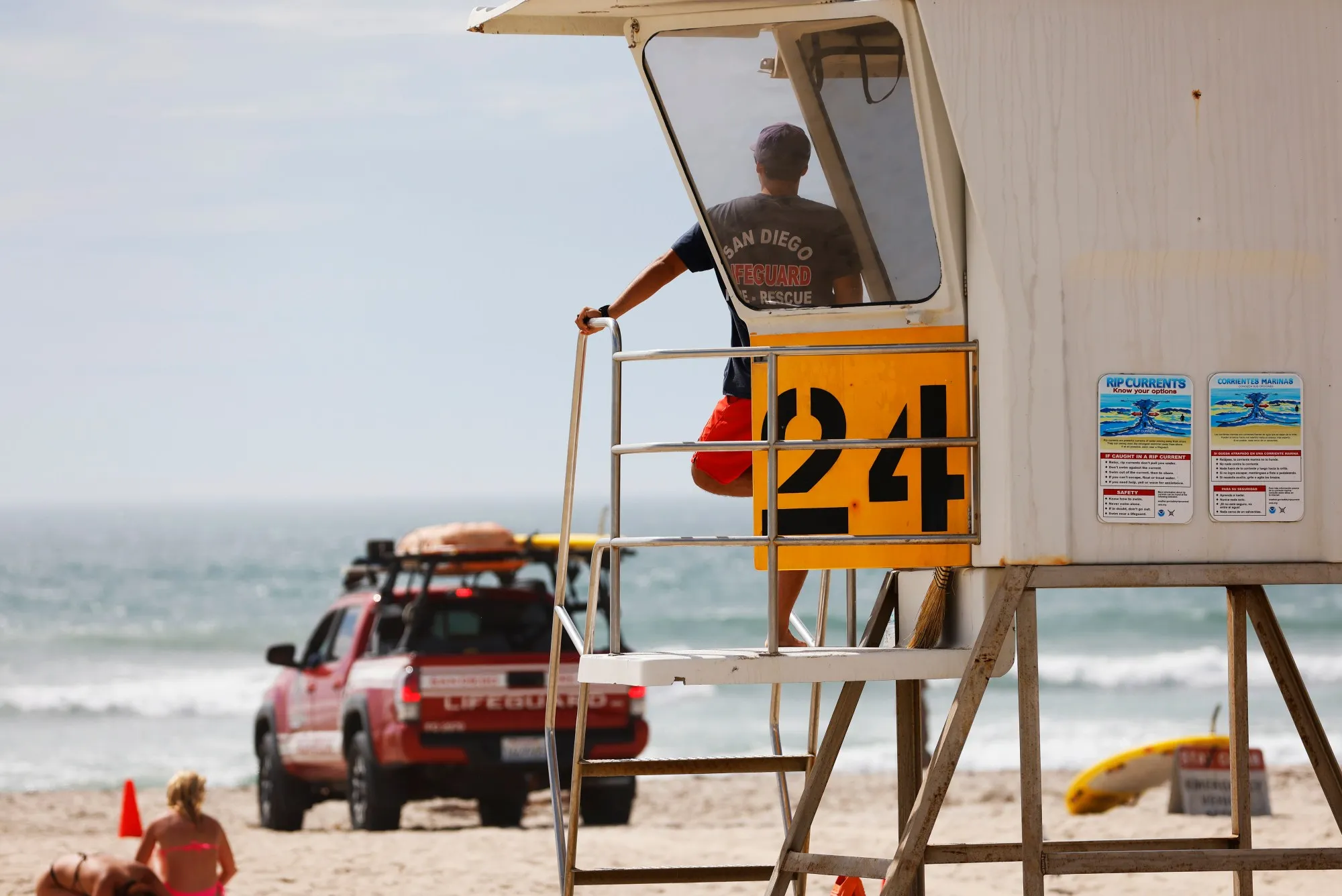
Lifeguards will get no hikes in the ongoing fiscal year or the fiscal year that begins next July. They will then get a giant 9.5% increase in July 2028.
The pay hikes will cost the city an estimated $42 million per year starting in fiscal 2031, worsening what officials call a “structural” budget deficit where long-term expenses are higher than long-term revenues.
The hikes will also enlarge the pensions police officers and firefighters receive when they retire, creating additional budget challenges for the city.
City officials stress that the pay hikes in the new contracts work out to roughly 3% per year – the size of annual employee pay raises predicted by the city’s long-range financial planning documents and pension system.
The pay hikes are in addition to longevity pay increases police officers and lifeguards get for reaching certain years-of-service milestones.
The new deals leave San Diego firefighters as the only city labor union working under an expired contract.
Negotiations between the city and the firefighters’ union have been acrimonious in recent months.
Sticking points are believed to be healthcare and compensation. City firefighters are the only employee group that administers its own healthcare plan.
Union leaders protested what they characterize as relatively low wages during a June City Council hearing about citywide job vacancies and worker retention efforts. They also complained that firefighters are frequently forced to work mandatory overtime.
The union recently retracted its endorsement of incumbent Councilmember Henry Foster, who is in a tough runoff battle for the District 4 seat with nurse Martha Abraham.
The city reached deals this spring with its other three labor unions — those representing white-collar workers, blue-collar workers and deputy city attorneys.
Read more Tech CEOs call for AI regulation. Trump and Congress are not rushing to act
Those deals also aim to avoid immediately worsening the city’s budget deficit by mostly canceling out pay hikes during the first two years of the deals with mandated employee furloughs – unpaid time off.
The savings the city will get from the unpaid worker furloughs during the first year of those other deals — the new fiscal year that started July 1 — nearly cover the cost of the 2% raises and other benefits those employees get.
And furloughs during the second year soften the impact of 3.5% raises that employees will get during the second year of those other deals.
The city couldn’t require furloughs in the deals with police officers and lifeguards because city officials say it makes no sense for public safety workers to take furloughs.
Unless the city wants to fundamentally shift staffing models for public safety, forcing employees to take furloughs could actually cost the city money. That’s because to maintain staffing levels, a furloughed worker getting regular pay would have to be replaced by a worker getting paid overtime.
The new contract deal with city lifeguards resolves a pay dispute for lifeguards who work on the “night crew,” patrolling waterways after sunset.
But the contract does not provide the “presumptive” medical coverage the union, Teamsters Local 986, has been seeking for years.
When city police or firefighters get ill with heart disease, cancer or post-traumatic stress, it is presumed that their work for the city is the cause and they are automatically covered.
For lifeguards, there is presumptive medical coverage only for skin cancer, which is required by state law.
In a prepared statement on Tuesday, the union praised the deal.
“In light of the city’s structural budget deficit, San Diego lifeguards and Teamsters 986 have agreed to defer general wage increases until July 2028,” the statement says. “This deferment is necessary to ensure continued levels of service for the safety of all visitors to the beaches and waterways throughout San Diego.”
The statement also mentions presumptive coverage.
“We’re hopeful the city remains an active partner in our common goal to ensure lifeguards receive presumptive medical coverage,” it says.
Councilmember Sean Elo-Rivera said he strongly supports that goal.
“A gap remains,” he said. “San Diego lifeguards are first responders and public safety employees and should be treated as such.”
On the police contract, union President Jared Wilson said more work lies ahead.
“We appreciate Mayor Gloria and his team for working with us to reach a four-year agreement that recognizes the fiscal realities facing San Diego while providing raises in the final two years and giving our officers a path toward a stronger future,” Wilson said. “However, the work is far from over. With response times at all-time highs, the public will continue to see the very real challenges SDPD faces as a result of inadequate staffing and resources.”
The city has about 1,850 police officers, 110 full-time lifeguards and about 200 seasonal lifeguards.
Read more Trump and the court: If he wins, he’s happy. When he loses, he ridicules justices he appointed