





The civilian board charged with overseeing the San Diego County Sheriff’s Office will not revisit the case of a homeless man who was beaten and paralyzed by deputies during a confrontation over an expired registration on the broken-down van he called home before dying years later from his injuries.
Read more 2-alarm fire in Escondido apartment complex sends 5 people to hospital
The Citizens’ Law Enforcement Review Board, or CLERB, posted its decision late Tuesday, five days after speakers at the September meeting pleaded with the volunteer panel to investigate the 2023 death of Randal Tanner more closely.
“Things that I’ve found have raised serious questions,” Richard Tanner told the volunteer board just before it convened in closed session to debate circumstances of his brother’s death. “Not the incident itself, but what came after.”
Yusef Miller, executive director of the advocacy group Saving Lives In Custody California, told the board that Randal Tanner was not the only person experiencing homelessness who has been mistreated by sheriff’s deputies.
“For many years you have heard complaints about how the unhoused population are treated,” Miller said. “There is a pattern in some of our homeless population when it comes to in-custody deaths.”
Despite the testimony, the review board voted 7-2 against further considering their prior investigations into what happened to Tanner in 2019, according to final findings posted on the CLERB website Tuesday afternoon.
Executive Officer Brett Kalina did not immediately comment on the vote or disclose how individual board members voted on the matter.
“CLERB has just recently implemented (publishing) the voting totals but the individual board member’s vote is confidential,” Kalina said by email Tuesday. “It has never been released to my knowledge.”
But Wednesday afternoon, after being pressed by the Union-Tribune to provide the legal authority permitting the information to be withheld, CLERB issued amended findings.
The updated report showed that Norman Bisson and Adele Fasano were the two members who opposed the decision not to reconsider the earlier Tanner decisions.
The decision all but shutters the independent review of the Tanner case, which was initially opened as an excessive-force case after Tanner was badly injured by deputies in a 2019 confrontation over their decision to impound his van.
CLERB ruled in 2020 that the use of force by one deputy was justified; an excessive-force allegation against the other deputy was unfounded, the review board said.
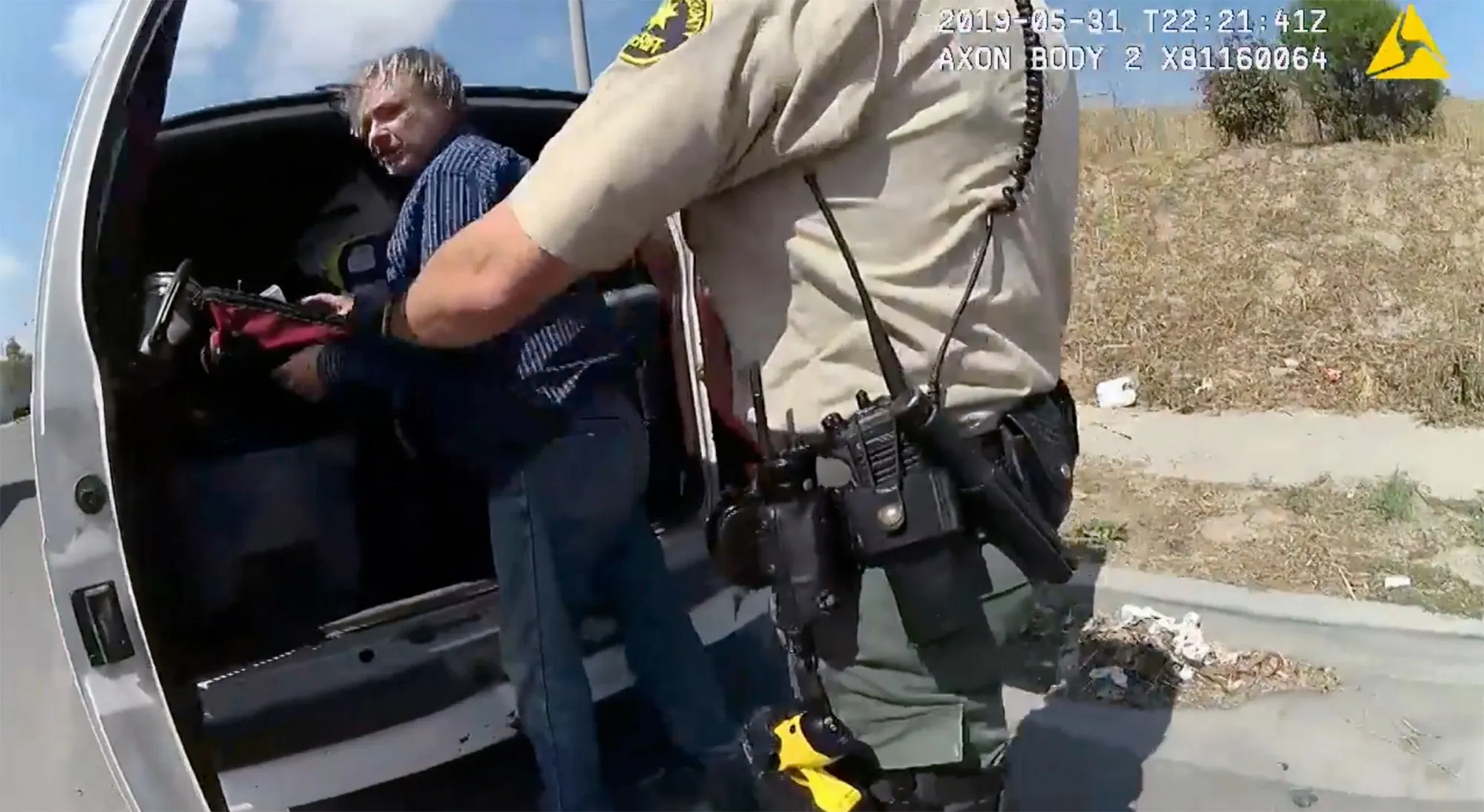
Evidence in the case showed Tanner became agitated while removing personal items from his van and tossing them onto the Otay Mesa sidewalk where the van had been parked. One of the deputies said he worried for his safety when a piece of rubber being unloaded nearly struck his legs, so he disarmed Tanner by forcing him to the asphalt.
Tanner struck his head and began bleeding, and deputies pinned him to the ground. Both deputies subsequently retired and are collecting county pensions, records show.
Read more Navy taking steps to avoid the supply problems that surfaced on USS Abraham Lincoln
According to body-worn camera video of the encounter, Tanner pleaded for help and told deputies he was unable to move. He never walked again — and was never charged with committing a crime that day.
Tanner spent four years in various facilities and died in 2023. The Medical Examiner’s Office ruled the death a homicide and said it was a direct result of the deputies’ actions.
“He developed quadriplegia, cervical spinal cord contusion injury, cervical myelopathy and neurogenic shock secondary to an altercation with police on May 31, 2019,” autopsy findings said.
CLERB reopened the case in 2024 as a result of the medical examiner’s findings, and last month Kalina recommended against reexamining the events surrounding Tanner’s encounter with deputies.
In August, the review board voted 7-1 to defer any decision in the case.
“Although CLERB opened this case out of an abundance of caution, it was determined there was no new evidence regarding the original complaint of excessive force,” Kalina said ahead of last month’s meeting.
“Nor did the M.E.’s report produce any new evidence of the use of force, and therefore CLERB cannot revisit the original findings,” he added. “Without new and substantial evidence of the use of force, CLERB does not have jurisdiction.”
Paul Parker, the former CLERB executive officer who resigned in 2024 due to what he said were ineffective board practices, had a different view of the Tanner case.
“Even though the 2019 case found no misconduct and the involved deputies are no longer employed, there is clearly a public interest in knowing exactly what occurred,” Parker told the Union-Tribune before the August CLERB meeting.
“It should be reconsidered and included in a comprehensive CLERB investigation,” he said.
Tom Packard, a longtime activist fighting for better conditions in San Diego County jails, also urged the review board to look more closely at the Tanner case.
“I hope you will give serious attention to the Randal Tanner case,” Packard told CLERB members before they convened in closed session to discuss the case. “Clearly some or many things went wrong in terms of deputy behavior.
“Please pursue justice in this case and reach a fair and just conclusion.”
Despite video footage and other evidence released in the case, Richard Tanner said no lawyer would take the case back in 2019. His brother was 58 and homeless, he said, and several lawyers told him that any legal settlement would not likely be worth their time.
Read more La Mesa council appoints 20-year-old college student as interim city treasurer