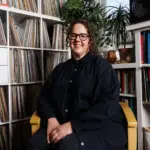


As a student in one of the few graduate-level programs of its kind for contemporary and experimental music, Leslie Ann Leytham had found “a really special place to meet other like-minded weirdos and play and make and create.” After graduation, as they were all trying to figure out what to do next, she and a friend decided they wanted to keep that same energy going and share it with the public.
Read more Lemon Grove leaders weigh term limits, but leaves issue for next council
“I was taking gigs in Los Angeles…constantly going back and forth to L.A., and I was really tired of losing money to pursue what I loved, which was working with composers and coming up with new performance pieces, and collaborating with other artists,” she says. “I realized that San Diego has a really vibrant visual arts community, and has a really thriving and diverse musician community. What I was seeing happening elsewhere wasn’t really happening here, so myself and Brendan Nguyen decided to see what we can do here. Let’s see if we can create the thing that we want to see, here in San Diego. Thankfully, people continue to want to see it.”
In 2019, they co-founded Project [BLANK], a nonprofit producing events and performances that include chamber music concerts, art exhibits, and contemporary operas, and collaborates with a range of creatives to expand on how audiences can connect to the performers, the content, and the space. Their 2026-2027 season starts with the “Art Attack!” launch party at Bread & Salt on Sept. 27 with music, food, drinks, a silent auction, and performances by Francisco Eme, Xareni Lizárraga, and Camilo Zamudio. The season continues with “The Salty Series,” monthly experimental concerts at Bread & Salt from October through May; a workshop of “ILNAMIKILISPAN [útero-herida | womb-wound]” in December blends opera, music, dance, poetry, technology, and storytelling by J.E. Hernández, Priscella Uvalle, and J. Mae Barizo; and the return of “Working Title,” a three-day exhibition of experimental art, performance, and music at St. Paul’s Episcopal Cathedral in May.
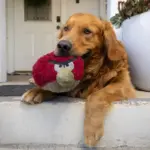
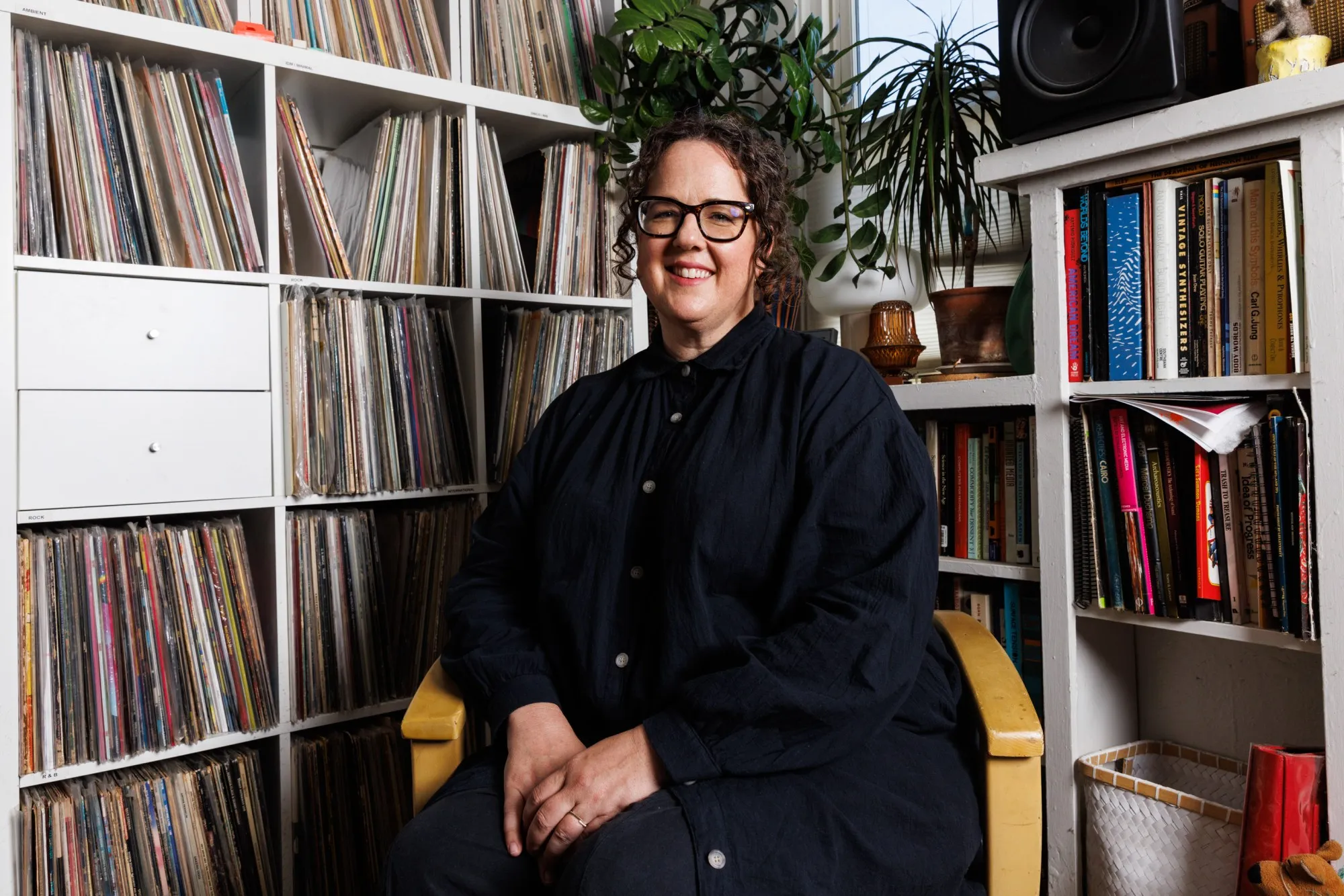
Leytham, 44, is artistic director and co-founder of Project [BLANK], and a mezzo-soprano with a bachelor’s and master’s in voice performance from the University of Nevada, Las Vegas and the Boston Conservatory, and a doctorate in contemporary music performance from UC San Diego. She lives in City Heights with her husband and sound artist, Joe Cantrell, and their dog, Hans, and took some time to talk about growing up on both MTV and classic country music, pursuing a life of making art and music, and always looking for new experiences to share.
Why was Project [BLANK] something you wanted to do?
A lot of times, when I say what I do, people have no frame of reference for it. It sounds like, ‘Oh, well, that’s clearly not for me.’ It’s the way that contemporary music and contemporary art can be talked about, I think, can be very exclusive and people feel like they’re being talked down to. For me, I was sort of drawn to the novelty of, ‘What else can you do with that instrument? What else can you do with that space?,’ so the tinkerer in me is really well-nurtured in this kind of a space. It’s about finding a way for all of these modes of expression to work together, and come up with something that I’ve never seen before. Hopefully, something that no one else has seen before, too. It’s fun, it’s like it’s playground time.
What I love about City Heights…
The food, man. I mean, it’s Little Saigon, so we’ve got Paris Bakery just a couple of blocks away; we’ve got Cafeina, one of my favorite coffee shops in town. City Farmers (Nursery) because, as a recent gardener convert, I’m there and spending way too much money way too often. It’s the greatest plant store in the world.
Can you walk us through a bit of your process for putting this year’s season together? How do you go about deciding what to feature?
I am a big sponge. I am constantly seeking out and following as many creators as I can, and trying to have my nose to the ground of who’s doing what in San Diego, Tijuana, and Los Angeles, trying to constantly consume as much as I can. I can’t necessarily make it to everything that I would like to, but I’m always keeping notes. I also don’t do it alone; I work with Michelle Lou, who is a composer in town. She is much more broadly connected beyond my little worldview and she’s got her own network of artists that she’s keeping tabs on. And, my husband, who’s a sound artist. People are constantly sending in submissions, and we’re keeping track of who’s sending me things. This year, we’ve actually brought in a few more people from outside of San Diego than we normally have. It’s just a matter of always trying to find a perspective that I’ve never seen, and curate something completely novel each month, while also platforming a couple of San Diego legends that have been doing what they’re doing for years. It’s just a really fun way for me to partner with them and get to play in their sandbox for a little bit.
What are you looking for from the artists and performers you reach out to for inclusion in your programming?
Something that explores sound in a way that I haven’t seen before, something that might create a little sense of community; a perspective, a voice that is kind of hiding and waiting for their turn for recognition. We have a broad spectrum. We don’t just want to feature established artists, we want to feature mid-career artists. Mid-career artists get overlooked like crazy, as well as up-and-coming young people who are, just like any great musicians, tinkering around with some stuff in their bedrooms. It’s trying to find ways to include as diverse an array of perspectives as possible.
You’re a mezzo-soprano with degrees in vocal performance and experimental music performance. When did you start singing?
Well, like everybody started singing, as soon as the first scream, I guess (laughs). I think I have always been singing. I would be glued to my radio and playing through my mom and dad’s record collection constantly. As an elder millennial, I was raised by MTV and Nick at Night, so it’s always been present, but I joined choir in middle school, and that was it. It changed everything. It felt like a place where I fit. I pursued opera because my high school choir director told me to. I didn’t really know what I wanted to do, and he was like, “Are you crazy? This is what you’re gonna do. Go and submit an application.” I was kind of a very mediocre student and was only singularly interested in whatever I was interested in, and that was entertainment, television, movies, music, visual art. I didn’t take my first voice lesson until my first day of college, so I was technically a late bloomer as far as opera singers go.
What was your relationship to music and the arts growing up? What kind of music did you hear at home?
Read more San Diego federal court to posthumously honor Andrew Haden with prestigious civility award
I was born in south Texas, in a little town called San Marcos, and then we moved even further south in the Rio Grande Valley, to a little town called Mission. I was a kid in the absolute tip bottom of Texas. I grew up there, and then we moved to Las Vegas, which is where my dad was from, in the summer of ’96. It was kind of a weird culture shock to go from south Texas to a major city. One of the many avenues of deep passion for me is popular music from the ’50s and ’60s. That, and my own childhood music from the ’80s and ’90s. My heart is really with the girl groups-The Crystals, The Ronettes, The Shangri-Las. And then, really old country, like Hank Williams, The Carter Family. Then, the big voices of the ’80s and ’90s. I joke that my first voice teacher was Whitney Houston on “The Bodyguard” soundtrack. I was listening to that nonstop, trying to do with my voice what that superhuman could do with hers, and just failing miserably, but having a good time. My dad played the guitar and we definitely sang and played a lot together, and my siblings all took piano lessons. I was the one who quit piano lessons because I was tired of being told what to practice, and then I’m the one who pursued music. It found me anyway.
There was no classical music and the only opera I’d heard was Bugs Bunny. In high school, my choir director, who’s very dear to me, would expose us to a huge variety of types of music, and he would have us do choruses from operas, contemporary pieces by living composers. I think he’s solely responsible for shaping my taste in classical music.
Part of your organization’s work includes encouraging new interdisciplinary performances because you’ve said you want people to discover something they haven’t experienced before. Can you share any performances, exhibitions, or events you’ve seen over the years through your work that have been completely new experiences for you?
I think “Park Opera,” a couple of seasons ago, composed by a dear friend of mine. This piece is kind of deconstructing an opera into its component parts, and then scattering them across public space, so that people who intend to go, enjoy their visit, but the magic also happens to people who just happened to be there that day. It happened to be during an incredibly busy weekend because it was on Mexican Mother’s Day; American Mother’s Day was the very next day, so people were in the park. There was a prom, some graduation ceremonies, there were thousands of people just there with their families that happened upon someone playing a flute under a tree, and a couple of singers making little bumblebee sounds in the Zoro Garden (in Balboa Park), wandering through the cactus garden and hearing a sound installation. It was just this beautiful place where people could discover sound in a novel way that was really natural.
We have this annual event called “Working Title,” and it was the event that we did the weekend before (the COVID-19) lockdown. We didn’t know that we were going to be shut down the next week, but we were all a little on edge, so there was a sense of convening that felt really beautiful. It’s just an art exhibition, but it’s in a church, and there are performances, sculpture and painting, all manner of visual and performance art, but it’s taken out of a gallery space and it’s put in a church. It’s another kind of irony because, for many people, I’m sure that churches also feel like forbidden places for them that maybe feel like they’re not welcome there, for whatever reason; the same way that people might feel that they’re not really welcome in a gallery space. There’s this kind of simmering energy of ‘How do I behave? Am I allowed to kind of explore, maybe, profane ideas or respectful ideas?’ It’s kind of the cornerstone of our season every year. It’s just a really beautiful celebration of our extended artist community.
Admittedly, when I imagine experimental art, my mind immediately pulls up the episode of “Friends” where the character Ross is performing his “wordless sound poems” using various sound effects on his keyboard. What do you think people misunderstand about experimental art? And, what do you hope Project Blank can show them?
I mean, it can be that. It can be tongue-in-cheek, it can be very funny, it can be very serious. It’s a medium for exploring an idea. We’re all very different people, and some people can hear sound in a way where they want to focus on one element, rather than melody, like the way that a song works, or you have a tune that you sing along to. Some people really love exploring the feelings of the way that sound can vibrate in your body; certain frequencies when played together, certain tones, certain pitches when played together, can create changes in the air. The space hums with you, and then it hums inside of you. It can create space in a way that is not quite the same as writing a song, so the exploration of sound, if you can come into it saying you don’t have any expectations, then you’ll probably be surprised that you didn’t hate it like you might have thought you would have. We try to talk to people afterward, and talk about their experience, and a lot of people are pleasantly surprised, like, “Wow, that was really beautiful,” and “I didn’t expect to be so moved,” or “I didn’t expect to be so confronted with noise,” and how does that make them feel? It causes people to ask more questions, which I think is the fun part.
What is the best advice you’ve ever received?
In classical music training, perfection is something you feel like you have to achieve. Of course, as anyone grows up, we understand that perfection is impossible. It’s not a real thing, it’s imaginary, and perfection is different from person to person. As I was learning how to move my muscles in a productive way, my first voice teacher would always remind me that the power of the mistake separates the amateur from the professional. Professionals expect the mistake, they know they’re going to make them, but it doesn’t define them, nor does it defeat them—it’s just part of the process. The only way to be good, is to be bad at something. I grapple with that constantly, so I’m always trying to meter my expectations and understand what is learnable from this mistake, and how can I build on that and then correct it.
What is one thing people would be surprised to find out about you?
I’m a very serious artist, with a capital A, but I very much am obsessed with the silly and the stupid. I am obsessed with stand-up comedy, and people who can be very dumb just delight me to no end. Also, that I was a competitive cheerleader when I lived in Texas. Very opposite of my personality now.
Please describe your ideal San Diego weekend.
I don’t want to blow the spot up because I don’t want the line to be out the door, but the best sandwich in town is in La Jolla, and I will just go ahead and share because I think everybody needs to know—they’re called Jaybird Superette and they make the most delicious sandwich. Recently, my husband and I have been going to get a sandwich on a Sunday, and then heading to Kate Sessions (Park) and eating a sandwich and a soda and some chips, and then just taking a nap with the dog, and going for a walk. It has been so, so, so beautiful.
To suggest a notable San Diegan for the One-on-One series, contact Lisa Deaderick at [email protected].
Read more Jehovah’s Witnesses allow blood-derived products but keep ban on whole-blood transfusions