






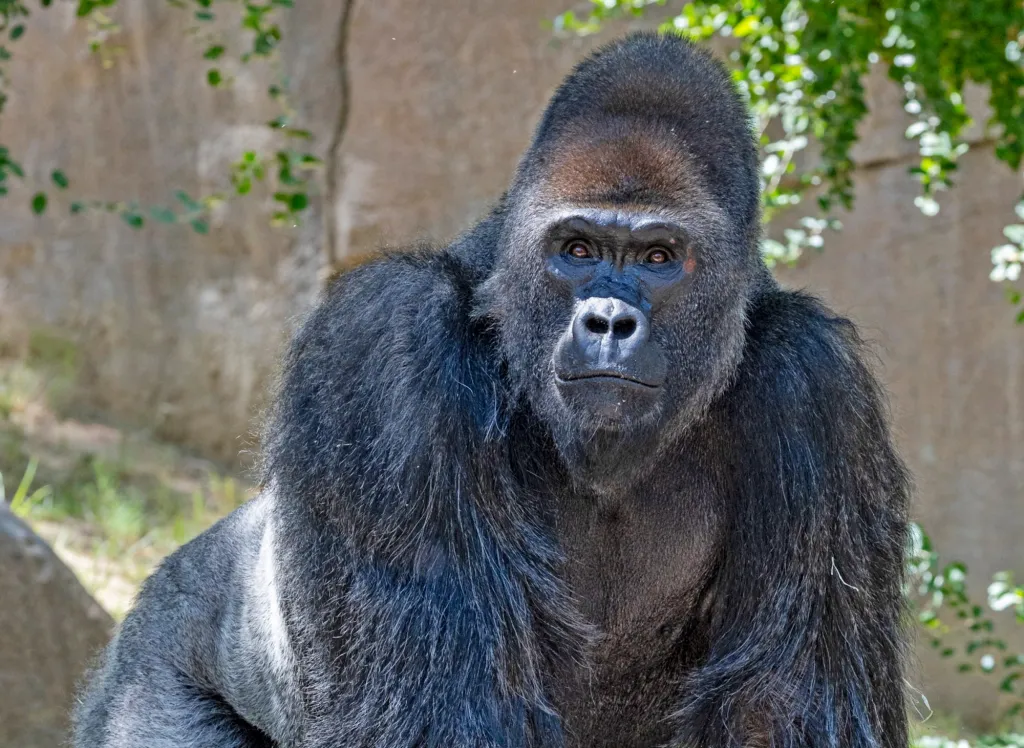
The unexpected death of the leader of a gorilla troop at the San Diego Zoo Safari Park in May has kicked off a search for a replacement — a painstaking process of matchmaking that looks not only at the social needs of the group but also the personality and genetic makeup of individual apes.
Read more Escondido awards contract for city’s second skate park
It is unclear when a new silverback will be found to take the place of Paul Donn, a 37-year-old western lowland gorilla who died after a brief illness.
That decision will be made in consultation with members of the Association of Zoos and Aquariums’ Gorilla Species Survival Plan, a group that manages 339 apes cared for in U.S. zoos with a goal of sustaining a healthy, genetically diverse and demographically varied population. The search for Paul Donn’s successor is well underway.
“We have been working closely with the San Diego Zoo Wildlife Alliance team at the Safari Park to discuss options for their troop that will be a great fit for their females and sets them up for long-term success,” said Kristen Lukas, director of conservation and science at Cleveland Metroparks Zoo, who chairs the gorilla survival plan.
The selection of a silverback — the term for a fully mature dominant male with distinctive silver-gray fur who serves as a protector and decision-maker for a troop — will draw upon the expertise of a 10-member survival plan management group, with each member serving as the primary liaison to four or five zoos that care for gorillas, Lukas said in an email.
Over a recent two-year period, the program arranged 40 transfers of gorillas between zoos. “It requires enormous cooperation and skillful investment of time and resources to ensure a safe and seamless move for each gorilla,” she said.
San Diego Zoo officials say they do not yet know what caused the death of Paul Donn, who died May 15 after unexpectedly falling ill. His death came after park care staff noticed his appetite had decreased. They moved him to the Harter Veterinary Hospital for treatment, and wildlife care specialists were “by his side” when he died, the zoo said in a social media post at the time.
“There are those whose presence touches everything, and whose loss is felt in everything, too,” the zoo posted on social media.
This was the second loss of a silverback at the Safari Park since July 2024, when veterinarians euthanized a beloved troop leader named Winston at the age of 52. Winston, who was popular with guests and staff alike, had suffered from heart problems, kidney disease and other ailments.
It was a little more than a year later when zoo officials announced they had moved Paul Donn to become the new troop leader. Born at the Safari Park, Paul Donn had lived more than two decades at the San Diego Zoo in Balboa Park before his return to the Safari Park, which is located in the San Pasqual Valley near Escondido. Paul Donn was one of the two unrelated males who had been accepted into a gorilla family by Winston earlier in his life.
Read more Michael Smolens: Sens. Padilla, Schiff call out Trump’s attempt to manipulate election
Zoo officials had described Winston as a gentle leader and noted that silverbacks don’t typically tolerate living with males who aren’t their offspring.
In his short time leading the troop, zoo officials said Paul Donn had displayed gentleness and strength “in perfect balance.”
“As troop leader, (Paul Donn) set the tone for what family meant, and he lived that every single day. Above all, Paul Donn was the embodiment of what it means to be a devoted father. From the time his four children were small, he was deeply engaged in their lives, seeking them out for long bouts of wrestling and play. He was, in every sense of the phrase, a ‘super dad,’” the zoo said in its May post.
Before Paul Donn died, the Safari Park had 11 gorillas, including five males in a bachelor troop and the five females in Paul Donn’s troop. Western lowland gorillas are critically endangered in the wild.
To find a new silverback for the Safari Park’s troop, zoo experts are looking for suitable candidates in bachelor gorilla groups at zoos, particularly if a male is showing signs he is ready to be split from other males. There are other factors to be weighed, too.
Before a move is made, officials “need to consider the consequences of moving a male out of a stable bachelor group because we don’t want to unintentionally destabilize a cohesive group,” Lukas said. “Of course we also assess the receiving gorilla group’s needs. All of this input informs the SSP’s discussion and ultimately shapes our decisions.”
After a silverback dies, there’s not an ideal time to move a new leader into a troop. Every troop has its own needs.
Lukas said some groups of females “will be just fine for a while as we determine best next steps,” but in other situations, a move needs to be made as quickly as possible to get a new silverback introduced and stabilized as the new leader.