






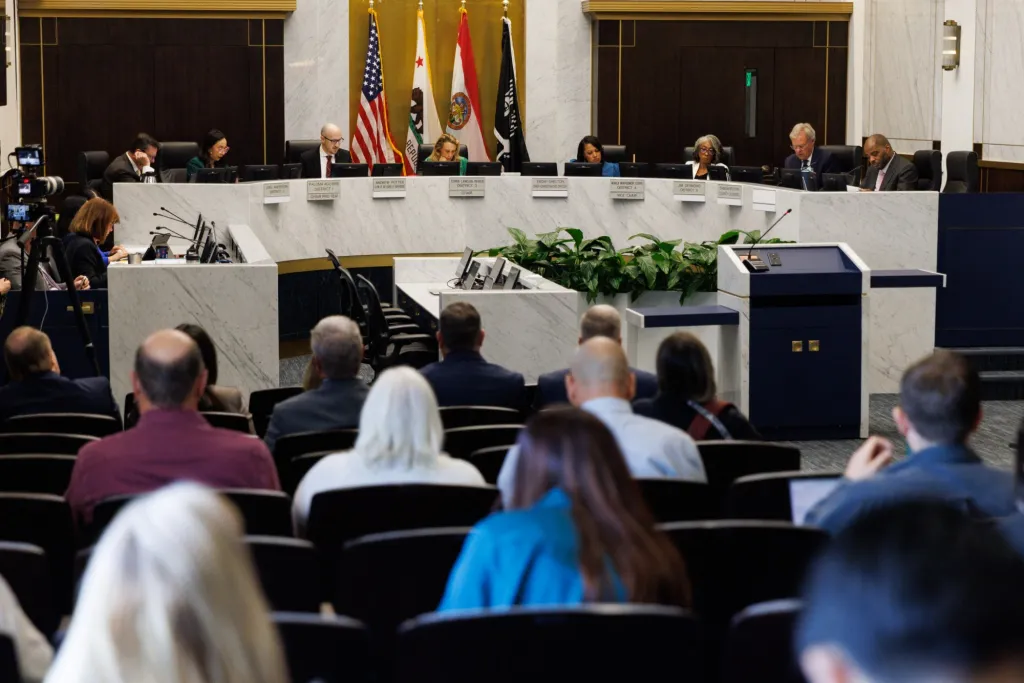
Looking toward the fall election, backers of a county sales tax ballot measure have the potential to pick up momentum as political dynamics continue to trend in their favor.
Read more LGBT Community Center updates public about $19 million donation, but some still have questions
Standing in the way is not just the tax-resistant nature of the region, however, but some troubling issues emerging within the county government — some of them self-inflicted.
In recent weeks, questions have been raised about political self-dealing, transparency, lack of guardrails on lobbyists, spending and staff increases. How much, or even whether, those issues will influence the outcome of the ballot measure is an open question.
In November, voters will consider raising the sales tax rate by a half-cent countywide.
If approved, backers say the measure would bring in $360 million in new revenue in its first year. The funds would be earmarked for child care, health and food programs, public safety, fighting wildfires, the Tijuana River sewage crisis and, in general, to counter federal cuts to county programs by the Trump administration.
Groups backing the proposal include SEIU 221, the union that represents county workers, Children First, First 5 San Diego, San Diego County Firefighters Cal-Fire Local 2881, the San Diego County Hospital Association and the American Academy of Pediatrics CA Chapter 3.
They have reason to be optimistic. The campaign for the measure would be expected to capitalize on the voter enthusiasm gap that so far this year favors Democrats, who typically are more supportive of tax increases, while Republicans are on the defensive. Also, the politically powerful SEIU has a good election track record.
Stiff opposition certainly will emerge, and cost-of-living worries have the public wary of being charged more for anything, but the new revenue is for popular spending targets.
The campaign for the measure will certainly blame what backers say is the need for the tax: Trump and his policies, which are unpopular not just among Democrats but, increasingly, independents as well.
Still, tax proposals have not fared well on the ballot in San Diego County, particularly within the city of San Diego, home to nearly half of the county’s voters. But there’s nuance that is often missed when simply branding this as an anti-tax region.
In November 2024, a city general sales tax measure and a countywide transportation sales tax each lost by less than a percentage point. It’s notable that this was during a presidential election won by Trump, who tends to bring out less-regular voters. There was much written about a slightly improved Republican voting trend in heavily Democratic San Diego County and California.
Meanwhile, some analysts questioned whether the two tax measures were one too many for some voters. Further, the city’s repeated, highly-publicized problems, budgetary and otherwise, might have played a role in the slim loss of its tax increase.
In November 2016, a countywide transportation sales tax failed to gain the necessary two-thirds vote, but still captured more than 58 percent support.
That would be a landslide victory in a simple-majority election. It came even after the Voice of San Diego revealed the sponsor of the measure, the San Diego Association of Governments, hid from the public its deep financial problems and the fact that the proposed tax revenue wouldn’t come close to paying for the projects promised.
Read more Thousands kick off America’s 250th birthday early with a seaside celebration in Oceanside
That was also during a presidential election, when Trump won his first term.
Meanwhile, the city’s 2020 hotel tax appeared to fail because it fell a hair short of the necessary two-thirds. But it was finally declared victorious after yearslong court battles.
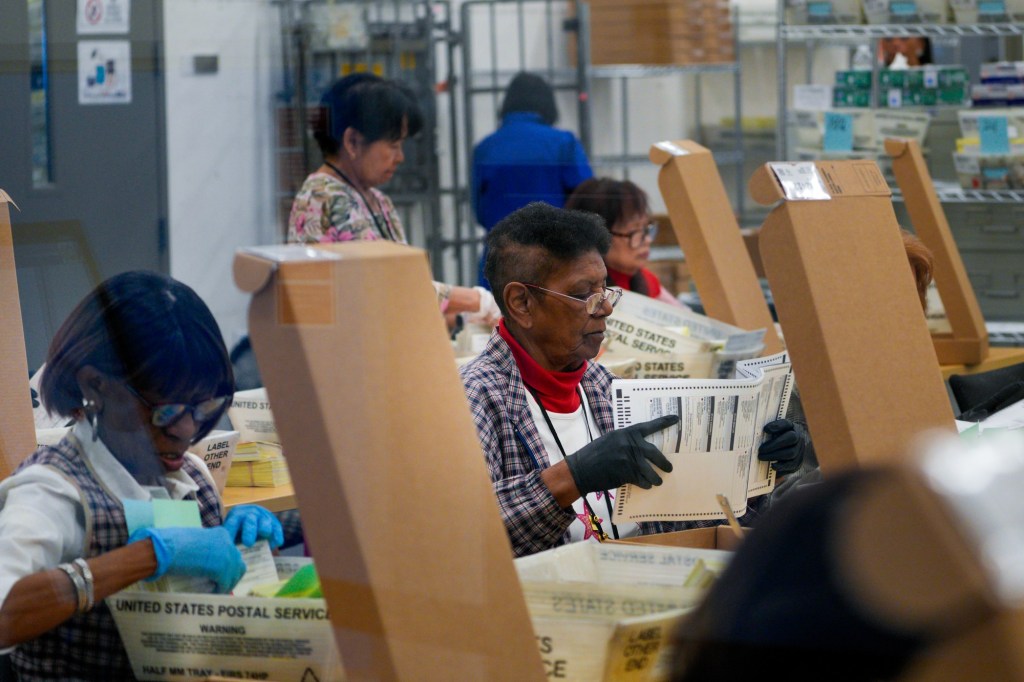
In this year’s June 2 primary election, the city’s proposed tax on second homes, Measure A, was handily defeated, but it wasn’t the blowout election-night returns suggested. The margin of defeat has narrowed to just over 6 percent with the ongoing vote count.
The opposition vastly outspent the proponents, but analysts also attributed the loss to the lack of voter trust in city government, where years of fiscal struggles and bad real estate transactions have tarnished City Hall’s image.
The question now is whether the county is facing trust issues heading toward the fall sales-tax election. It’s important to note that management and budget concerns about the county, compared with those in the city, are relatively mild and not universally held in the public forum.
The county has faced relatively small budget shortfalls in the last couple of years and is now dipping into its reserves to the tune of $95 million. Tapping reserves always raises a red flag, but that’s a pittance in the $9.2 billion county budget, which grew by $500 million-plus over the previous fiscal year and adds a little more than 100 new positions.
Even an otherwise critical analysis of the budget by the San Diego County Taxpayers Association acknowledged that some of the growth in payroll was due to rising costs for food stamps, health care and other state and federal programs as the Trump administration is cutting funding for them, according to Jeff McDonald of The San Diego Union-Tribune.
There’s more.
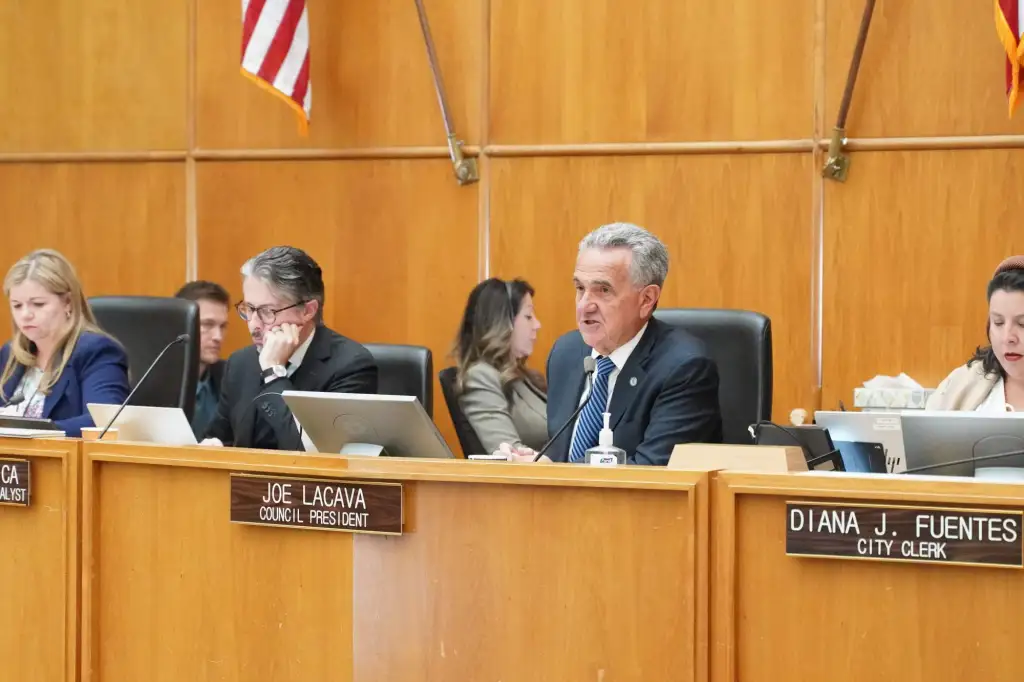
Another measure on the November ballot, this one backed by the board’s three-member Democratic majority, has been widely panned because it would allow current members to serve a third term, instead of the current limit of two.
Critics, including Republican Supervisor Joel Anderson, have said any such change should only apply to future board members. Other provisions in the sweeping charter reform measure would give the board more power over the county bureaucracy.
A new focus on the rules, or the lack of them, regarding lobbyists has also emerged. Former county employees are allowed to immediately lobby the county for private clients. That’s widely considered a bad idea, and most other large jurisdictions require one- and sometimes two-year waiting periods, according to Lucas Robinson of the Union-Tribune.
There are things the supervisors can do relatively quickly to address any eroding confidence in county government before voters decide on the sales tax.
They took a step in that direction Thursday by opening up previously closed supervisor subcommittee meetings, with some exceptions, and giving the public access to agendas and minutes.
Next, they should slow down the lobbyist revolving door and make the third-term option in the reform measure apply only to future supervisors.
That’s pretty easy low-hanging fruit.
Andrew Desiderio (@AndrewDesiderio) of Punchbowl News.
“Senior Senate GOP aide on Trump abruptly canceling signing ceremony for housing bill: ‘We saw glimpses of this during Trump’s first administration, but never in my lifetime have I seen a president so deliberately attempt to lose majorities for his own party.’”
Read more Photos: Ocean Beach Street Fair and Chili Cook-Off