

The Fourth of July is the most prominent all-American holiday — the birthday of our country — even though celebrating the Fourth didn’t become common until after 1815, and Independence Day wasn’t made a federal holiday until 1870.
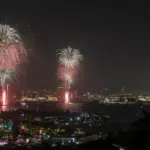
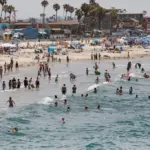
Do we ever celebrate! Families gather for parades, picnics, concerts, carnivals, baseball, and fireworks. So today, halfway between Memorial Day and Labor Day, as you’re getting out your festive red, white, and blue decorations or eating a hot dog at a barbecue or gawking at spectacular celestial explosions, stop for a moment and think about those who fought in the Revolutionary War. They endured many hardships and spilled their blood so that we could live in the freedom that we enjoy today. Without their bravery and will to stand up to England, the most powerful military force in history up to that time, and fight for their right to be free, our United States of America would be a much different place.
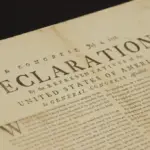
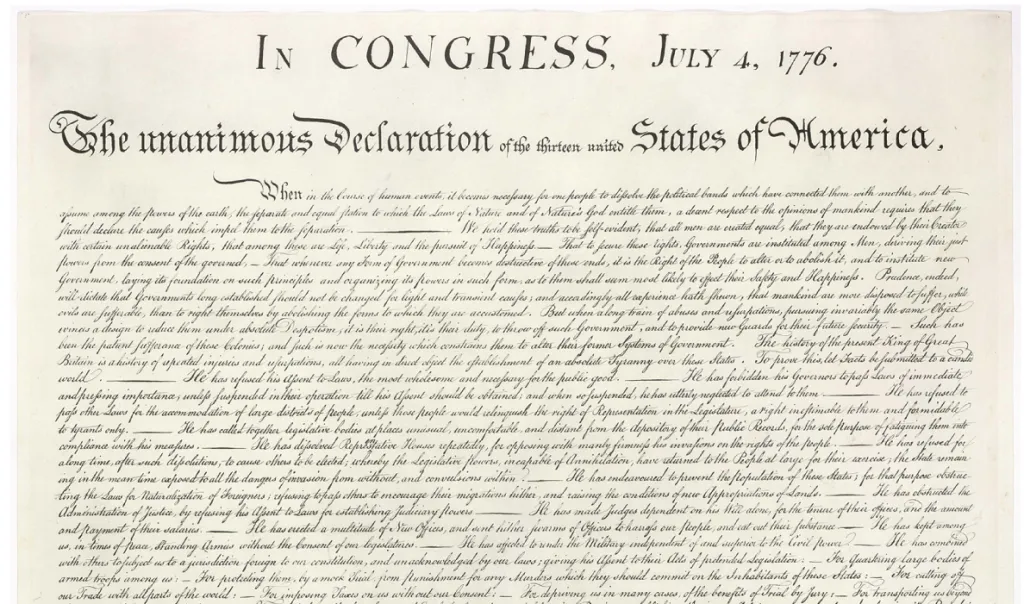
That national outpouring of jubilation commemorates the signing of the Declaration of Independence in Independence Hall in Philadelphia. But if you have an image in your mind of a room full of patriots lined up to sign that document on the fourth, think again. That’s not how it happened.
When Payton Randolph of Virginia gaveled the Second Continental Congress to order on May 10, 1775, it was only three weeks after the April 9 battles against the British at Lexington and Concord, Mass. Representatives from all 13 colonies attended this meeting of the de facto national government. Even so, the delegates had little appetite for breaking away from England. Instead, in July 1775, they sent a petition to King George III asking him to protect them from Parliament, which, in the colonists’ eyes, taxed them often and unreasonably. No colonist sat in Parliament. The phrase “no taxation without representation” summed up their complaint. King George ignored their petition.
On June 11, 1776, the Congress named Benjamin Franklin of Pennsylvania, John Adams of Massachusetts, Roger Sherman of Connecticut, Robert Livingston of New York, and Thomas Jefferson of Virginia to form a committee to draft an affirmation of independence. Jefferson took on the role of writing the first draft of the declaration.
It was in the Declaration of Independence that the term “The United States of America” first appeared. All Americans probably know the clarion words of the preamble (Latin: “to walk before”): “We hold these truths to be self-evident, that all men are created equal, that they are endowed by their Creator with certain unalienable Rights, that among these are Life, Liberty, and the pursuit of Happiness.”
That ringing statement has been called “one of the best-known sentences in the English language” and “the most potent and consequential words in American history.”
After some revisions, the Continental Congress on July 2 voted to accept the declaration of our national sovereignty. As reported in the Pennsylvania Evening Post, “This day the Continental Congress declared the United Colonies Free and Independent States.”
Read more What does it mean to be an American? We asked 26 San Diegans to reflect.
On July 4, John Hancock, of Massachusetts, president of the Congress, signed the Declaration of Independence with his prodigious signature in an almost empty chamber. Secretary Charles Thomson was the only other person who actually signed the declaration July 4, as a witness to Hancock’s signature.
On July 8, Hancock read the text to a large and boisterous crowd in Philadelphia. Their joyful response was the first celebration of American independence. On July 19, Congress ordered that the Declaration of Independence be engrossed on parchment. The engrosser returned it to John Hancock to be signed. Forty-nine delegates signed it Aug. 2, almost a month after its adoption. Five signed it later, and two never signed.
That document marked the formal end of the effort by the American colonies to reconcile with King George. We now considered ourselves an independent nation, no longer subjects of the British king and no longer the United Colonies.
The original parchment copy of the Declaration of Independence reposes, with the Constitution and the Bill of Rights, in the National Archives in Washington, D.C. You can see them at: https://www.archives.gov/founding-docs/declaration.
***
On Saturday, July 11, 11:30 a.m., I’ll be speaking about the creation and significance of the Declaration of Independence at North University Community Library, 8820 Judicial Drive. Admission is free and worth every penny. I’d love to meet you there.
Please send your questions and comments about language to [email protected] website: verbivore.com
Read more El Cajon passes lean budget, officials warn of reserve spending trend