



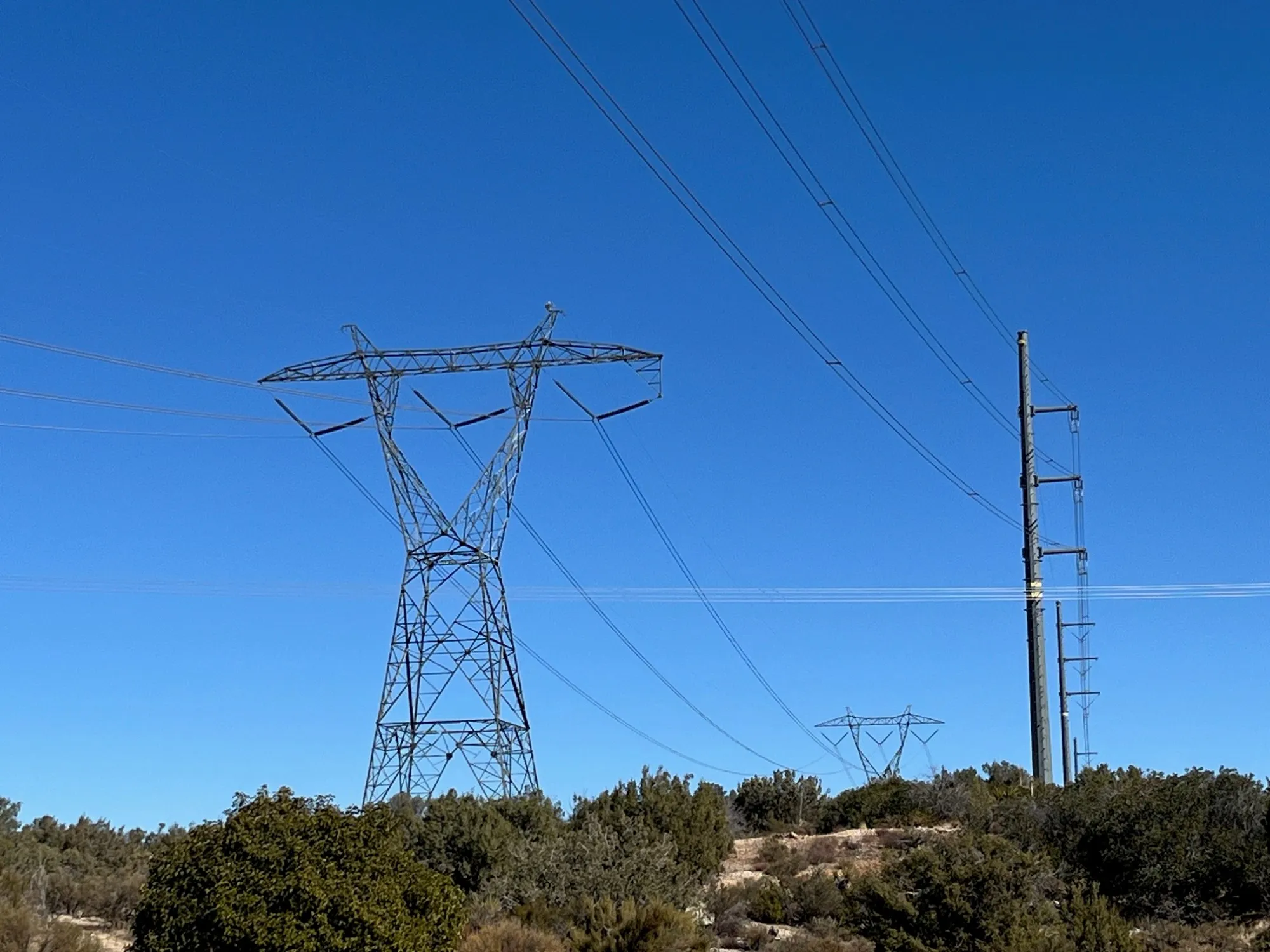
A big challenge in creating a cleaner energy future — beyond President Donald Trump’s opposition — is getting electricity from where it’s generated to where it’s needed.
Read more Trump dominated rural America. Iowa is testing whether Democrats can win them back
That may get easier under sweeping legislation pending in the U.S. Senate. The measure would also expedite development of fossil fuel energy projects and therein lies the rub, or the path to approval, depending on your perspective.
Not surprisingly, the prospects of this rare, major bipartisan bill remain politically fraught. But the yearslong effort to make much-needed improvements to the nation’s transmission grid appears to be hitting peak momentum after having faltered just a couple of years ago.
Efforts to upgrade and expand the nation’s aging grid have been stymied by cumbersome rules and regulations. Also, the future of alternative energy depends on getting electricity from remote places — wind farms on the plains and seas, and solar projects in the Southwest — to heavily populated metropolitan areas. Existing infrastructure is ill-equipped to do that.
Meanwhile, the nation’s appetite for more energy shows no signs of abating.
Advocates of the bill suggest votes on the measure could be taken by the lame-duck Congress after the November election.
Key players in both parties back the measure in the Senate, along with the White House, which could make sure House Republicans line up behind the bill.
Business interests are supportive, and gas and oil companies and renewable energy firms have long called for permitting reforms in the bill to streamline the review process for new projects that now can take a decade or longer.
But while some environmental groups are backing the agreement, others are opposed or have yet to commit one way or another. Utilities, concerned the proposal could usurp their control and bypass their existing plants, are reacting cautiously to the plan. Environmental organizations and utilities helped sink the effort in the past.
There are compromises that will make some Democrats swallow hard to accept, such as some limits to the Clean Water Act, the Endangered Species Act and the National Environmental Policy Act, the bedrock federal environmental protection law dating back to 1970.
But many alternative energy advocates and some environmentalists agree that changes are needed in those laws because, despite their good original intention, they have been used to bog down projects that could help provide cleaner energy and, at least in theory, lessen the negative impacts of climate change.
That’s a story familiar to Californians, where moves have been made for years to reform the California Environmental Quality Act — including Proposition 45 on the November ballot, which seeks changes to the landmark law.
Rep. Scott Peters, D-San Diego, for several years has been pursuing legislation to speed up projects that facilitate expansion of renewable energy. He has introduced a handful of bills aimed at streamlining the process, particularly for transmission lines.
Components in his SPEED and Reliability Act, CERTAIN Act, CLEAR Act, BIG WIRES Act, among others, are incorporated into the Senate package.
While everyone agrees the measure could help both clean energy and fossil fuel projects, the left-leaning backers say alternative energy would benefit the most, resulting in reduced global-warming emissions and consumer prices.
Democrats have concerns that if the bill passes, Trump will continue to block wind and solar development, or try to, while expediting oil and gas projects. Peters acknowledges that fear, but suggests people have to look at the long game.
“I do keep in mind Trump is a two-year problem,” Peters said. “We’re trying to solve a three-decade problem.”
Read more Deadline is Monday to register for mail-in ballot to vote in November election
Democrats added provisions that seek to prevent Trump from unilaterally stonewalling such things as offshore wind farms and solar projects, especially those already approved (that provision was in Peters’ CERTAIN Act).
But the administration has been known to blow past laws and court orders with a “catch me if you can” arrogance.
Peters acknowledged concern about some of the compromises Democrats made that greatly narrow the time allowed to file legal challenges, restrict some judicial injunctions and encroach on the sovereignty of Native American tribes over control of their land.
But he said the tradeoffs are worth it, though he suggested the Native American issues need to be addressed.
“The market wants to provide us with clean energy,” he said about the need for transmission improvements. “You make everything faster, clean energy wins.”
Peters said the agreement includes language that addresses potential problems with energy-sucking data centers that communities fear will increase their utility bills. Under the legislation, those centers must pay for the energy they use and also for hookups and related infrastructure costs.
“I think the planet and ratepayer do really well with this bill,” Peters said. “… I think it’s a terrific deal.”
Brad Campbell, president of the Conservation Law Foundation, an environmental advocacy group, sharply disagreed, saying in a statement that it “appears to adopt a fossil fuel industry wish-list,” according to The Associated Press.
“Striking this deal in the waning days of this Congress, in a pact and on a schedule that preclude public input or amendment, before midterm elections that can only improve the prospects for a more balanced approach, is indefensible,” Campbell said.
Peters disputed that, saying any bill would still need 60 senators to pass — not to mention the president’s support — and if the midterms change the upper house, it won’t be by that much.
“This is as good as you’re going to get,” Peters said.
Transmission line construction has slowed for some time, in part because of delays and rejected proposals. Yet the U.S. Department of Energy estimated in 2024 that the nation’s grid would need to expand by two-thirds or more by 2035 to meet President Joe Biden’s goals at the time to power the country with clean energy, The New York Times reported.
Much of the power grid was built in the 1960s and 1970s. More than 70 percent of transmission lines are more than 25 years old, according to the Department of Energy, and will need replacing in the coming decades.
Meanwhile, the frequency and severity of power outages are increasing, in part due to extreme weather, according to the Congressional Joint Economic Committee.
A big fix is needed. The question now is will this be the one.
NBC News
“GOP ad buyer mixes up Portlands, spends money meant to help Maine Sen. Susan Collins in Oregon.”
Read more Black and brown parents revisit ‘the talk’ with their children as school year unfolds