






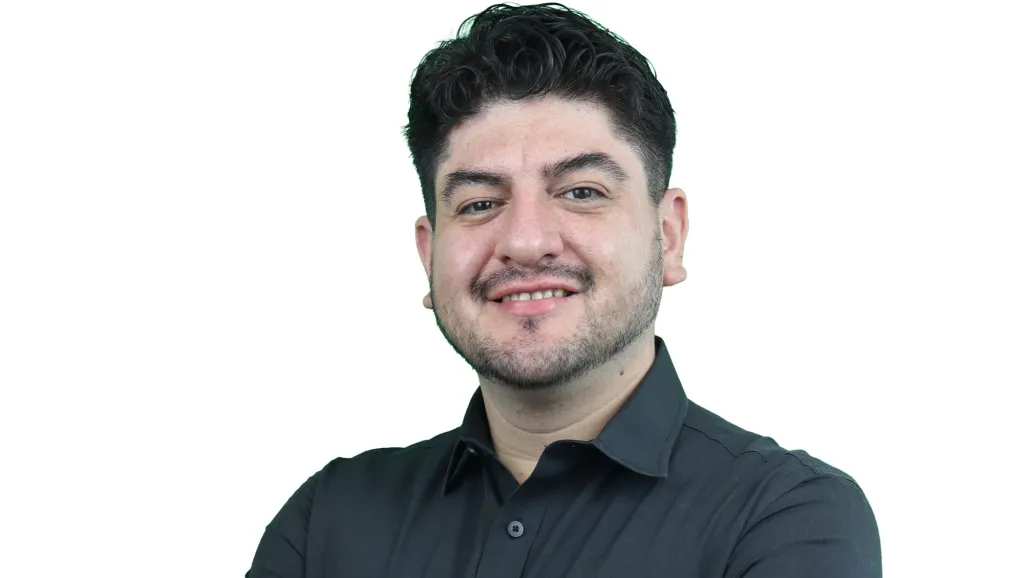
Antonio Salguero, 34, a Libertarian, private security executive and gun instructor, is running for California’s 78th Assembly District representing San Diego neighborhoods including Mira Mesa, Clairemont, Mission Valley, Allied Gardens and Hillcrest.
Read more One person dead in Bonsall pickup fire
Originally from Los Angeles, Salguero lives in the Kearny Mesa neighborhood of San Diego
The San Diego Union-Tribune emailed a series of questions to Salguero and other candidates to help inform voters about their positions, priorities and plans if elected.
Salguero said he did not use any AI tools in responding to the Union-Tribune’s questions.
1) Why are you running, and what makes you the best candidate? (150 words max)
I am running because San Diegans are feeling the cost-of-living increase while quality of life decreases. Housing is unaffordable, and our dollars aren’t going as far at the grocery store or the gas pump. The devastation of the mental-health and addiction crisis we call “homelessness” is painfully visible on the streets, and the impact of crime can be felt in our neighborhoods and commercial centers.
As an owner-operator of a private security company — dealing with laws and regulations while addressing the realities on the streets — my experience has required me to deal with these issues directly. I will remove restrictive housing policies to build more homes, improve our response to crime and invest in long-term mental health and addiction solutions. I have done it in the streets of San Diego, and I will bring that same real-world experience to Sacramento to lower costs and improve public safety.
2) What are the top 3 issues facing this district? (150 words max)
San Diegans are feeling the pain of the housing affordability crisis and the rising cost of living, along with “homelessness” and increased crime. These are symptoms of deeper problems. The state continues to overspend, which requires excessive taxation to maintain a balanced budget, and overregulation of our industries is pushing away the businesses and jobs we depend on to create opportunity and support our communities.
As businesses flee California or decide to downsize or cease expansion, people lose opportunities for stable lives and growth. As the government overspends and taxation increases, everyday goods and services become more expensive, leaving fewer resources for our families; and as our public safety and support systems weaken, the impacts of crime and addiction become more visible in our communities.
3) What are the first 3 things you would do in office if elected? (150 words max)
I would first review the governor’s proposed budget. I will support a balanced budget with cuts to reduce the state debt. I will target wasteful programs such as the bullet train and programs that have not passed financial audits. The goal is to target waste and fraud before moving to other programs, while preserving essential services.
Secondly, as a business owner who is familiar with how laws and regulations affect the economy, I would move to repeal regulations that increase time and cost to start businesses and build housing, lowering the cost of living in San Diego.
Lastly, I will work to improve Proposition 36 to provide funding for mental health and addiction services and require that individuals diagnosed with a serious mental health disorder or addiction, and who lack the capacity to make informed decisions about their care, are admitted into recovery programs.
4) What should California do to solve its shortage of affordable housing and curb homelessness? Which existing efforts do you believe are working, and which aren’t? (150 words max)
The California Environmental Quality Act (CEQA) has created delays that increase the time and cost of building housing. I worked with a client who waited 10 years through CEQA litigation before beginning construction. These delays make housing more expensive and limit supply.
Zoning should be simplified, with greater allowance for mixed-use development and increased density to better meet community needs. Districts like the 78th that are landlocked would benefit from policies that allow for higher-density housing and more efficient land use.
Policies like rent control and low-income housing requirements do not address the root issue of supply and can increase costs. Increasing housing supply will make housing more affordable.
Homelessness must also be addressed through mental health and addiction treatment, with structured recovery programs for those who need them.
5) This district and its neighbors are vulnerable to climate change impacts like wildfires, rising seas and extreme heat, and to the health effects of climate-warming emissions. What should California do to improve climate resilience and reduce emissions and fire risk? (150 words max)
California must take a more proactive approach to wildfire prevention and climate resilience.
Forest management needs to be a priority. Overgrown forests and fuel buildup have made wildfires more destructive. We should expand forest thinning and fuel reduction efforts, working with Cal Fire and existing state resources to reduce fire risk before disasters occur.
Read more Chula Vista patrol car struck by suspected DUI driver
As someone who experienced the Cedar fire and the fires of 2007 and who spends time in the Sierra Nevada and redwoods, I’ve seen firsthand the damage wildfires cause to our communities and environment.
We also need to strengthen resilience by investing in infrastructure like water storage and desalination to ensure reliable reserves for fire response and reduce emissions through practical solutions like expanding nuclear energy and improving efficiency.
6) Laws enshrined in California’s Constitution that protect residents from tax increases have also painted local governments into a corner as they seek to fund basic services and have led to chronic underfunding of schools. What would you do about this? For instance, would you support changes to Proposition 13 to remove its protections for commercial properties? (150 words)
I would not support changes to Prop 13. I will oppose attempts to weaken these taxpayer protections, including split-roll proposals that seek to remove commercial properties from Prop. 13 protections.
The priority should be to reduce government spending and ensure existing revenues are directed toward essential services like schools and public safety. We need to focus on eliminating waste and improving efficiency before asking taxpayers to pay more.
Local governments are not underfunded because taxpayers are not paying enough — they are constrained by how funds are allocated. Before considering any changes to Prop. 13, we must demonstrate that current resources are being used effectively and responsibly.
7) In light of those constraints, along with federal funding cuts, how should California balance its budget and fund basic services? Where would you seek new revenues or savings? (150 words)
California should balance its budget by prioritizing spending reform before seeking new revenue. We need a balanced budget that reduces state debt, starting with identifying and cutting wasteful or ineffective programs, including those that have failed financial audits.
Savings should come from improving efficiency, eliminating duplication across agencies and focusing resources on core services like public safety, education and infrastructure. We should ensure that every dollar is being used effectively before asking taxpayers to contribute more.
I do not support increasing taxes to cover ongoing deficits. Any discussion of new revenue should come only after we have demonstrated fiscal discipline, balanced the budget and restored public trust in how funds are managed.
8) Speaking of spending, Californians consistently rank the cost of living as a big concern. Recent jumps in the costs of fuel, food and other goods — combined with federal cuts to safety-net programs, new limits on certain federal loans and more — are further squeezing residents who were already struggling. What relief would you seek to offer, and how? (150 words max)
California should focus on lowering the cost of energy, which impacts the price of nearly everything. We need to remove regulations that are driving refineries out of the state and limiting in-state energy production. Expanding responsible oil production in California would increase supply, stabilize fuel costs and create new revenue opportunities for the state.
A temporary suspension or repeal of the gas tax would provide immediate relief to families and small businesses, lowering transportation costs for goods and services across the board.
California can also play a role in supporting national energy security by contributing to domestic supply, reducing reliance on foreign sources while strengthening our own financial position.
9) President Trump has made cracking down on immigration a cornerstone of his administration, ordering widespread arrests and detentions of immigrants nationwide and directing military resources to a new military zone along the U.S.-Mexico border. What impact have these actions had on this district? What are your goals on immigrants, immigration and the border, and how would you pursue them in the Legislature? What is your message to constituents who are immigrants? (150 words max)
Candidate did not answer.
10) Health care costs for many Californians are rising — some because of new federal eligibility requirements, some because of Gov. Gavin Newsom’s moves to limit Medi-Cal coverage for some immigrants. How would you rein in costs? Would you vote to reverse the governor’s cuts to immigrant health care coverage? (100 words max)
Candidate did not answer.
11) Among the many ballot measures being pursued by lawmakers and citizens for the November ballot are a handful that have drawn much attention and money. Should each of the below measures qualify for the November ballot, would you personally vote for measures that would do the following? (50 words max per measure)
— make ride-hail companies like Uber and Lyft liable for sexual assaults committed in cars?
Read more Telegraph Canyon Road to be closed over four nights
No.
— require voters to provide a government-issued ID each time they vote?
Yes.
— levy a one-time 5% wealth tax on people with over $1 billion in assets?
No.
— pass $10 billion in bonds to fund affordable housing development?
No.