







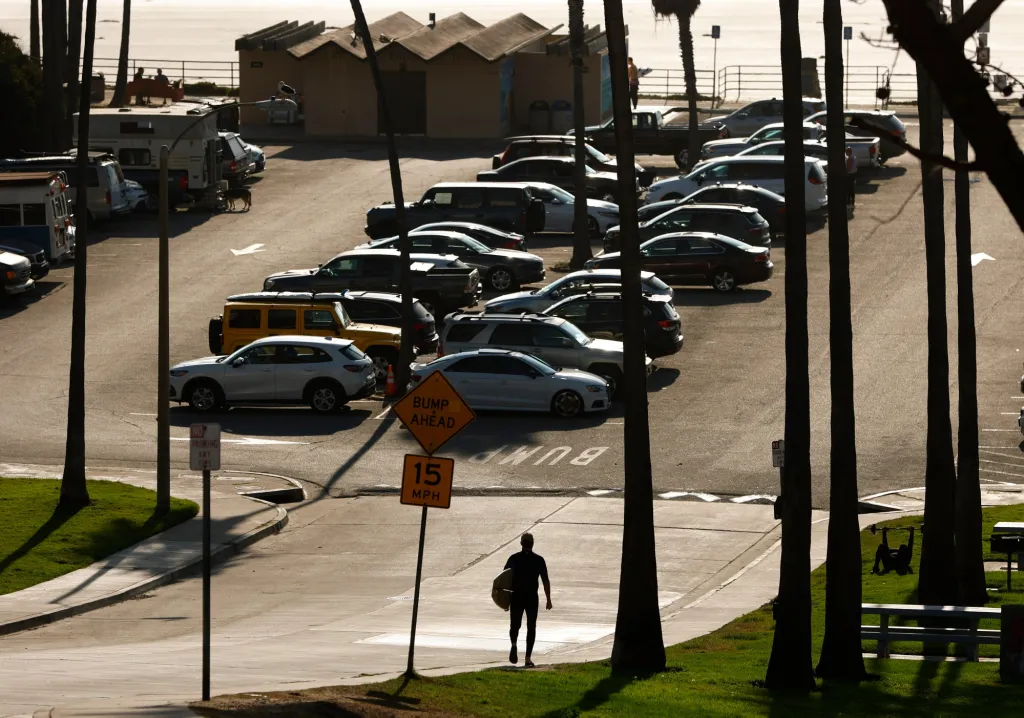
A proposed San Diego ballot measure to ban paid parking at city beaches won’t make the November ballot but will instead be presented to the City Council as a possible ordinance, city officials said Wednesday.
Read more Trump refuses to sign bipartisan housing bill into law. What does that mean for homebuyers, renters?
Several other ballot measures proposed for November also won’t make the ballot, including measures to boost campaign contribution transparency, increase revenue from hotel taxes and shrink the mayor’s power.
Some of the measures have been delayed indefinitely due to lack of City Council support, including the proposal to shrink the mayor’s power, which was rejected by the council’s Rules Committee Wednesday in a 3-2 vote.
The proposal to boost hotel tax revenue by reclassifying online travel agencies as hotel operators was withdrawn Wednesday by Council President Joe LaCava, partly because it would require approval by two-thirds of voters.
Other possible measures have been transformed into ordinances that don’t require a public vote, such as the ban on paid beach parking and the proposal to boost campaign contribution transparency.
The ordinance to boost campaign contribution transparency was approved by the Rules Committee Wednesday and will be presented to the full council for a final vote later this summer.
The ordinance to ban paid parking at city beaches and bays will be presented to the Rules Committee in late summer by Councilmember Raul Campillo and LaCava, according to Campillo’s chief of staff.
Part of the motivation for pursuing an ordinance instead of a ballot measure is that ballot measures can require as much as $500,000 in election costs, said Councilmember Sean Elo-Rivera, who is spearheading the campaign contribution ordinance.
One key difference between an ordinance and a ballot measure is that an ordinance can be changed by a simple vote of the council, but an approved ballot measure can’t be changed without another public vote.
These recent decisions mean there will be no San Diego city measures on the November ballot, because there isn’t time for such a measure to get the necessary approvals before an early August deadline.
Two other possible city measures for the November ballot were also abandoned or delayed by their proponents.
The Lincoln Club Business League agreed last month to cease gathering signatures for a ballot measure to overturn the city’s new trash fees for single-family homes.
And a local construction union decided this winter to target 2028 instead of this November for a proposed city sales tax increase.
Read more Lawmakers demand answers as turmoil over Reflecting Pool repair continues
The proposal to ban paid parking at city beaches and bays comes after the city’s highly unpopular effort to charge for parking at Balboa Park. The council voted June 8 to eliminate paid parking in Balboa Park by the end of this year.
Some council members have expressed support for paid parking at beaches and bays if the state Coastal Commission would allow city residents to be exempt from such fees.
The ordinance boosting campaign contribution transparency would require much faster disclosure of money spent to influence city decisions and ban campaign contributions from registered lobbyists to city campaigns.
“Today’s vote is a step toward a City Hall where San Diegans can see who is trying to influence their government before decisions are made, not after it is too late,” said Councilmember Sean Elo-Rivera, who spearheaded the effort. “People believe the game is rigged, because it is.”
Anyone spending $1,000 or more to influence a municipal decision would be required to file a disclosure report with the City Clerk within 24 hours.
Also, elected city officials and candidates for city office could no longer accept campaign contributions from registered lobbyists. This would bring city policy closer to restrictions already in place at the county and state.
The proposal to shrink the mayor’s power, which is being spearheaded by Councilmember Kent Lee, includes four separate elements.
They include forcing the mayor to hire a chief operating officer, giving the council more power to make mid-year budget cuts, setting minimum funding levels for city oversight agencies and eliminating the current 10-year maximum term for the city auditor.
Councilmember Vivian Moreno joined Lee in support of the measure on Wednesday, but LaCava, Campillo and Elo-Rivera voted against.
They said the measure had worthy goals and would address some real problems, but they expressed concerns it hadn’t been studied thoroughly enough and that city labor leaders hadn’t been included in the process of putting the measure together.
Mayor Todd Gloria, who eliminated the chief operating officer position more than a year ago, expressed opposition to the proposal.
Lee said after the vote that he will continue to pursue the reforms, possibly with a ballot measure in 2028.
Read more Court filing reveals President Trump spoke to Live Nation CEO before antitrust case was settled