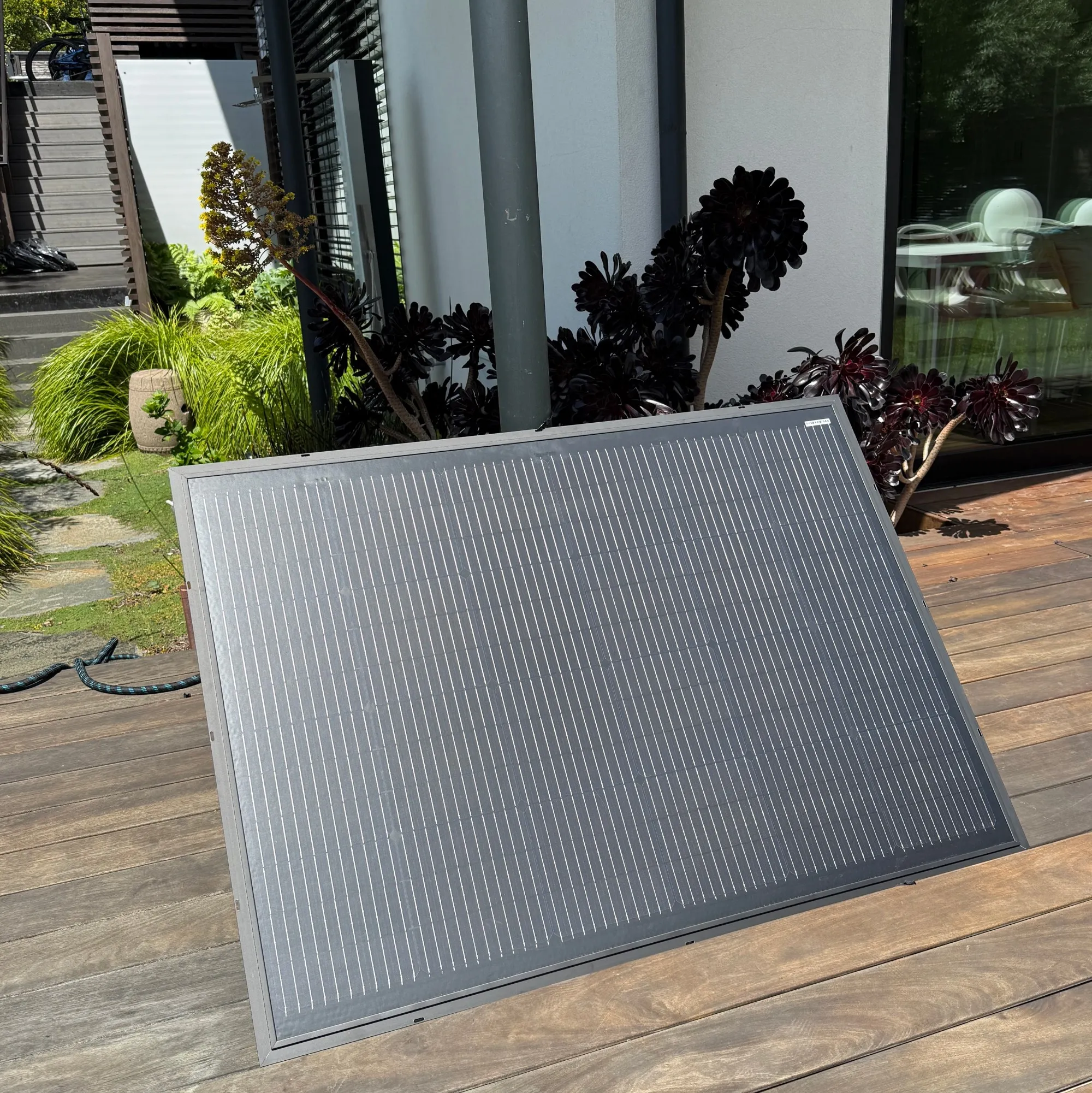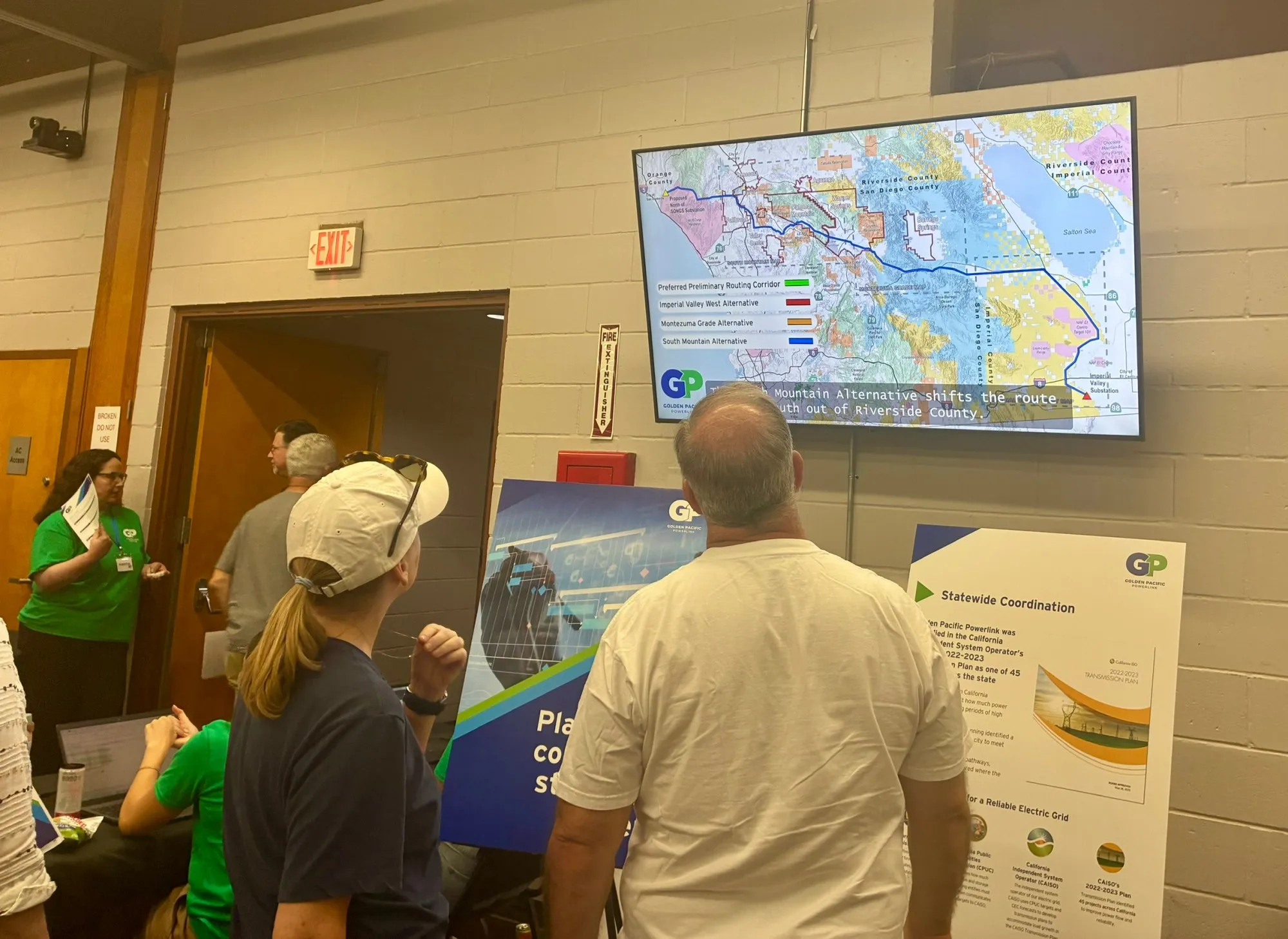










Avantus, one of the largest utility-scale solar and storage developers in the U.S., recently moved into its new corporate headquarters in downtown San Diego.
Read more Man convicted in terrorism trial over the 2022 stabbing of author Salman Rushdie
“It’s a great city, great skill sets,” said Avantus CEO Cliff Graham from his corner office on the 15th floor at 655 West Broadway. “We looked at the Bay Area, LA and San Diego and did a ‘bake-off’ between talent, ability and so forth and San Diego clearly won.”
The company that focuses on utility-scale solar and battery energy storage projects primarily in California, Arizona and Nevada relocated from offices in Los Angeles, San Francisco and El Dorado Hills to San Diego last year.
After working from a temporary location on the 10th floor, Avantus expanded last month to its sleek corporate space that features impressive views of the city and San Diego Bay.
Graham said one of the selling points was easy access to San Diego International Airport and the downtown train station at Santa Fe Depot.
“San Diego is a great location when you look at ease of transportation for people, the ease of getting to headquarters to collaborate,” Graham said. “We looked a lot of places in and around the San Diego area and we found downtown to be like the gem of the whole area.”
About 50 employees work at the Broadway location, but Avantus touts a staff of 210 mostly based near the company’s various energy facilities across the West.
“We like California, Arizona and Nevada because you have expansive land, limited water and policy for clean air,” Graham said, referring to the fact that solar doesn’t require water for generation or cooling the way that natural gas and nuclear do. “But we also see high production — the solar is very strong here,” given the sunny weather in all three of those states.
The move to San Diego also reflects a broader shift in the company’s strategy.
Historically, Avantus primarily developed solar and storage projects and then sold them to long-term infrastructure owners and investors. But now the company increasingly owns and operates its projects as an independent power producer.
And the company has been busy.
On July 20, the Aratina 1 facility in eastern Kern County started delivering electricity to California’s grid. Just a few days earlier, the company closed a $525 million package with three financing firms to develop the second phase of the project, called Aratina 2.
Southern California Edison has signed a 15-year power purchase agreement for Aratina 2, which is expected to be operational by the end of this year.
Together, the two facilities will have 350 megawatts of solar capacity and 952 megawatt-hours of battery storage. That’s enough to power 180,000 homes.
On July 13, Avantus announced a 20-year power purchase agreement with the Clean Power Alliance, a community choice energy program serving Los Angeles and Ventura counties, for the Rexford 2 solar and storage project.
Located in Tulare County, the project will deliver a combined 200 megawatts of solar generation capacity and 800 megawatt-hours of battery energy storage to California’s electric grid — about enough to power 84,000 homes.
And in March, Avantus closed a financing package of more than $300 million with a pair of financial groups for the Kitt Solar and Energy Storage Project in Pinal County, Arizona. The project features 100 megawatts of solar and 400 megawatt-hours of battery storage, with capacity to serve up to 32,000 homes.
Scheduled to be up and running by the end of this year, the project has signed a power purchase agreement with Arizona Public Service, the largest electric utility in the Grand Canyon State.
All told, Avantus has 42 renewable energy projects in its development portfolio, with about one-third of them in California.
None are in San Diego County, but Graham said, “we’re always looking for transmission and trying to find locations.”
Solar power and energy stored in batteries have become the anchors of California’s efforts to wean itself from fossil fuels — in particular natural gas — to drive the state’s power system.
Read more Film financier Jason Cloth indicted in alleged $100M Ponzi scheme tied to movie funding
While solar is abundant during the day, it vanishes after the sun goes down. But energy storage from batteries can save the power generated by solar and then discharge the electricity later, especially during the crucial 4-to-9 p.m. period when California’s grid is under the most stress.
The Golden State has gone all-in on batteries, reaching by the end of last year. That’s an increase of 2,100% compared to 2019 and the largest amount of any state.
But a spate of fires at battery facilities has raised concerns.
In May 2024, emergency responders rushed to the Gateway Energy Storage facility in Otay Mesa when nickel manganese cobalt batteries kept reigniting. It took nearly 17 days before the last firefighting and air monitoring crews from San Diego Fire and the Sheriff’s Department left the scene.
In April of this year, global energy company AES withdrew plans to build a large battery storage facility in Eden Valley after residents loudly opposed the project, due to potential fire risk.
Graham said Avantus’s new projects use lithium iron phosphate batteries that are much less likely to overheat, catch fire and lead to “thermal runaway” — a chemical reaction that spreads in a chain reaction from one battery to another.
The company’s Aratina project led to pushback from some residents over the destruction of Joshua trees and impacts on wildlife.
Avantus responded by partnering with state and federal agencies to set aside more than 215,000 acres in Kern County to protect Mojave Desert plants, including the western Joshua tree, and animals living on the site.
“We understand the desert’s a very sacred place,” Graham said. “It’s alive, it needs to be taken care of and fostered. It’s not a wasteland … So we’re really doing everything we can to keep that balance in a great location.”
On the political front, the Trump administration is not exactly embracing the renewable energy sector.
But Graham said officials at Avantus have worked closely with the White House and the U.S. Department of the Interior and, “at this point, we found them very pragmatic.”
He said the company has pushed the case that renewables make sense, particularly in the desert Southwest, harkening to projects such as the Hoover Dam, which was built between 1931 and 1936.
“We’ve been getting our permits through the Trump administration with no problems at this point, so long as we’re able to show it’s compatible,” Graham said, “On solar-plus-storage, we found them very pragmatic if it makes sense and the land use is consistent.”
California policymakers have set a goal to derive 100% of the state’s electricity from carbon-free sources by 2045.
“What California’s done very well compared to other markets is that early investment has paid off dividends,” Graham said. “Today, we’re at 70% renewables, and our grid is totally stable.”
As for getting to 100%, Graham said, “I do think that last 10-15% gets really expensive real quick. With today’s technology, I think we can get to 85%, 90% comfortably, but I think that last percentage is the hard part.”
A private company, Avantus was founded in 2009, back when it was called 8minuteenergy Renewables. The company changed its name in 2022, combining the words “advancing” and “advantages” with regard to clean energy.
Global investment firm KKR acquired a majority stake in Avantus in 2024 in a deal that resulted in KKR and energy investment firm EIG as the sole equity investors in the company.
Read more Passenger in suspected stolen vehicle shot by San Diego police in San Ysidro