




Carlsbad’s City Council has unanimously approved an agreement with North County Transit District and the San Diego Association of Governments to advance a plan to place the downtown railroad tracks into a trench below street level.
Read more Sheriff’s Office is now letting you know how your 911 call turns out
The memorandum of understanding includes the city’s appropriation of $5.22 million set aside in 2023 from general fund reserves as matching money to help cover the costs of planning the project.
Final approvement of the agreement is expected by the end of this year from the SANDAG board, said Jason Haber, Carlsbad’s intergovernmental affairs director. SANDAG is the lead agency for the project.
The agreement outlines work expected over the next three years to complete preliminary studies and 30% of the design for the trench.
At that point, the city and the other agencies involved will decide whether to proceed with the project, which has been estimated to cost roughly $500 million in present-day dollars, Haber said. Most of the money would have to come from state and federal grants.
“There’s a lot of benefits over time that would compensate for that half a billion dollars,” Carlsbad Mayor Keith Blackburn said at Tuesday’s City Council meeting.
Blackburn and others have emphasized the economic and public safety benefits of lowering the railroad tracks to about 30 feet below street level.
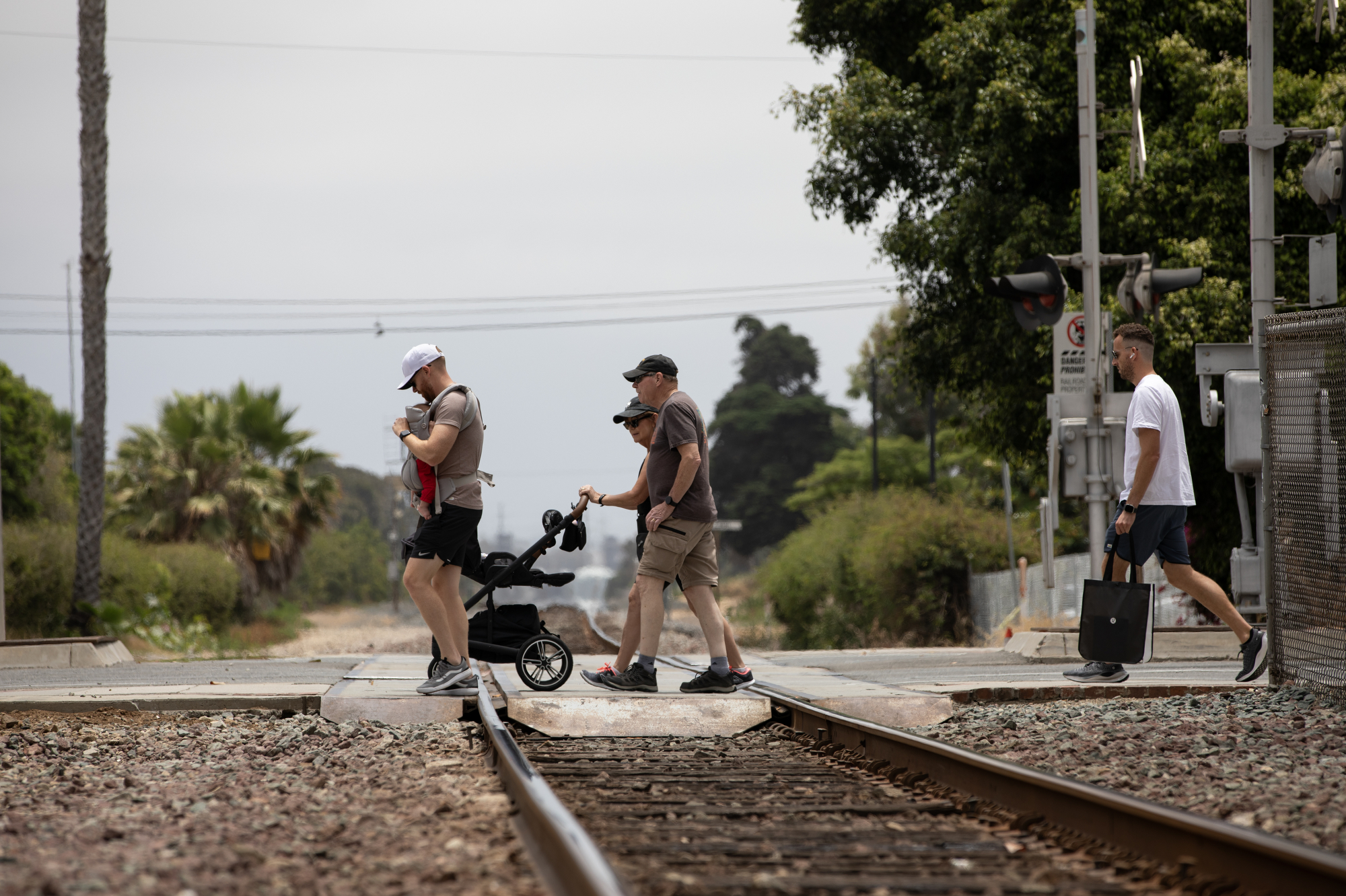
A trench virtually eliminates the chances of a train hitting a vehicle or a person, which occurs several times a year in North County. It improves traffic circulation in the area and ends delays for fire trucks and ambulances forced to stop for a passing train when responding to an emergency call.
Lowering the tracks also avoids the need for trains to sound their horns at street crossings, making the neighborhood quieter. Studies show the combined benefits can boost business and increase property values.
City and transit officials have been discussing the trench proposal since at least 2009.
The downside of the project is the cost and the several years of noise and traffic disruption during construction that would take about four years. For much of that time, trains would be diverted onto a temporary “shoofly” track parallel to the trench.
However, preliminary studies completed for the project show the benefits are worth the investment.
Read more Outside influence, cost of living top issues in Chula Vista’s District 1, 2 council races
“I just wish we would have done this (before) I was born,” said Councilmember Priya Bhat-Patel. “Not only is (the train) a way for our residents to get around, but it’s a huge economic driver.”
The trench would start near the city’s border with Oceanside at the Buena Vista Lagoon and go south through the Village and Barrio neighborhoods to about Tamarack Avenue.
Carlsbad’s matching money will be used with a $20.8 million in state transportation improvement funds allocated this year by SANDAG.
Also, the fiscal 2025-26 federal Transportation, Housing and Urban Development appropriations bill includes $1 million for the project. The federal money is expected to offset $1 million of the city’s contribution, according to a city staff report.
SANDAG is working to double-track the entire coastal rail corridor through San Diego County. About three-quarters of the 60-mile segment has been completed so far, and Carlsbad is one of the remaining bottlenecks. Two sets of tracks allow trains to pass each other and increases the speed and efficiency of rail service.
SANDAG intends to double-track the segment through Carlsbad’s downtown Village whether or not the tracks are lowered. The street-level plan would cost considerably less and would not require a financial contribution from the city.
Solana Beach is the only North County community so far to have lowered its section of the tracks, a project completed in the 1990s.
The coastal rail route is part of the 351-mile corridor from downtown San Diego to San Luis Obispo. It is San Diego’s only railroad connection to Orange County, Los Angeles and the rest of the United States.
The Carlsbad segment is used by Amtrak’s Pacific Surfliner, NCTD’s Coaster and BNSF freight trains.
The corridor is the second-busiest intercity rail route in the United States, surpassed only in the Northeast by a segment through New York City connecting Boston with Washington, D.C., according to transit officials.
Read more Inmate dies in apparent suicide in Otay Mesa jail cell, sheriff’s officials say