






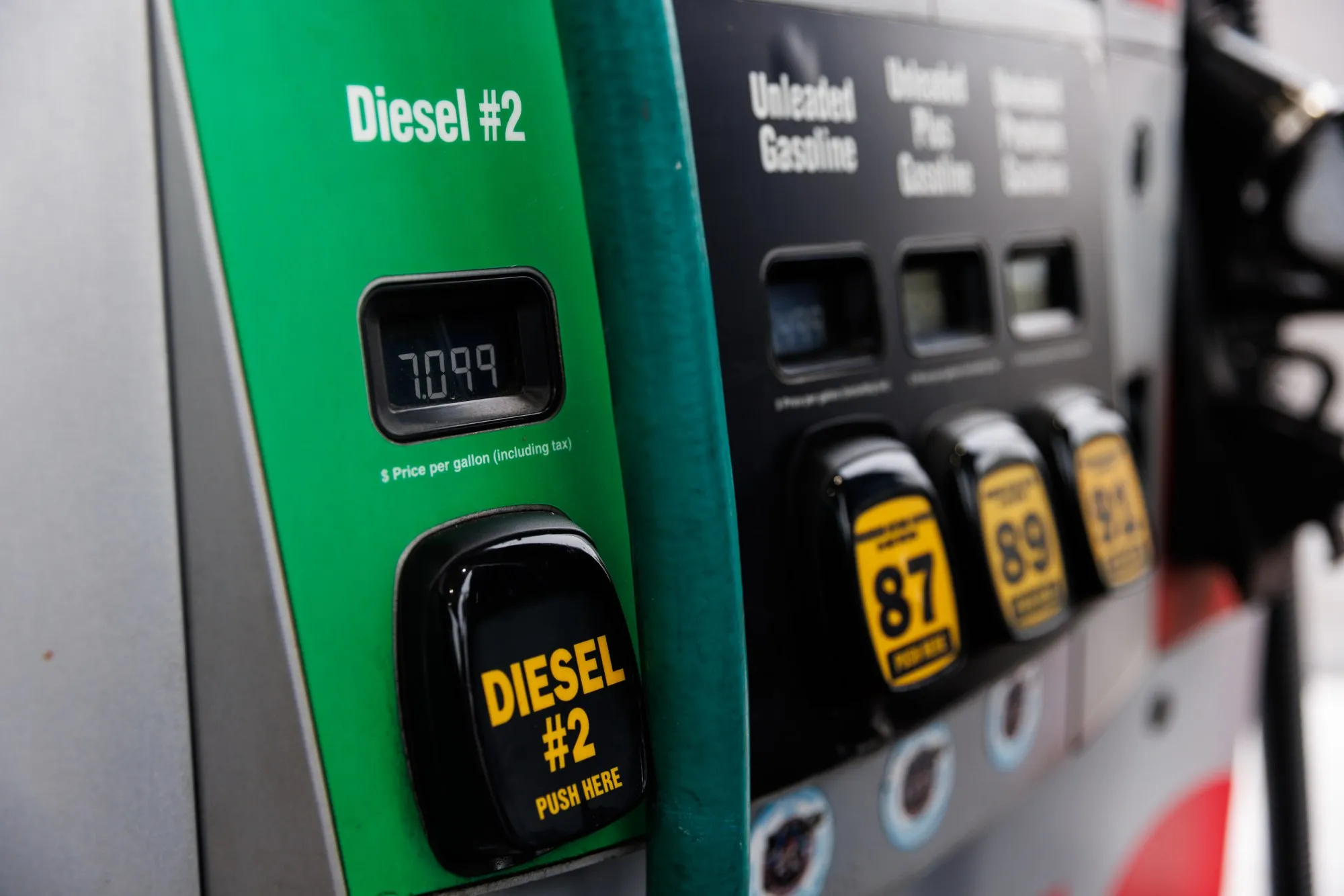
The cost of diesel fuel keeps rising and the average price in San Diego has once again surpassed $7 a gallon — a further indication of an increasingly tight global market for crude oil and refined products such as diesel and gasoline.
Read more Longtime publisher of Stars and Stripes to retire, citing differences with Pentagon leadership
“The situation is not going away anytime soon and could very well get more expensive,” Mizuho Americas energy futures strategist Bob Yawger said in a note to investors.
While most consumers focus on gasoline prices, fuel analysts often say, “the economy runs on diesel,” because trucks and ships that deliver goods to markets and food to grocery stores run on diesel fuel. When transportation costs increase, they are passed on to consumers and contribute to inflation. Agricultural machinery also relies on diesel fuel.
The average price for a gallon of diesel in the San Diego area came to $7.03 on Wednesday, according to AAA. That’s the first time since June 10 that the average price has surpassed $7.
Fuel prices have soared after the U.S. and Israel launched joint air strikes on Iran earlier this year. The Iranian regime responded by choking traffic in the Strait of Hormuz, where 20% of the world’s oil exports traverse.
When hostilities started on Feb. 28, diesel was 34 cents higher than gasoline in San Diego but the gap has widened as the war continues in fits and starts. On Wednesday, the average price for gasoline in the San Diego area stood at $5.69 a gallon — a difference of $1.34.
That gap is not only seen throughout California, but across the country on a proportional basis.
The U.S. average for diesel on Wednesday came to $5.50. The average price for gasoline stood at $4.09 — a difference of $1.41.
Why is the spread between diesel and gasoline prices growing?
Fuel analysts say that tightened supplies due to the war in Iran have been further stretched because fighting between Russia and Ukraine has escalated.
Read more Former Meta engineer says Instagram took a ‘don’t ask, don’t tell’ approach on kids under 13
As late as 2025, Russia exported as much as 1 million barrels per day of diesel and other petroleum products. But recent drone attacks on Russian refineries prompted the Kremlin to ban international sales through January.
S&P Global Energy says refinery activity from China has also been “subdued,” according to a story from Axios.
Refiners in the U.S. have ramped up diesel production but they are already running at full tilt, with capacity utilization hitting 96.2% on July 17.
For diesel consumers, Patrick DeHaan, head of petroleum analysis at GasBuddy, posted on X, “the worst retail prices still could be in the months ahead.”
In San Diego, the highest-ever average price for diesel came on April 8 when it reached $7.72 a gallon.
Nationally, the all-time record price for diesel came on June 19, 2022, when it hit an average of $5.82.
The prospects of a truce between the U.S. and Iran appear to be diminishing.
A 60-day memorandum of understanding was reached between Iran and the Trump administration in June, which caused gas prices to temporarily retreat as an increasing number of ships passed through the strait. But when Iran launched a drone attack on a Singapore-flagged cargo ship on June 25, the U.S. responded by directing retaliatory airstrikes, sending prices back up.
President Donald Trump on Tuesday, posting on Truth Social, said, “There are no talks or conversations going on, or scheduled, with the Islamic Republic of Iran.” Meanwhile, the head of Iran’s armed forces renewed warnings to countries in the Persian Gulf to not assist the U.S. military, saying any help would amount to joining operations against the Islamic Republic.
Read more Trump says US and Canada have a trade deal, but key terms remain unclear