





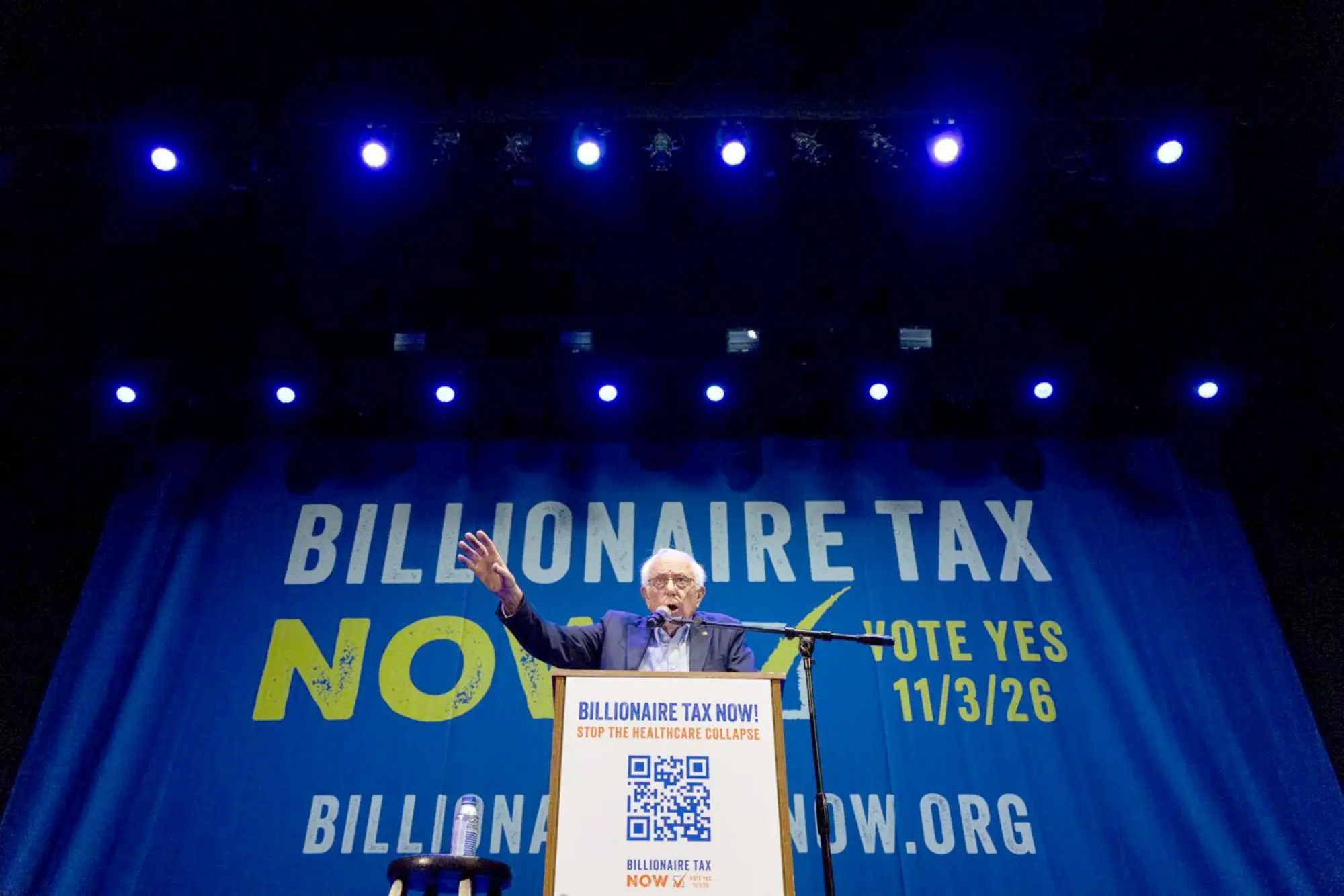
The most closely watched measure on the statewide California ballot, a tax on billionaires’ wealth, lacks majority support, as do a pair of countermeasures backed by its opponents, according to a poll published Friday.
Read more Trump administration uses rare authority to claw back nearly $1B in spending approved by Congress
The poll by UC Berkeley’s Institute of Governmental Studies found 45% of likely voters in the Nov. 3 general election would support Proposition 40, the billionaires tax, less than the majority that would be needed for it to pass. Proposition 41, backed by opponents of the billionaires tax and designed to nullify it, was backed by 37%, and another countermeasure, Proposition 42, had 43% support. The poll found 13% were undecided on Proposition 40.
“The findings suggest tough news for Proposition 40 proponents,” said G. Cristina Mora, co-director of the IGS poll. “With less than 50% support this close to the election, ballot measures for new taxes tend not to pass, as undecided voters likely break towards ‘no.’”
Support stood at 48% when Berkeley IGS last polled it in August, when the institute found 48% support for the billionaire tax, 41% opposed and 11% undecided.
For two countermeasures also on the ballot, the poll found 37% in favor of Proposition 41, which would bar new state taxes that exclude revenues from a state spending limit, while 33% were opposed and 30% were undecided. Proposition 42, which calls for prohibiting new taxes on personal property passed after Jan. 1, 2026, including retirement accounts and assets, was supported by 43% and opposed by 34%, with 23% undecided. Propositions 41 and 42 have provisions that could void Proposition 40 if either also passes and receives more yes votes.
“The results indicate that while supporters outnumber opponents on both countermeasures, neither receives majority support and large proportions are undecided,” wrote Mark DiCamillo, director of the Berkeley IGS poll.
The results differ from another recent independent poll by the Public Policy Institute of California that found Propositions 40, 41 and 42 all with majority support.
The Proposition 40 billionaires tax has been perhaps California’s most divisive among 14 statewide measures on the November ballot, inspiring talk of similar taxes nationally and in other states while dividing the state’s majority Democrats and Silicon Valley leaders.
The one-time, 5% levy on the state’s more than 200 billionaires was proposed by SEIU United Healthcare Workers West last year to offset revenue lost to federal cuts, with 90% of the revenue earmarked for healthcare and 10% for food assistance or education-related programs. It would apply to people living in the state as of Jan. 1, 2026, with a net worth topping $1 billion. Real estate and some pensions and retirement accounts would be excluded from the tax, which could be paid in full in 2027 or over the next five years, with interest.
Advocates include Rep. Ro Khanna, Vermont independent Sen. Bernie Sanders, the California Democratic Party and the California Federation of Labor Unions say it would address wealth inequality and fund important services. Among Silicon Valley billionaires, Nvidia CEO Jensen Huang has said he’d be “perfectly fine” with having to pay more in taxes.
Read more Supreme Court rejects a Trump-backed Missouri congressional map for the third time
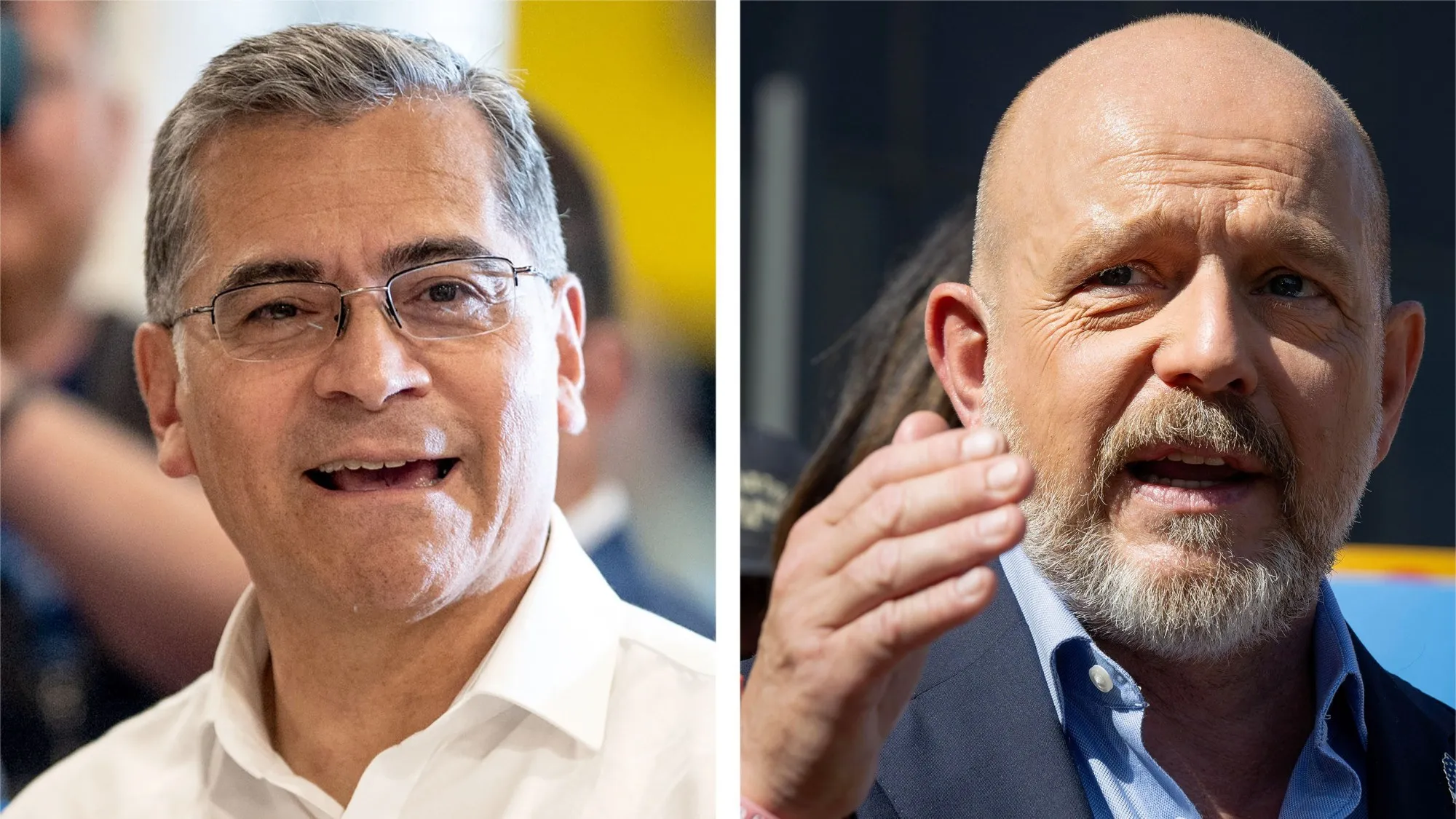
But critics argue the tax would drive many entrepreneurs out of state or persuade them not to come, hurting California’s economy and depriving the state of vital income tax revenue from high earners. Opponents include Gov. Gavin Newsom, candidates for governor Xavier Becerra and Steve Hilton, former candidate for governor and Rep. Katie Porter, Rep. Sam Liccardo and organizations including Planned Parenthood, the California Teachers Association and several other unions. Among leading funders for the opposition campaign and countermeasures is Google co-founder Sergey Brin, who has moved to Nevada.
Friday’s poll found support for Proposition 40 was strongest among Democrats, younger voters and women. It was favored by 65% of Democrats with 20% opposed, while 80% of Republicans were opposed and 11% in favor. Among voters with no party preference, 45% were in favor and 41% opposed. More voters under age 50 were found in support, while more over age 50 were opposed, the poll found. Men opposed it 48% to 41%, while women favored it 49% to 35%.
Proposition 40’s struggles don’t seem to reflect a loss of appetite for taxing the wealthy in California. The poll found Proposition 3, which would make permanent existing high tax rates on the state’s highest earners, which give California the country’s highest income tax rate, leading with 54% to 34% opposed.
And Proposition 43, which would raise the voter approval threshold for local special tax initiatives put on the ballot by voter signature gathering, was favored by 31% and opposed by 40%, with 29% undecided.
Among other ballot measures, Proposition 39, which would institute voter identification measures, was trailing among likely voters with 39% in favor and 52% opposed, the poll found. DiCamillo noted that the 13-point deficit in the poll “is slightly greater than the 9-point deficit observed by the poll in early August.” Support and opposition were highly partisan, with about nine in 10 Republicans in favor and eight in 10 Democrats opposed.
Mora noted that opponents seem to have successfully linked Proposition 39 to Republican President Donald Trump, who has backed similar voter identification nationally.
“Canvassing against Proposition 39 has seemed to successfully link the initiative to the Trump agenda and this has made the proposition less likely to pass.”
The poll was conducted online Sept. 15-20 in English and Spanish among a weighted subset of 4,512 Californians considered likely to vote in the upcoming November election. The margin of error was plus or minus 2 percentage points.
Read more Private school gets OK to build 6.5-acre campus in Del Sur