




Inside a small house on Garrett Avenue in Chula Vista, across from Friendship Park, history shows up everywhere: on counters, in boxes, on walls, in closets and on almost every table.
Read more Outdoors: A new doorman for Mt. Hoo – a western fence lizard
Since last fall, 261 Garrett Ave. has been home to the nascent Chula Vista Museum and History Center. Local residents — proud Chula Vistans, really — have been meeting since early 2025 trying to get a local museum up and running. But it wasn’t until October that it finally received its nonprofit designation.
Now, the small army of volunteers is working around the clock to fulfill the museum’s mission: “to preserve and showcase the diverse and distinctive history of Chula Vista.”
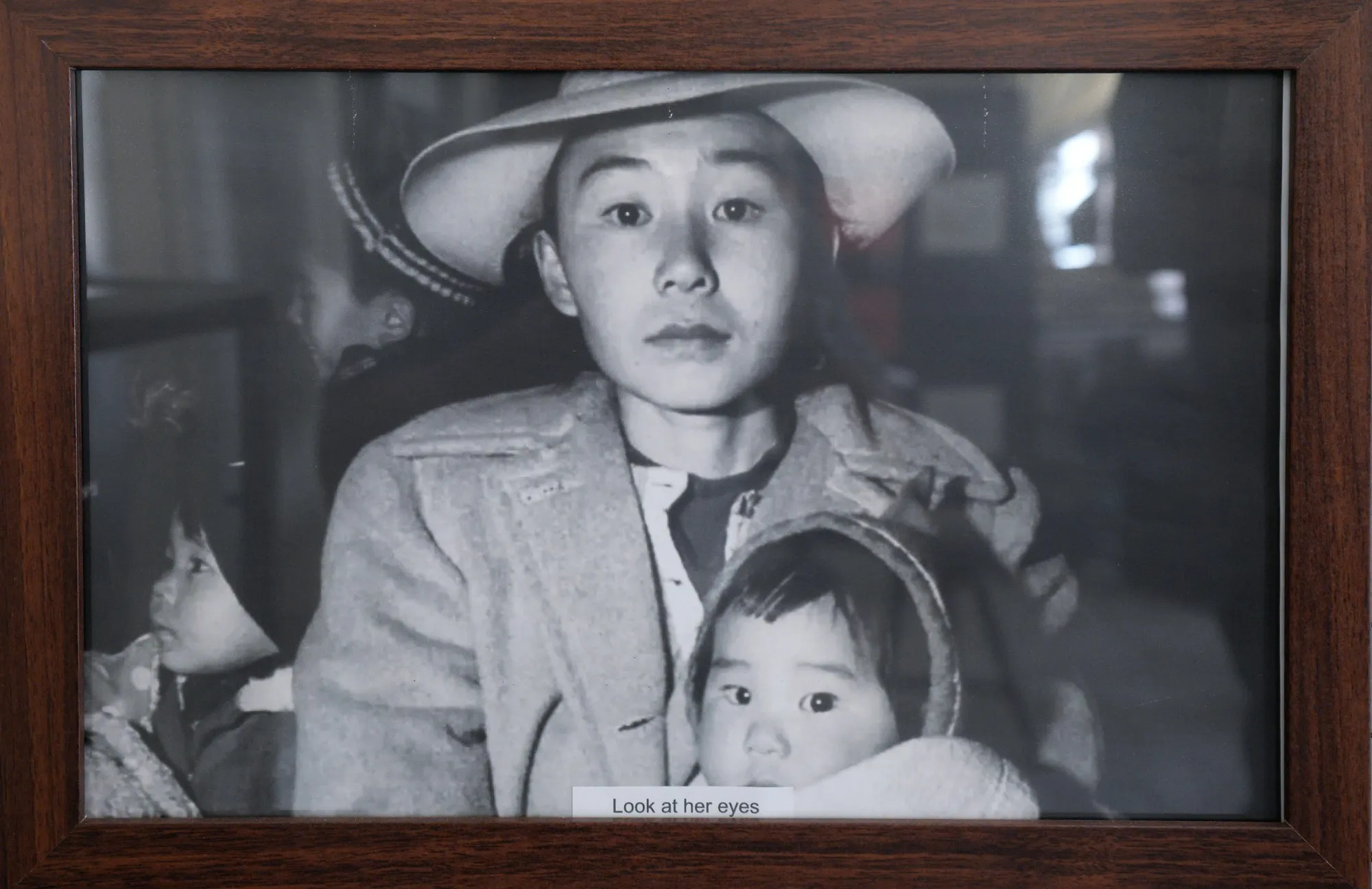
That mission comes to life on Sept. 18, when the museum unveils its inaugural exhibit, “The Chula Vista Japanese American Story.” The exhibit sheds light on a pivotal — and painful — chapter in South County history: the displacement of thriving Japanese vegetable farmers following the onset of World War II.
Through photos, historical accounts and archival newspaper clips, “The Chula Vista Japanese American Story” recounts the experiences of a generation uprooted from their homes and sent to internment camps across Arizona and California.
It’s these kinds of stories that the people behind the Chula Vista Museum and History Center are trying to preserve — “a community-built collection of the moments, memories and milestones,” organizers say.
Why now? Across the street, inside the city library, the Chula Vista Heritage Museum has, for years, mounted exhibits about the city, but for this intrepid band of history buffs, it’s not quite enough. There’s so much to say about Chula Vista — from the era of lemon orchards to its stunning growth to become the county’s second-largest city — that it truly deserves to have a stand-alone museum, they say.
Longtime resident Earl Jentz is so adamant about this that in early 2025, he and other ardent Chula Vista residents came together to discuss the idea. Since arriving in town in 1976, he’s been a vocal advocate of preservation efforts to make sure Chula Vista’s story continues to be told for generations.
“This is not the first time this has been done,” Jentz said.
‘Fill the gap’
Efforts to start a museum beyond what’s already in the library have been attempted in the past, but for one reason or another, they just never could get things off the ground. Many of those local boosters have since died.
“So we’re trying once again,” Jentz said.
This time, though, the work seems to be paying off, thanks to community members, many of whom have donated boxes and boxes of memorabilia to the museum’s collection. Former county supervisor Greg Cox, who also served as Chula Vista mayor from 1981 to 1990, has donated some artifacts from his time in office. Museum board member Steve Wood, a photographer, has donated many items to the museum as well.
There is now a museum board. It has nine members, including former Chula Vista councilmember Pat Aguilar, who’s just as passionate as Jentz about Chula Vista history.
“What we’re doing is trying to fill in the gap so that (there’s) a place that residents, visitors, students can go to learn about the history of the city,” said Aguilar, now board president.
At the Chula Vista library across the street, there are boxes and boxes of historical artifacts, all in storage. The people behind the Chula Vista Museum and History Center would like to make sure all that history doesn’t remain locked up.
There’s no official partnership with the city, but some council members have voiced support and even dropped by for a visit. Many local politicians have been invited to the inaugural exhibition, which features former mayor Shirley Horton, a Japanese American herself.
Beyond politicians, support has also come from the Chula Vista Heritage Museum, which falls under the auspices of the city library.
“They’re very supportive of what we’re doing,” Aguilar said. “With all the things that they’re doing, they really don’t have the staffing or the resources to get into things like museums. They’re too busy.”
In Chula Vista, the library “also serves as a sort of a community services organization,” Aguilar said. “I mean, they have a food pantry there. They hold movies on certain nights for children. They do all sorts of things.”
Read more The secret ballot has been an article of faith in U.S. elections. That’s being tested in Georgia
Besides that, Aguilar said, the city is now in the process of building a new library on the eastern side of town.
“Right now, because of things that are going on that are no fault of their own, they can’t really focus on a museum,” she said. “They just don’t have the resources, so we’re trying to help by filling in the gap.”
‘Amazing history’
On a recent Wednesday, Jentz walked around the museum, housed in a privately owned home built in 1945. The house sits in a commercial zone, which allows it to operate as a museum. Jentz knows every nook and cranny of the museum and all the artifacts in it. But there’s a photo in the back room that he always gravitates to: a black-and-white picture, circa 1910, of an electric carline at the corner of F and Third streets.
The photo shows the Melville Building, built in the early 1900s by Chula Vista pioneer Ed Melville. It housed, according to history records, Chula Vista Dry Goods, a real estate office and a meat market, as well as the city’s first medical and dental offices. Later, the Security Trust and Savings Bank opened a branch there.
“If you look closely,” Jentz said, pointing to the photo, “you see the different kinds of transportation of the day. There’s a horse, an electric trolley, a car and a bicycle.”
Years later, the Sweetwater Dam broke and unleashed what would later become known as the Great Flood of 1916. The torrent flooded the South Bay for 12 miles from inland to the sea. That flood washed away the rail line in the photograph and was never rebuilt.
It’s stories like these that the people behind the Chula Vista Museum and History Center want to continue telling.
Because of limited space, the museum is only displaying one exhibition at a time, like “The Chula Vista Japanese American Story.” But many of the displays are on mobile carts and stands that the museum plans to take on the road — to community festivals like the Lemon Festival or the Starlight Parade.
“Chula Vista has this amazing history that in our view is worth promoting,” Aguilar said.
Aguilar should know. She was on the City Council for eight years.
“When I was on the council, it was: We need money for cops. We needed money for street repairs. We needed money for infrastructure. We need cheaper housing. That’s not limited to Chula Vista. When you rank all of those things in terms of priority, where does a museum end up? It’s not a priority, so it was a struggle.”
“But on the other hand, history is important,” she added. “History is really important because we learn from history.”
Which brings us back to Chula Vista Museum and History Center. Aguilar said she knew Martha Longenecker, the artist and professor who founded the Mingei International Museum in Balboa Park.
“She was an amazing woman, and she had all these organizations that were willing to back her,” Aguilar said. “She had all these grand plans — and funding to do it. When I compare that to what we’re doing, I call us the funky museum because we’re so different from that.”
They’ve made connections in the community and recently attended the San Diego Museum Council’s summer meeting to learn from other art institutions. They still have a lot to do, especially in fundraising, Aguilar admitted.
“We’re really at the ground level of trying to start a museum,” Aguilar said, pointing to the donation jar near the front door. “But we’re doing it.”
Chula Vista Museum and History Center presents “The Chula Vista Japanese American Story”
Opens Friday and current exhibition will be on view for six months. Special hours for opening weekend: 5 to 7 p.m. Friday and 1 to 3 p.m. Saturday. Normal museum hours: Friday from 1 p.m.-4:30 p.m. and Sunday from noon-3 p.m. or by appointment.
Read more The 101 Ash deal is back: Here are the key terms
Chula Vista Museum and History Center, 261 Garrett Ave., Chula Vista
Free
619-316-2642
cv-museum.com