




Scientists with Scripps Research helped pioneer wastewater testing in San Diego, using samples taken from local treatment plants to show which versions of coronavirus were present in local communities even before patient tests started coming back positive.
Read more Who could replace Lindsey Graham? South Carolina’s next steps after senator’s death
Since then, the research consortium has continuously expanded these efforts, testing for additional pathogens and helping countries across the globe create their own wastewater treatment programs based on methods first tested here.
Two new grants from The Gates Foundation will help push these efforts further still, providing an additional $2 million to add additional diseases such as tuberculosis and to use artificial intelligence to better correlate wastewater information with other information that can provide a clearer picture of how disease moves through communities.
At the center of this work is Scripps senior project scientist Joshua Levy, who joined the lab of evolutionary biologist Kristian Andersen in 2021.
Experienced with computer modeling, Levy found himself tackling the challenge of refining existing wastewater analysis methods to help predict when the next wave of COVID-19 cases would surge, filling hospital emergency departments and urgent care centers past capacity.
Working with scientists at UC San Diego, including microbiome luminary and computational biologist Rob Knight, Andersen’s lab, with Levy leading the way, built Freyja, a computer program capable of sorting out the fragments of viral genetic code that showed the new Omicron variant had arrived, correctly predicting that cases would soon spike.
Since then, Freyja has evolved, adding the capability to detect other pathogens in wastewater, from MPOX to influenza.
Levy, who earned his doctorate in applied mathematics from Northwestern University, has certainly found that methods of statistical analysis have been the most applicable.
Wastewater, being the ultimate mashup of genetic material shed by humans and the viruses and microorganisms they carry, is the ultimate analysis challenge.
By all accounts, Freyja does this messy task, often called “deconvolution,” better than most. A 2024 research paper published in the journal Science of the Total Environment, after examining several such tools, declared that “Freyja has the highest accuracy in identifying the relative abundance of lineages.”
Lineages are the specific subtypes of a given pathogen, such as the Omicron variant that caused the biggest wave of illness during the COVID-19 pandemic.
Freyja has quietly become so instrumental to the growing wastewater epidemiology movement that it is built into Aquascope, the system that the U.S. Centers for Disease Control and Prevention uses to surveil wastewater nationwide.
Read more McConnell says a fall led to his hospitalization, breaking weeks of silence about health condition
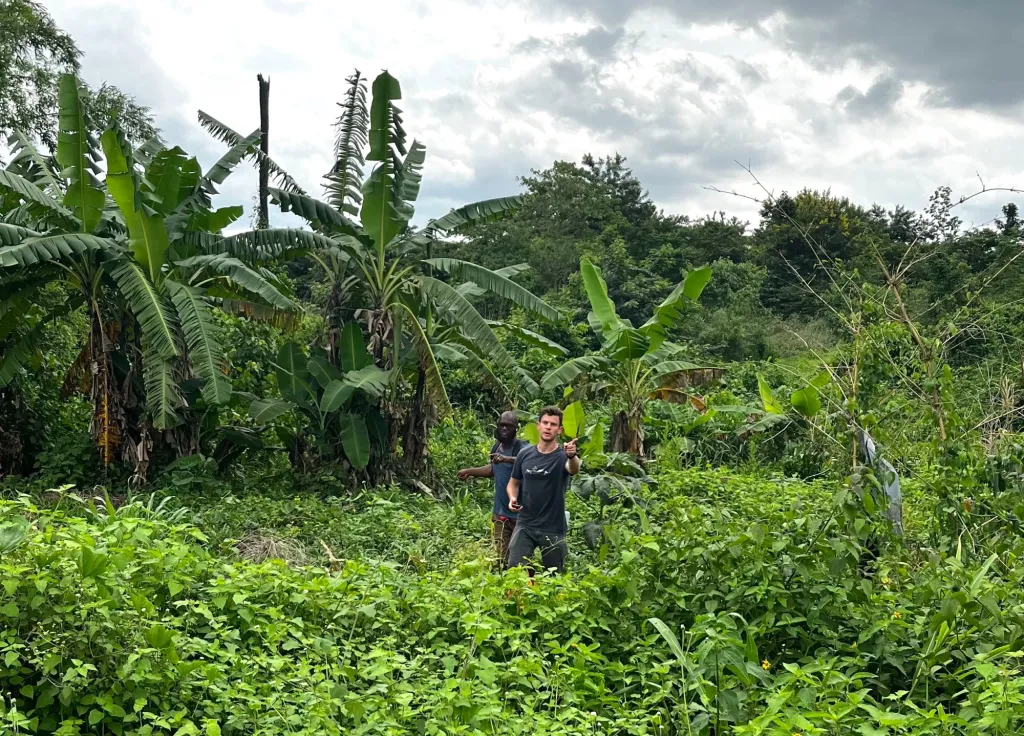
Use of this tool can usually be handled remotely. Most countries have scientists who can collect samples and run them through the equipment needed to do the genetic sequencing that Freyja and other tools analyze. But, sometimes there is a need to travel into the field, especially in African nations where Levy has occasionally found himself providing hands-on training, most often with computation but occasionally with scouting wastewater collection locations.
“Not all wastewater sampling is as nice as what we have at the Point Loma wastewater treatment plant here in San Diego,” Levy said. “We’re doing these same sorts of approaches out of canals in Lagos, streams in Blantyre in Malawi, sewer manholes in South Africa or in Sierra Leone.”
Sierra Leone and Nigeria have been Scripps’ deepest dives, with Levy and Andersen building wastewater detection in those two African nations from the ground up.
These efforts recently received a major vote of confidence, with the announcement of the two new grants. One award renews a 2023 grant, continuing to fund a collaboration with the National Institute for Communicable Diseases in South Africa and with the University of Birmingham in the United Kingdom.
Plans are to continue adding additional pathogens to the list of those already detectable with wastewater surveillance. A second grant will explore using machine learning techniques to make existing systems better at tracking the spread of pathogens within communities.
For example, people may use different wastewater systems as they move through their days, especially if they commute long distances. This means that infections might be detected through clinical testing in communities that are not connected to urban wastewater treatment plants. Finding ways to model connections between test results and what is observed in wastewater systems, layered with other information such as community transportation patterns, holds the potential to provide a deeper understanding of infectious disease transmission patterns.
“It allows you to really pull in information across different modalities that are really hard to model by standard mechanisms,” Levy said.
A paper is nearly ready, he said, on detecting measles virus in wastewater, and the next big hurdle is tuberculosis. This one is tough because several of the genetic sequences that would be used to spot the presence of TB bacteria are very similar to those of other bacteria. It will be necessary to devise methods to amplify the signal of the bacteria that cause tuberculosis without giving too much of a boost to other microbes that significantly overlap the target’s genetic signature.
But, having already learned how to make wastewater samples reveal so many other pathogens, Levy says that these challenges look manageable. And the prize for success is massive.
Estimated to kill more than 1 million people worldwide each year, TB is among the world’s deadliest infectious diseases. Being able to help whole communities more quickly identify which strains of tuberculosis bacteria are causing outbreaks by analyzing wastewater can save lives.
“We know exactly which ones they are and the particular drugs that may be affected by them,” Levy said. “We can say, ‘okay, this first-line drug and this second-line drug might not even be worth trying in this community.”
Read more Senate returns to Washington after Sen. Lindsey Graham’s death with uncertain agenda