







Hydrogen sulfide readings in the South Bay have exceeded the county’s safety threshold with growing frequency in 2026, signaling a worsening trend in the presence of the toxic gas despite ongoing efforts to address the Tijuana River sewage and pollution crisis at the U.S.-Mexico border.
Read more Stalled Oceanside luxury home project faces steep water board penalty
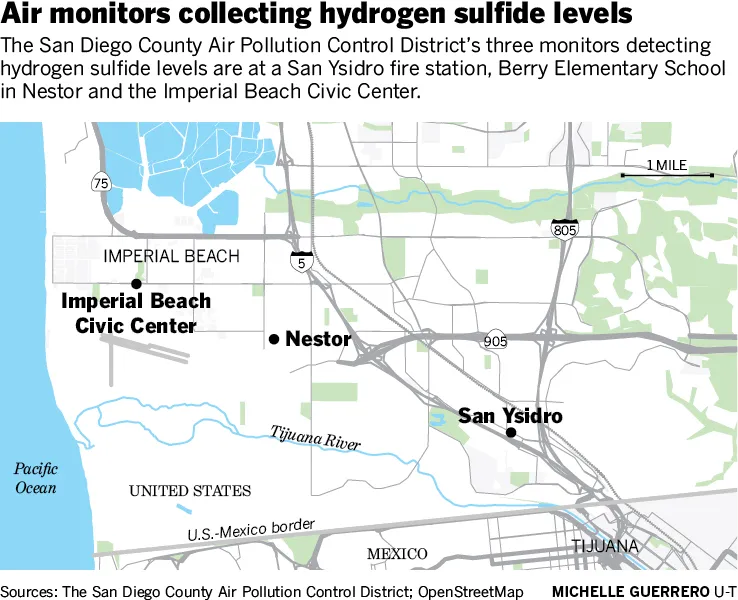
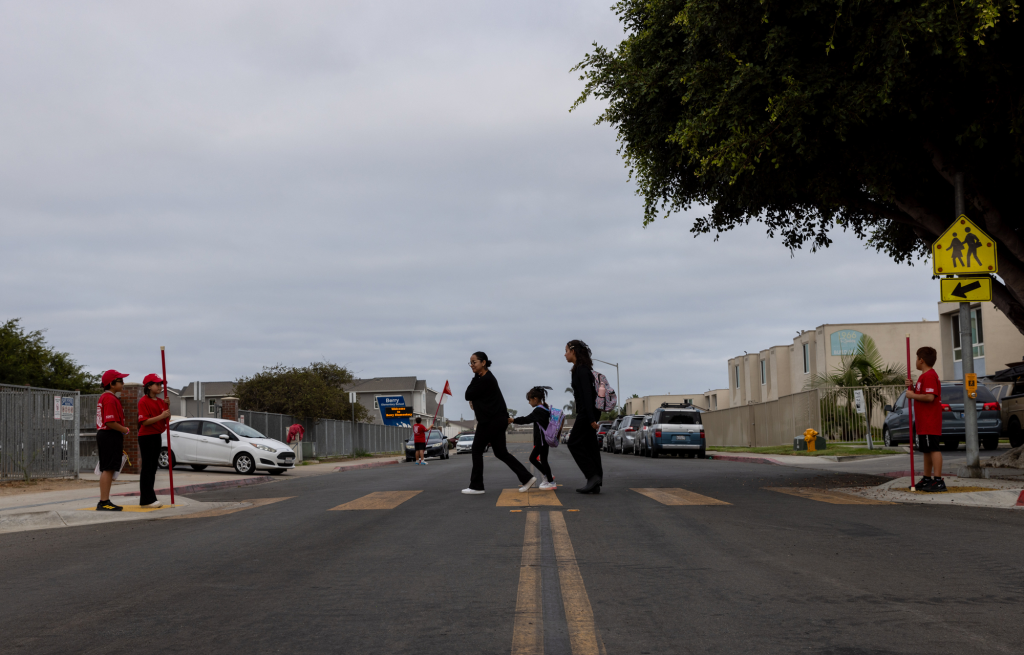
Hourly readings at a hydrogen sulfide monitoring station in Nestor, near Berry Elementary School, exceeded that threshold more than 10% of the time so far this year, up from under 2% in 2024, according to monitoring data obtained from the San Diego County Air Pollution Control District. It’s the sharpest increase of the three sites the district tracks — compared with roughly 1% of hourly readings exceeding the threshold at Imperial Beach Civic Center and about 0.5% at San Ysidro since October 2024.
The trend comes as state Sen. Steve Padilla, D-San Diego, pushes Senate Bill 58, which would require the state Air Resources Board to develop a response framework and evaluate the adequacy of hydrogen sulfide standards first adopted in 1969 to address odor, not health effects.
“There wasn’t the science or the understanding of the public health impacts, particularly those that deal with all kinds of things from neurological impacts to pulmonary impacts to other kinds of chronic conditions,” Padilla said.
Hydrogen sulfide is a colorless gas with a strong, rotten-egg odor produced as sewage and organic waste break down. Kimberly Prather, an atmospheric chemist at the Scripps Institution of Oceanography and UC San Diego, has spent nearly a decade tracking the gas near the border and said during a Thursday presentation to the Sierra Club San Diego Chapter that her own data backs up what the county’s numbers now show: the problem isn’t improving.
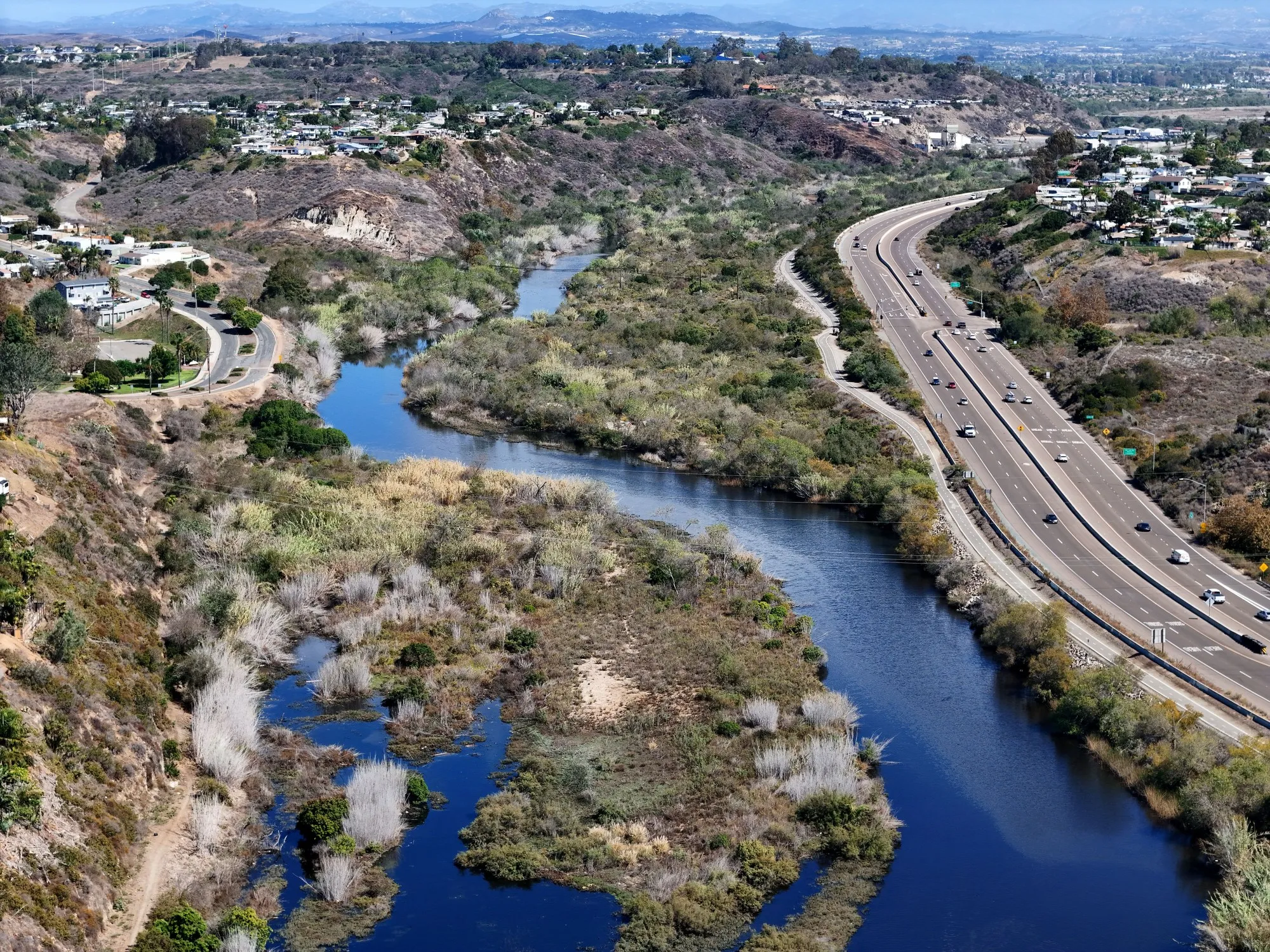
Researchers have traced much of the region’s worst hydrogen sulfide pollution to a single stretch of the river known as the Saturn hotspot, near Saturn Boulevard in the Nestor community. Prather’s team identified the site after finding hydrogen sulfide levels spiked when wind blew from over land, not from the ocean — the opposite of what they initially expected.
People in the South Bay are “breathing high levels of hydrogen sulfide, don’t get me wrong, but they’re also breathing pretty high levels of other major pollutants that they should not be breathing,” Prather said during her presentation, adding hydrogen sulfide “attacks your mitochondria, attacks your brain, it attacks your nerve system,” raising particular concern for children.
The gas escapes the water through turbulence. As raw sewage and industrial waste churn and bubble at the hotspot, those bubbles burst and release hydrogen sulfide and other pollutants into the air, according to Prather. When Mexican officials briefly diverted wastewater away from that location in September 2024, she said, hydrogen sulfide readings dropped sharply — though not to zero — confirming the turbulence at that specific spot as the primary source.
The county has been measuring hydrogen sulfide levels since roughly October 2024. Before that, residents were lodging complaints about the odor and perceived health impacts — complaints with no data behind them yet, which fell on mostly deaf ears.
Prather’s team compared years of community odor complaints against its own hydrogen sulfide measurements around September 2024 and found the two tracked almost perfectly.
“The people were the sensors,” Prather said. “They’ve been being essentially gaslit and told there’s nothing going on, don’t worry. They were being completely dismissed. And we basically showed with scientific measurements that what they’ve been saying all along was true.”
Nearly two years on, Nestor’s highest recorded reading, 915 ppb, came at midnight on June 2, the same night a collapsed sewage pipeline in Tijuana sent flows at the South Bay International Wastewater Treatment Plant surging from roughly 35 million gallons per day to a peak average of about 51 million gallons per day, according to flow data from the U.S. section of the International Boundary and Water Commission.
She said the worst conditions tend to occur during the dry season, when river flow should not exist but does because of wastewater releases from pumps on the Mexican side that U.S. agencies do not control.
The county’s Community Hydrogen Sulfide Guidance sorts readings into four tiers. Levels below 5 ppb are unlikely to cause symptoms; between 5 and 29.9 ppb, sensitive groups may experience headaches, nausea or respiratory discomfort. At 30 ppb or higher, the district issues a public advisory, while measurements above 200 ppb activate a multiagency review. Above 27,000 ppb, the final tier prompts first responders to evaluate for shelter-in-place or evacuation orders.
The 30 ppb threshold, set by the California Air Resources Board, was designed to prevent the odor itself from causing short-term symptoms — not to protect against chronic, longer-term health effects from repeated exposure, which SB 58 aims to address.
Read more Will vaccine boosters be necessary as measles spreads nationwide?
“Well, first of all, the health standards are being reevaluated,” Prather said, referring to the pending legislation. “Levels of hydrogen sulfide are way above (the standards), sometimes an order of magnitude above them. And it’s shocking to me that it’s being allowed to continue.”
Melina Meza, with the county Air Pollution Control District, said high readings typically occur when several conditions align: consecutive days of high transboundary flows, dry weather, higher temperatures and little nighttime wind.
“High H2S levels can also occur without all three of the conditions above, but it’s unclear why they do,” Meza said.
Nighttime readings consistently dwarfed daytime levels across all three stations. At Nestor, the overnight average was nearly nine times the daytime average, and readings spiked repeatedly from mid-March through late April, with the station’s monthly average climbing from under 3 ppb in January to roughly 27 ppb to 29 ppb that spring.
Padilla said SB 58 would require the state board to consult with local air districts, the state Department of Public Health, tribal governments and community-based organizations, and hold at least three public workshops, including one in the Tijuana River Valley and one near the Salton Sea.
“There is no response framework currently, and there is no set of standards yet which can flow from that, ultimately dealing with concentrated hydrogen sulfide emissions,” Padilla said. “This bill will fix that.”
For residents like Robert Stephen Egger, the numbers reflect decades of worsening conditions. Egger, 72, has spent his whole life on his family’s dairy farm in the upper Tijuana River Valley, land his Swiss grandfather settled a century ago.
“Our river valley was a pristine, healthy environment,” Egger said. “We grew vegetables and we had 300 cows that we milked twice a day. I both worked and played in the valley. I started working on the dairy when I was six years old. It’s been my life.”
Today, Egger said, he and his wife wake up most mornings congested, coughing up phlegm. His doctor has told him to move. He has declined.
“This has been my home forever,” Egger said. “My roots are there. I’ve been there all my life. I like it there. I want it the way it was.”
Efforts to address the crisis span multiple fronts. The U.S. and Mexico negotiated Minute 328 in 2022, a roughly $474 million binational commitment to expand infrastructure, followed by Minute 333 in 2025, adding operations and maintenance planning. The federal government has also funded a plant expansion increasing treatment capacity from 25 to 50 million gallons daily by 2027.
Locally, the county has funded air purifiers, health studies and fixes at hotspots like Saturn Boulevard. Applications for air purifiers, which stalled, are expected to resume at the end of July, Meza said.
Padilla said SB 58 is meant to be a foundation other efforts can build on, including future funding for local agencies that respond to exposure events.
Read more US bombing of Iran expands as American troops killed and Tehran retaliates against the Gulf states
“It is a tool that is missing and needed,” Padilla said.