






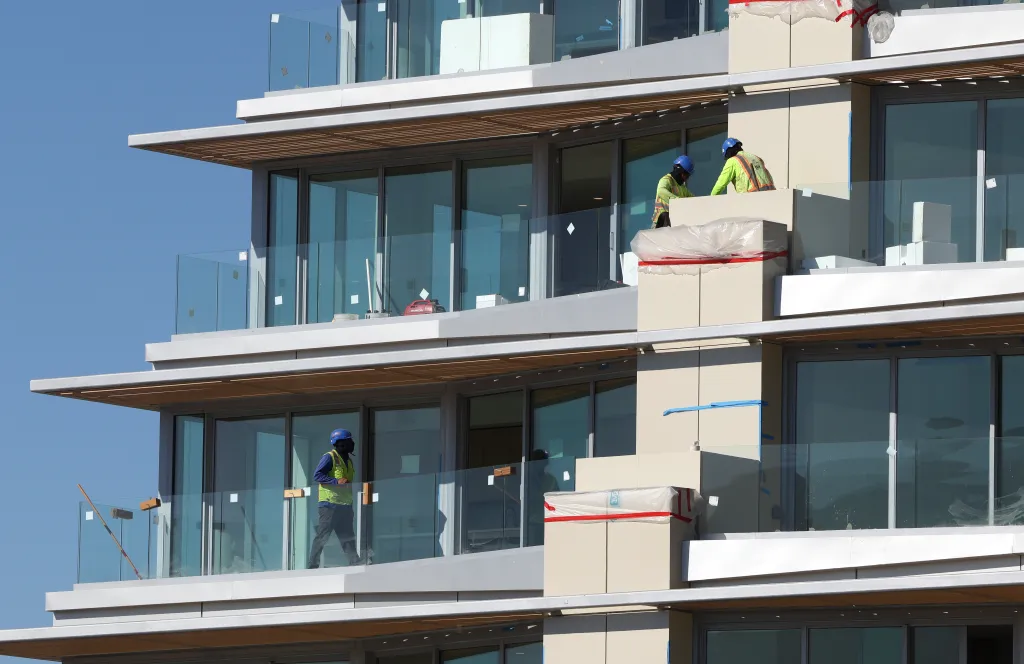
San Diego has been a state leader in apartment construction in recent years and that appears to have had a noticeable effect on rents.
Read more Sen. Lindsey Graham, a close Trump ally, dies after a brief and unexpected illness, his office says
But at least on paper, average rents have essentially flattened, not lowered, over the past three years. That’s raised an issue about how well the supply-side strategy to create housing affordability is working.
Lawmakers in the state Capitol and at San Diego City Hall appeared to believe more is needed beyond pushing to build housing to create more affordable units. In various respects, they’re moving to increase subsidies for housing construction, rents and home-buying assistance.
Simply lifting restrictions on construction hasn’t been able to get over the much-discussed hurdle of the high cost for materials, land, labor and financing (as in interest and mortgage rates).
Less light has been shed on how terms of construction loans keep rents relatively high, despite a substantial increase in available apartments in San Diego County. That’s not something most people talked about or perhaps even knew about as officials loosened development regulations to boost housing construction.
Phillip Molnar of The San Diego Union-Tribune has been chronicling housing development and price trends in the region for years. He recently revealed that apartment complexes here “are now the emptiest they’ve been this century,” with a vacancy rate of 6.2%. Five years earlier, it was an extremely tight 2.6%.
Rents and vacancy rates can vary dramatically depending on the community and its desirability, and, of course, on the size of the apartment. Generally, rents have seen modest increases in coastal areas, while slightly declining in inland communities, though there are exceptions.
According to real estate tracker CoStar, the average rent was $2,570 per month early last week, while in the second quarter of 2023 it was $2,545.
That’s nearly $31,000 in rent annually. Under the standard government definition of affordable housing, costs, including utilities, shouldn’t be more than 30% of household income. For San Diego’s average rent to be considered affordable, that means an annual income of more than $90,000.
(According to Zillow, the average studio apartment rent is $1,911 per month, a one-bedroom unit is $2,362, and a two-bedroom apartment is $3,200 per month. For all apartments, Zillow shows a higher average rent than CoStar.)
Thousands of apartments have gone on the market in the last couple of years, and there are more in the pipeline, though fewer projects are anticipated in the future. Real estate experts told Molnar that a slight overall decline in rents of 1.7% is expected at the end of the year, but they should start increasing again in 2027.
Some apartment owners are constricted on rent by the terms of their financing or expectations of stockholders. Hence, they’ll often offer incentives to attract new tenants — such as one, two or more months rent free — rather than lower the base rent.
“They’ve effectively lowered the rent for the spreadsheet,” said Gary London of The London Group Realty Advisors. He suggested some were “propping up the numbers” for equity lenders.
“At some levels, landlords are willing to sacrifice occupancy to keep rents level,” he added. “… But it’s also hope springs eternal. They don’t want to lower their base until absolutely necessary.”
Andrew Malick, who specializes in urban apartment construction aimed at moderate-income residents, agreed that the flat stated rents with the concessions essentially mean lower rents.
Read more Solar-powered tricycles help Cubans navigate fuel shortages and blackouts
“The laws of economics are applying correctly,” he said. But he added that while there are more apartments available, “affordability is absolutely a concern.”
The apartment vacancy rate and declining price in townhomes and condominiums have some people casting a wary eye on the health of the housing market. San Diego’s median for-sale home price is near its previous peak, boosted by a significant increase in single-family-home prices.
Nationwide, home listing prices in May posted the sharpest drop in nine years, according to Realtor.com.
But analysts such as London and Malick don’t see anything coming as severe as the housing collapse that triggered the 2008 Great Recession, or even very much negative about the current situation. Many suggest it’s a market correction.
“The apartment market is a little bit overbuilt at this point,” London said. “Rent levels here reached their peak over the last few years.”
Malick said there’s still plenty of need for more units.
“You look at how many 30-year-olds are living with their parents and then tell me if we’re overbuilding,” he said.
London said the rental market is bifurcated, with older apartment complexes generally fuller than newer ones.
He said the region had become used to an extremely low vacancy rate. That may make the current 6.2% seem large by comparison, he said, adding that multifamily-unit project feasibility models often plug in a 10% vacancy rate. London called that range “fairly in the balance.”
San Diego has received national recognition for its pro-development policies, including from the U.S. Green Building Council. Earlier this year, the city’s development-friendly ways, and lack of rent control, received a glowing review in the Los Angeles Times, which used San Diego as a foil to underscore difficulties in getting things built in L.A.
San Diego had been on a comparatively scorching pace in issuing development permits, and in 2025 had added more subsidized apartments — 3,836 rent-restricted units — than in any year since at least 1987. But that’s a drop in the bucket compared with the hundreds of thousands of multifamily units in the region.
The state and city are still pursuing more ways to increase housing density and streamline development regulations in hopes of lowering costs. But they are also looking beyond that. Statewide housing bonds and down payment assistance measures will be on the November ballot, and the city is moving to buy currently affordable apartments to keep them that way.
For some time, critics of the build-more housing policies have questioned the notion that the region is facing a “housing crisis” when what’s apparent is a shortage of affordable homes. The increasing apartment vacancy rate and lack of a corresponding drop in rent have given them more fodder.
The recent Molnar report, said a letter to the Union-Tribune, “confirms that the real housing crisis is that people can’t afford rent.”
Kaitlyn Hennessy (@Kdoespolitics)
“Graham Platner has accomplished making Eric Swalwell not the most hated person in Democrat politics.”
Read more US Sen. Lindsey Graham has died after a brief and unexpected illness, his office says