





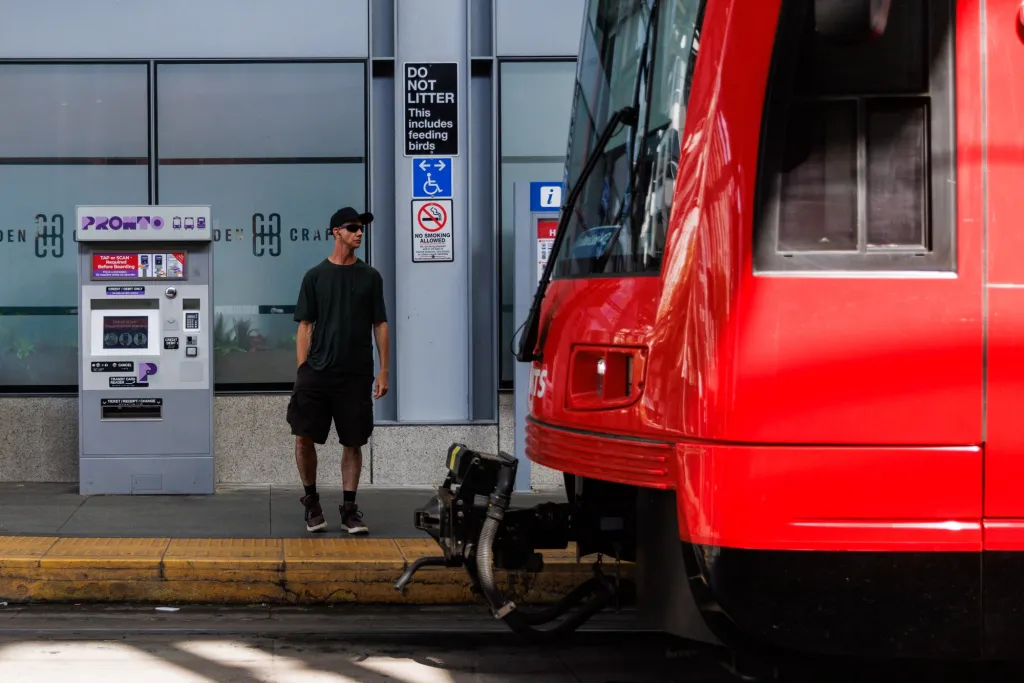
Local transit fares will jump 30% under a proposal approved Friday by regional officials, but fare freezes for low-income riders will diminish the budget relief that has been the primary goal of the increases.
Read more Renowned Salk Institute scientist resigns amid sexual misconduct investigation
The fare freezes, approved last month by the Metropolitan Transit System and OK’d in a last-minute move Thursday by the North County Transit District, will reduce new revenue from the hikes by more than half.
MTS is projected to pull in $4.6 million a year in new revenue from the hikes — far less than the $14 million projected before the freezes were approved. For NCTD, the difference is $600,000 versus $1.22 million.
San Diego Councilmember Sean Elo-Rivera, a member of the MTS board, said the larger-than-anticipated number of riders eligible for fare freezes is proof MTS was going to solve its financial problems on the backs of poor people before the freezes were approved.
One MTS official said the freezes may end up requiring some version of the kind of service cuts that the transit agency had tried to avoid by choosing unusually steep fare increases instead.
The fare hikes, which begin taking effect Oct. 1, were approved 7-1 on Friday by the transportation committee of the county’s regional planning agency, the San Diego Association of Governments.
The hikes are scheduled for final approval next Friday by the full SANDAG board. But that will be only a thumbs-up or thumbs-down vote, with no opportunity for the board to make changes or amendments.
It’s the first fare increase in 17 years for monthly passes on local buses, the San Diego Trolley and the Sprinter. The cost of a pass will jump from $72 to $85 on Oct. 1 and then to $95 in fall 2027 — up nearly 31%.
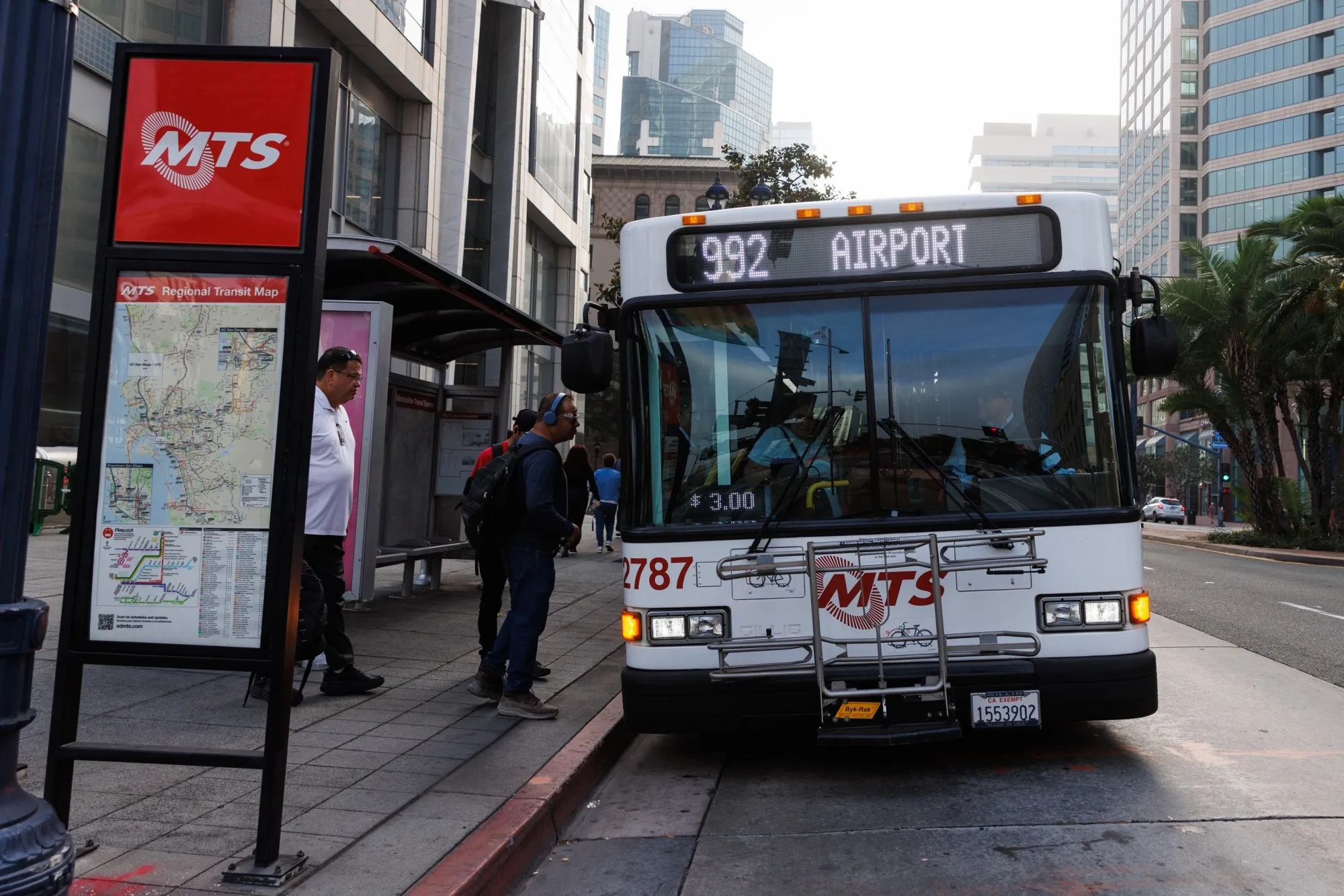
And it will be the first increase in seven years for one-way fares, which will rise from $2.50 to $3 on Oct. 1 and then to $3.25 in fall 2027. That’s a 30% hike, far steeper than the last increase in 2019 from $2.25 to $2.50.
NCTD is also eliminating zoned fares on the Coaster commuter rail line. Those fares now charge passengers more for longer trips. Instead, all riders — no matter how far they’re traveling — will start paying the same one-way fare, which will rise from $6.50 to $7 in fall 2027.
In addition, a special monthly pass that can be used only on Sprinter trains and Breeze buses in North County will rise in price from $59 to $65 this fall and to $70 in fall 2027.
The hikes for one-way fares put the San Diego region at a higher price point than comparable transit agencies.
One-way fares are currently $3 in Dallas and San Francisco, $2.80 in Portland, Ore., $2.75 in Denver and $2.50 in Sacramento and Salt Lake City.
For both MTS and NCTD, the discounts for seniors, disabled passengers and those on Medicare will be phased in. One-way fares will climb from $1.25 to $1.50 this fall and will not rise in 2027. Monthly passes rise from $23 to $28 this fall and then to $30 in fall 2027.
Elo-Rivera, who also serves on SANDAG’s transportation committee, said Friday that he voted in favor of the hikes only because they have been dramatically softened by the freezes.
Under the freeze policy, the hikes won’t apply to anyone enrolled in government assistance programs CalFresh, CalWORKs or Medi-Cal.
MTS officials initially expected the freezes to apply only to a small number of riders because the agency has so many other programs for low-income riders — but a more thorough analysis found they will apply to 34,000.
Elo-Rivera said forcing poor people to pay more for transit is a societal choice that he doesn’t support.
“We can tax the rich and fund transit, we can tax the wealthiest corporations and fund transit,” he said. “It doesn’t have to be on the backs of our lowest-income riders.”
San Diego Councilmember Vivian Moreno, another member of SANDAG’s transportation committee, cast the lone “no” vote Friday.
Read more Photos: Opening Day hats
She criticized rider surveys about the proposed fare hike that have been conducted by MTS, NCTD and SANDAG since the process of considering a fare increase began 18 months ago.
Moreno said the surveys didn’t do enough to get feedback from low-income riders.
She also echoed complaints from community leaders about transit officials continually contending that residents who attended open houses and completed surveys said they’d prefer fare hikes over service cuts.
Many residents say the officials handling those workshops and surveys forced them into what they now call a false choice. If you need transit to get to work, you would obviously choose a fare hike over a service cut, they say, making it less meaningful that a majority of people opted for fare increases.
Several speakers during Friday’s public hearing made that point.
“This process did not accurately present the range of possible approaches,” said Angel Pippins-Lopez of the City Heights Community Development Corporation.
Guadalupe Rojas of the Mid-City Community Action Network said officials need to understand how vital transit is to some residents.
“For vulnerable riders like those in City Heights, transit is not a commodity or a convenient alternative — it’s a lifeline,” she said.
But Aria Grossman, policy manager at pro-transit group Circulate Planning and Policy, said local transit agencies are choosing the best of the unpleasant options they face.
“It’s nobody’s first choice to make taking the trolley or the Coaster more expensive, but we have to do what’s necessary to keep the system running with high frequency and reliability,” Grossman said. “The only way to close the gap while maintaining as much service as possible is to raise fares.”
About the surveys, SANDAG’s Brian Lane said he understands why people have been critical of them.
“I know my friends in the community don’t think our survey was perfect,” said Lane, a transportation planner. “This is a hard topic to talk about.”
Solana Beach City Councilmember David Zito, chair of SANDAG’s transportation committee, said he believes fare hikes must be part of the solution for the multimillion-dollar deficits faced by both MTS and NCTD.
“We have a huge fiscal challenge ahead of us, and this is one of the ways to potentially address that,” Zito said.
Solana Beach City Councilmember Jewel Edson said the NCTD board chose to adopt its own fare freeze this week under duress after MTS approved a freeze last month in what she called “an 11th-hour surprise.”
Edson said her board strongly supports low-income exemptions but would have preferred a more comprehensive study of their impact before being essentially forced to approve them.
“We strongly believe in a low-income fare program; we just want to make sure it’s right,” she said.
The NCTD board, Edson said, chose to adopt the same freeze as MTS in a spirit of regional coordination and collaboration.
Mark Olson, an MTS communications official, said the financial impact of the freeze damages the agency’s plan to close huge deficits between now and 2030.
“We’re going to need to find about $15 million a year over the next four years,” Olson said of how the freeze impacts MTS finances. “We just don’t know where we’re going to get that money from. Certainly, service cuts and service changes on some core services may need to happen.”
Read more Pet of the week: Shepherd mix likes long walks and cuddles