






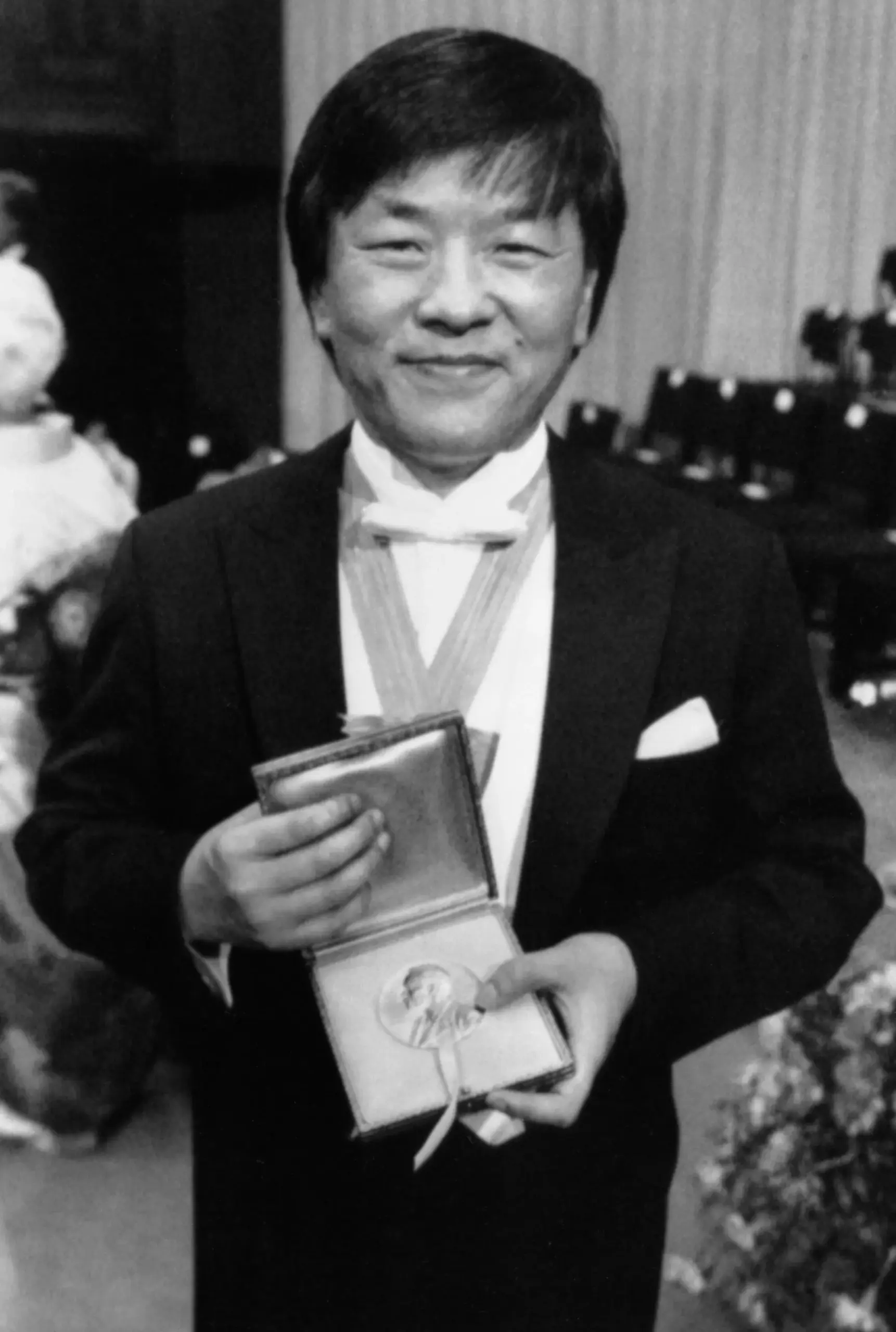
Susumu Tonegawa, whose early years of research at UC San Diego and the Salk Institute in La Jolla contributed to subsequent insights that earned him the 1987 Nobel Prize in Physiology or Medicine, died on July 11 in San Mateo. He was 86.
Read more Equipment failure leaves more than 3,000 customers without power
His death was announced by the Massachusetts Institute of Technology, his home for near 50 years. The institute did not cite a cause for his passing.
Tonegawa was a molecular biologist whose name wasn’t widely known outside the scientific community. But his work has improved public health globally. The Nobel Prize Committee said Tonegawa revealed how a limited number of genes can shuffle and rearrange to create millions of unique antibodies.
These insights have helped scientists search for ways to treat everything from cancer and autoimmune diseases to schizophrenia, researchers say.
He was the first native of Japan to win the Nobel in Physiology and Medicine. This medal is often awarded to two or three scientists. But Tonegawa won it alone.
Tonegawa’s earliest significant research occurred at Japan’s Kyoto University, where he studied chemistry. He grew tired of that subject and moved to UC San Diego, where David Bonner, one of the nation’s pre-eminent scientists, was turning the biology department into powerhouse.
Read more Airstrikes have paused and talks are pressing forward. But can the US and Iran take the off-ramp?
The young Tonegawa earned a doctorate in molecular biology in 1968. He then became a researcher at the newly-founded Salk Institute, directly across Torrey Pines Road from UCSD. Tonegawa was then named a postdoctoral fellow under Renato Dulbecco, who soon became famous. He shared the 1975 Nobel in Physiology or Medicine.
Tonegawa’s heady years at MIT didn’t wash away his memory of UCSD.
“I was really impressed by the horizontal structure among the faculty members and the relationship between faculty members and their students or postdocs,” he told the Lasker Foundation in an interview in 2017.
“This kind of environment maximizes the expression of scientific talent of younger faculty, postdocs, and students.”
MIT said Tonegawa is survived by his wife, Mayumi Tonegawa, his two children, Hidde Tonegawa and Hanna Tonegawa, and two grandchildren.
Read more Hurricane Genevieve likely to send 8 to 11 foot waves to San Diego County beaches