



When he was 15 years old, Jeff Nevin was asked to join a mariachi in his native Tucson, which at the time was home to the largest mariachi conference in the world. Started in 1982, the Tucson International Mariachi Conference is the longest-running mariachi festival on the planet today.
After high school, he went on to pursue music — predominantly of the classical variety — and earned degrees at the University of Illinois, Arizona State University and, eventually, UC San Diego, where he received his doctorate in music theory and composition in 1998.
“They didn’t have mariachi programs,” he recalled. “I just studied classical music, but the whole time, I continued playing mariachi on the side.”
So perhaps it was fate that after earning his doctorate at UCSD, mariachi would change the trajectory of his career. Serafin Zasueta, then the president at Southwestern College in Chula Vista, approached him and asked if he could create a college degree program in mariachi “just like the ones in Texas,” Nevin recalled.
“I had to correct him to say that there were no mariachi college degree programs in Texas or anywhere,” Nevin said. “They had mariachi classes and programs, but no degrees.”
First in the world
In 2004, Southwestern College became the first college in the world to offer a music degree program with a specialization in mariachi.
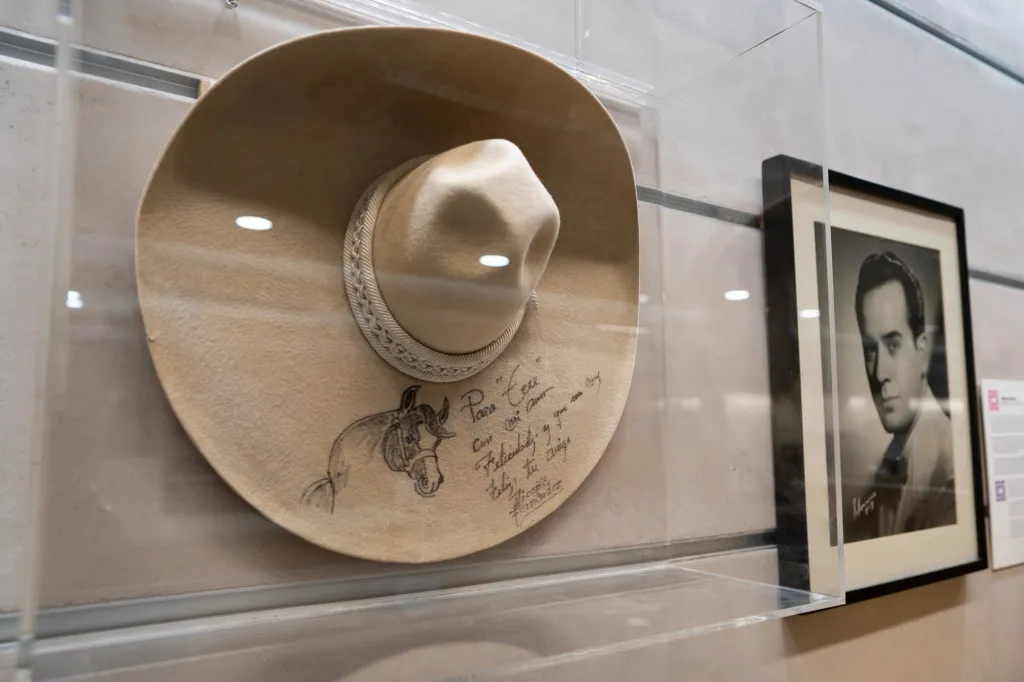
In 2022, the college hit another milestone when it opened the Ed Marsh Mariachi Museum inside the Southwestern College library, showcasing hundreds of mariachi-centric artifacts — ranging from original outfits and manuscripts to books and instruments.
The nonprofit museum — run under the auspices of the Mariachi Scholarship Foundation, of which Nevin has been president since 2013 — was made possible largely through the generosity of Marsh, a lifelong San Diegan with a passion for mariachi. Along with seed money, he donated 30 bronze busts of famous mariachi musicians, and that donation launched what would eventually become the Ed Marsh Mariachi Museum.
All in all, the museum’s collection numbers in the thousands, collected by Nevin over the years or donated by community members and families of well-known mariachi musicians and singers from around the world. Most of the artifacts are in storage because over the past couple of years, the original space in the library has shrunk, going from a portion of the expansive second floor to a smaller footprint along the perimeter of the first floor.
Now, that footprint is gone altogether. Late last month, the museum lost its space at the library after a three-year agreement finally ended, leaving the museum without a home. The library is looking to use the space for other exhibits, with the next one possibly tied to the college’s 65th anniversary, which is this year.
So in late June, Nevin, with the help of professional movers, his wife and his students, dismantled the exhibit and carefully packaged everything, from intricately embroidered dresses to unique musical instruments. Every piece is now in a storage facility five minutes away from the college. They’ll stay there until Nevin can find a new home — a permanent one, he hopes — and reopen the museum.
In a perfect world, he said, the collection’s new home would be located in a part of town with high foot traffic. His dream would be to land in Balboa Park, Liberty Station, Barrio Logan or Chula Vista, preferably at a venue that could hold the museum’s vast collection as well as accommodate performances. He’s visited a location in Barrio Logan but has only reached out via email to leaders in Balboa Park and Liberty Station, since he doesn’t have any connections there.
The library, he said, has been gracious, extending his agreement by a year, giving him time to prepare for the closure. The reality of it, though, didn’t really begin to sink in until mid-June when the prospect of taking everything down and putting things in boxes loomed around the corner.
Many items in the one-of-a-kind collection — with an appraised value of about $3.4 million — needed to be handled with the utmost care. There’s a rare Mexican dictionary from 1895 with one of the first references to the word “mariache” (with an “e”) defined as, “Fandango (a party), dance of people from the pueblo.”
An outfit worn by Jorge Negrete — largely considered Mexico’s biggest movie star from the Golden Age of cinema (often referenced as “the Gene Autry or John Wayne of Mexico”) — is one of the collection’s most treasured pieces. Elsewhere, there are dresses, movie posters, bronze statues, musical instruments, historical photographs and manuscripts, some devoted to women mariachi pioneers like Rebecca Gonzales and Laura Sobrino.
A cultural connection
When asked why mariachi music, especially within the context of education, matters so much, Nevin gets emotional. When the Mariachi Scholarship Foundation was first started in 1996 by Bob Griego, then the president of the Sweetwater Union High School board of directors, his main goal was to use music as way to connect to students’ families.
Read more Record campaign cash was spent in San Diego’s City Council primaries. Did it pay off?
“Many of the schools were schools where the students were 90% Mexican,” said Nevin, a full-time music professor who’s been teaching at Southwestern for nearly 30 years. “The parents don’t come to parent-teacher night. They don’t come and talk to the biology teacher about their kids’ homework. But if you have the mariachi playing on parent-teacher night, that changes the conversation. They realize that the school appreciates their culture. There’s a connection.”
Nurturing that cultural connection — and perhaps cultural preservation, too — is what drives Nevin these days. Professionally, he directs Symphonic Mariachi Champaña Nevin, highly regarded in the world as one of the most visible and respected ensembles devoted to classical mariachi music. As a teacher, he has overseen Southwestern College’s renowned student ensemble, Mariachi Garibaldi.
The Mariachi Scholarship Foundation, which is hosting its annual Mariachi Summit on Friday, last month awarded $52,000 in scholarships, the most it has ever doled out. Past recipients have moved on to pursue their degrees in music at universities across the nation, including Harvard and Stanford, and former students are now playing in mariachi bands across the nation, from Seattle to Las Vegas to Phoenix.
Nevin wants to do everything he can, he said, to preserve the art of mariachi music — in the classroom, in concert halls and in a museum. He’s hopeful a new home can be found, but he is cautiously optimistic, too, about the future of the museum.
Up until now, the museum has operated without any expenses, since it was housed inside the Southwestern College library. A new location in, say, Balboa Park or Arts District Liberty Station would require Nevin to have someone at the museum during operating hours.
A stand-alone museum, he said, will present a new wrinkle: “I’ll have to hire someone to staff the museum. We could find volunteers, but that’s a whole other can of worms, too.”
Former state senator Ben Hueso is helping Nevin scout locations and said this “creates an opportunity to find a more permanent location and one that is more accessible to the public.”
“I was extremely impressed by his exhibit,” he said. “It’s a one-of-a-kind museum that deserves to be seen by more people. It deserves a location that can draw people from all over. I have appreciated mariachi all my life, but I was amazed at how I learned so many new things from the museum.”
Tom Felkner, interim executive director of the San Diego Museum Council, said he hopes the Mariachi Museum gets a second chance.
“Libraries like (the one) at Southwestern College play an important role in helping nurture emerging museums and exhibitions,” Felkner said. “That’s often a first step in realizing something bigger. What I’d love to see is a permanent home for the Mariachi Museum. That’s because of its importance to our region’s cultural identity and heritage. It would add a vibrant dimension to our museum community while giving voice to an important musical genre.”
Whatever comes next, Nevin is up to the challenge. There’s a lot at stake after all. For now, spreading the gospel of mariachi will continue through performances, but he hopes the museum gets to start its next chapter.
“There’s nothing like this in the world,” Nevin said. “There are mariachi museums, yes, but one that’s this comprehensive — with timelines and historical background that track mariachi from pre-Columbian times to today — it just doesn’t exist.”
2026 San Diego International Mariachi Summit
Legado del Mariachi, Symphonic Mariachi Champaña Nevin, Mariachi Plata del College of Southern Nevada, Herencia Mariachi Academy and Ballet Folklórico Internacional
7:30 p.m. Friday, July 17
Balboa Theatre, 868 Fourth Ave., downtown San Diego
$35 to $100
MariachiSD.org
Three other events are scheduled at Southwestern College Performing Arts Center: San Diego Mariachi Showcase at 7 p.m. July 14, College Mariachi Showcase at 7 p.m. July 15 and Student Participant Showcase at 7 p.m. July 16. For more information, go to MariachiSD.org
Read more Michael Smolens: Apartment surge levels off rents, but “affordability” remains elusive