




Dr. A. Brent Eastman’s legacy can be summed up in two sentences: “In 1982, the rate of preventable trauma deaths in San Diego County was 21 percent. Today, the figure is less than one percent.”
Those words live atop the website for the San Diego County Trauma System, a revolutionary reimagining of care delivery that Eastman, working with Dr. Richard Virgilio, a colleague at Scripps Health, co-founded in 1984.
These young surgeons followed the pioneering path blazed by Dr. R. Adams Cowley, the Maryland surgeon considered the father of modern trauma medicine. Eastman and his colleagues were among the first to convince their local community that the most severe injuries — caused by traumatic events from car accidents to human-on-human violence — should be treated in a few specialized centers, with round-the-clock trauma surgeon staffing, rather than simply transported to the nearest hospital, as was the practice at the time.
It was an ambitious effort, not only for getting the local hospital association to participate, but also for launching a formal study of the results. Their paper, “The impact of a regionalized trauma system on trauma care in San Diego County,” published in the November 1989 edition of the Annals of Emergency Medicine, stated that preventable traumatic deaths fell from 11.4% in 1979 to just 1% in 1986, two years after the new trauma system began in ’84.
Subsequent research led to the 21% in 1982 estimate that is now widely cited. The findings swept the nation, and eventually the world, inspiring communities to follow San Diego’s exmple and set up trauma systems of their own. Eastman found himself not only pursuing a career as a trauma surgeon at Scripps Memorial Hospital La Jolla, but also traveling to preach the gospel of organized trauma treatment worldwide.
Eastman died on Wednesday, June 24, after a multi-year battle with a rare form of Parkinson’s disease. He was 86.
His death prompted Chris Van Gorder, chief executive officer of Scripps Health, to send an all-hands staff memo, noting the passing of a local legend whom he personally came to call a friend. Eastman was known, the executive said, for being the last to speak at meetings and for his efforts to make sure that no one forgot what is supposed to drive every decision in health care.
“Many of you will remember he was the catalyst for starting every systemwide management meeting with a patient story, so we all would be reminded of our mission before business,” Van Gorder wrote.
In addition to establishing leadership structures at Scripps around quality and physician leadership, Eastman also worked with Van Gorder, a former police officer, to build the Scripps Medical Response Team.
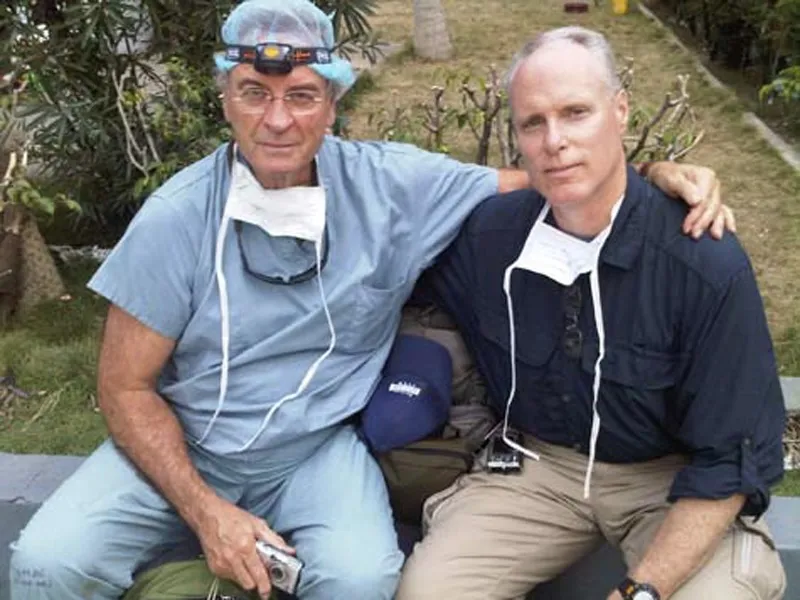
“We traveled together on the team’s first mission after Hurricane Katrina, and again to Haiti to provide medical care after that country’s earthquake,” Van Gorder wrote. “One of my biggest honors was assisting Dr. Eastman in a Haiti surgery when time of care was critical; it was a privilege to see him work.”
This accomplished surgeon would certainly have been forgiven for having an outsized ego. But those who worked with him insist that he was as humble as they come.
Dr. Jay Doucet, former trauma chief at UC San Diego Health, said that Eastman was accessible to younger generations.
“To me, he was a surgeon-leader of the highest stature, but he was always approachable, kind, and modest — even with someone who was early in their career like me,” Doucet said. “He consistently put patients and systems of care first, without ego or fanfare.
Read more Nursing gains ‘professional’ label for student loans after judge’s ruling, but theology now dropped
“His legacy is something we see every day in San Diego, the life-saving strengths of America’s finest trauma system, one that he helped build.”
Eastman’s contributions were ultimately recognized at the highest level when his peers named him the 93rd president of the American College of Surgeons in 2012.
That appointment coincided with his retirement from Scripps and launched an 18-month period of worldwide travel, visiting and speaking at college training programs across the globe. This period, noted his wife, Dr. Sarita Eastman, was a spectacularly active way to conclude a career.
“We traveled absolutely everywhere, and by the time I finished counting up the miles, we had made it 80% of the way to the moon,” Sarita Eastman said.
She and her husband met in medical school at UC San Francisco, the pair of newly minted doctors getting married in 1970. They decided to head south where Sarita’s parents, both doctors, had active practices in pediatrics and surgery.
She joined her father’s practice while her husband teamed up with her mother, Dr. Anita Figueredo, who is credited as San Diego’s first female surgeon, practicing at Scripps La Jolla. Eastman noted, in recognition of his colleague and mother-in-law’s passing in 2010, that she was known as a good friend of Mother Teresa, helping to support worldwide philanthropic efforts, especially in her native Costa Rica.
Her husband, Eastman said, loved to bring up this unusual start to his career.
“He used to tell that story all over the world,” she said. “When we traveled, people couldn’t believe that he practiced with his mother-in-law.”
As news of his death spread among the close-knit trauma community, stories of Brent Eastman’s equanimity flooded in. It was in his nature, Sarita said, to focus on the accomplishments of others rather than his own.
“I never met another person who was a more natural leader,” she said. “He never angered anyone in the room, never took offense, treated everybody with enormous respect, so that people didn’t feel threatened.”
Dr. Brent Eastman is survived by three children, Roan, Ian and Alexandra Eastman, and five grandchildren, all residents of Jackson Hole, Wyoming, where the couple lived in retirement.
A memorial service is scheduled for Sept. 19 in Jackson Hole with plans underway to live-stream the event to friends and family.
Read more San Diego-based Marine lost at sea identified as 21-year-old lance corporal