






The horse with no name now has a song.
For years, a mystery wild horse who roamed the desert sagebrush of California’s most remote mountain range had no name.
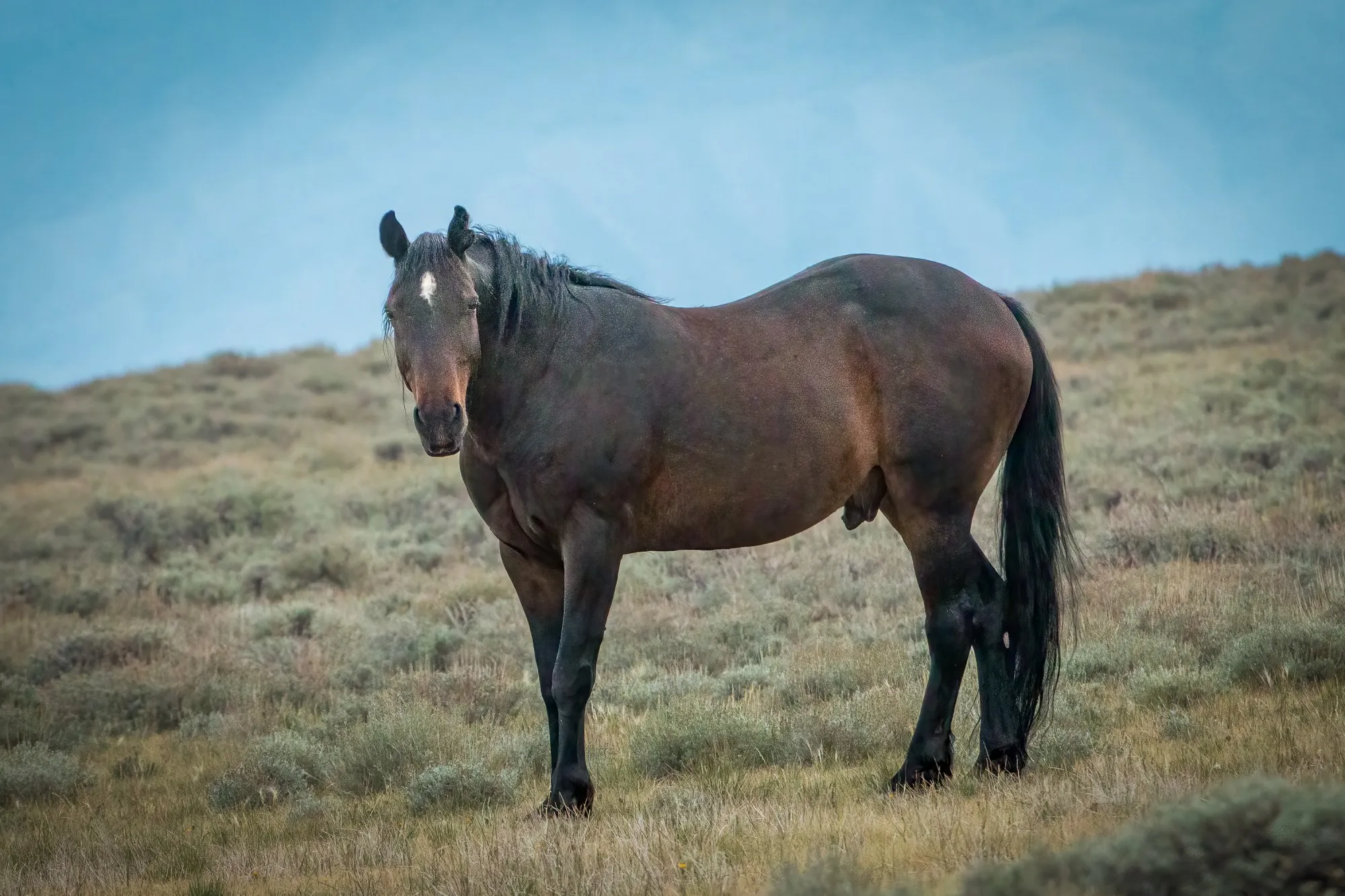
But as the legend of this lone mustang grew through the broad reach of social media, he became known as Campito because his rare sightings were near the 12,000-foot peak with that name in California’s White Mountains, a geological echo of the more formidable Sierra Nevada Range to the west of the Owens Valley.
In the past five years, I was able to piece together a more complete story of Campito to share with readers.
Local songwriter Dave Ish was fascinated by the wild horse story and reached out to share a song he wrote about him.
Ish, who is most known for his tropical/island-theme music, produced “Campito,” a beautiful ballad now available free on Spotify or on his website, dmusish.com.
“The story of Campito really grabbed me, so I wrote a song and I plan to make a YouTube video with AI-generated images, and I will overlay the lyrics on it,” he said.
More about the story of Campito.
I first encountered Campito in the late 1990s while hiking at nearly 12,000 feet in the White Mountain Wilderness. In the distance I noticed a horse grazing near a meager spring.
Over the years I saw him several more times, often just as a far away, lonely speck. He would keep his distance except for one time when he allowed me to get close enough for photos.
A few times he was with another horse, but most often, alone in this vast wilderness.
I was always curious about the horse but never found anyone who had answers.
The White Mountains hug the Nevada border and are a unique place visited by only a fraction of the crowds that swarm to the Eastern Sierra.
This is true wilderness, harsh and lonely, with barren, lofty peaks that push above the timber line. Winters here are as bitter and intense as the Arctic tundra with howling winds, snow and below zero temperatures.
It’s a windswept and moon-like landscape best known as home to bristlecone pines, the oldest living things on earth.
Five years ago, I first shared the story of my encounters with this elusive horse, marked by a flowing black mane and a white blaze on his forehead.
In 2021, I noticed a social media post from someone asking for information about the White Mountain Wild Horse.
Don Chambers, a Bishop resident and chairman of the Eastern Sierra Interpretive Association, responded and shared a fascinating story about Campito.
Read more Building a community, one comic book at a time
“From his freeze brand, we know that he was born in 1991 and came from the Buckhorn Wild Horse Management Area,” Chambers said. Freeze brands are applied on the neck with a frozen branding iron instead of the traditional fire brand.
Records show the horse was captured in 1995 and adopted by someone near Susanville in 1996, but there is no information after that.
There were rumors that Campito for a time was part of string of High Sierra pack animals but escaped during a wilderness pack trip.
“There are stories and legends about Campito, from how he made his way to the Whites to where he goes in winter. I’ve not been able to confirm any of these, and sometimes legends should remain,” Chambers said.
That story led to meeting Jim Summers, an Oceanside resident who had a more personal connection with Campito during White Mountain visits over a period of 20 years.
“Initially he would move parallel to us, put on a little show by snorting,” Summers said.
On one trip, Campito was offered an apple.
“I held it out, but he would not come in close to get it, so I eventually rolled it to him,” Summers said.
Over the years, Summers would bring apples and carrots when visiting the White Mountains, and he feels the horse would recognize him.
“There were occasions for him to really put on a show. He’d follow me around begging for the apple in my pack that he knew had his name on it,” Summers said. “I called out to him by name, and he recognized my voice after years of leaving him apples.”
In the 2021 story, I wrote, “The lifespan of wild horses is generally 25 to 30 years. Campito’s summers in the high country are numbered. Soon, a winter will pass, and his hoof prints will not return to the sage flats of the White Mountains. The Legend of Campito will grow, and I will be left with the memory that I’ve been through the desert with a horse named Campito.”
Just a year later, news came that the long shadows of mortality had swept across the lonely sagebrush flats of the White Mountains, claiming the life of Campito.
His remains had been found by a hiker and confirmed by a Forest Service biologist.
Campito is now the stuff of legends, and Ish has added to that with his song.
The lovely ballad with a beautiful melody softly says, “His home was in the mountains; clear water, sky pristine. They knew of his existence, but his face was rarely seen. He broke free from saddle and reins from deep in the Sierra and came to the little field, Campito.”
Long live the legend of Campito, the Wild Horse of the White Mountains.
Cowan is a freelance columnist. Email [email protected] or visit erniecowan.substack.com.