







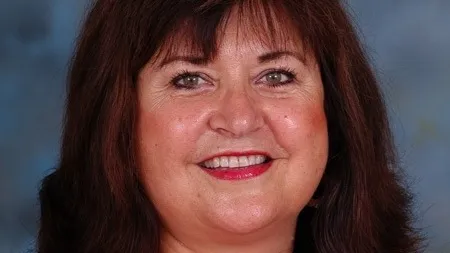
Alicia Munoz, 73, an incumbent member of the San Diego County Board of Education, is running for re-election to her District 3 seat.
Read more Q&A: Meet Jamal Kanj, candidate for San Diego County Board of Education in District 3
Munoz, who lives in the San Carlos neighborhood of San Diego, is a retired dean and professor of English as a second language at Cuyamaca College.
The San Diego Union-Tribune emailed a series of questions to Munoz and other candidates to help inform voters about their positions, priorities and plans if elected.
Munoz said she did not use AI in responding to the Union-Tribune’s questions.
1.) Why are you running, and what makes you the best candidate? (150 words max)
I am running for re-election because I believe that the County Office of Education will benefit from the profound understanding I have of the functions of the County Office of Education which are distinct from those of local school districts, particularly during these shifting and challenging times. The stability and experience which comes from a proven track record is of great value. The current board works well together in a respectful and professional manner, something that is acknowledged and recognized by both staff and the communities we serve.
2.) What are the top 3 issues facing schools and students in San Diego County? (150 words max)
1) The loss of federal funding for special programs. We are witnessing a significant increase in the number of children with serious emotional needs because of a prevailing fear and insecurity in their lives, while funding to help address students’ emotional wellbeing has been reduced.
2) Immigration crackdowns and the serious impact these have had on families and children.
3) COVID-related impacts to learning because of the shutdowns and reliance on online education. Test scores have yet to recover to pre-COVID levels, let alone being where they should be, indicating troubling learning loss.
3.) What are the first 3 things you would do in office if elected? (150 words max)
One of my top priorities is to continue providing guidance and support to the superintendent of county schools as she leads the Office of Education in offering technical assistance to local school districts.
The County Board of Education is distinct from local governing school boards in that the board has only one employee, which is the superintendent, and as a board, it is not appropriate to become involved in day-to-day matters nor to micromanage the superintendent as she fulfills her duties. The county board establishes goals and priorities every year on which the superintendent is evaluated.
A special concern is supporting the County Office of Education as it meets the needs of the most vulnerable students in our county — homeless students, foster youth, incarcerated youth or youth caught in the juvenile system — and advocating with the Legislature and other interested parties to ensure stable funding so students can continue with their education.
4.) The county office’s core goal is to “reduce poverty and increase belongingness through public education.” In addition to its current plans, what more would you do to achieve this?
As a public elected official, my responsibility would be to advocate for education in general and the county office in particular with legislators and community agencies to protect funding and ensure that it has continued stable funding, supporting mechanisms that put students first. Any decision that we make, the fundamental question that needs to be asked is, what is in the best interests of our students? What can we do to foster a sense of belonging? And what is our collective responsibility in accomplishing it?
5.) What do you think is driving student absenteeism and declining enrollment across San Diego County, and what would you do to improve both?
Student absenteeism can be attributed to the profound impact the pandemic had on teaching and learning and the dubious efficacy of online education. Nothing can replace the importance personal contact between teachers and students and the benefits of social interaction between students. In addition, the recent immigration crackdown has created a climate of fear among students and their families, which has led to parents keeping their children at home as a form of protection. School districts are doing a wonderful job and creating a climate of safe learning where students feel valued and protected while at school, and I would support administrators’ efforts to ensure this. Focusing on learning loss through tutoring and enrichment efforts as is currently taking place should be supported and enhanced.
Declining enrollment is not an exclusive problem affecting San Diego County, but the result of larger social and demographic shifts that are impacting both state and national population trends. Demographic experts believe the enrollment decline will continue through 2035. Until then, educators should continue advocating for a change in the current funding formula that is based on daily attendance to enrollment numbers similar to the way community colleges are funded. This will reduce the funding instability that school districts face.
Read more Q&A: Meet Anthony Rendon, candidate for California state superintendent of public instruction
6.) In light of changing federal policy, how can the county office better serve vulnerable students, including those whose families have mixed immigration status and those with disabilities?
The county office is committed to protecting students’ learning environment despite the difficult challenges everyone is encountering with immigration policy. Administrators, teachers and staff work diligently to communicate with students and their families that student safety is a top priority. While respecting the law is important, we can work with local and state authorities to make sure that arbitrary actions don’t take place that threaten the children we serve.
Federal funding cuts have affected the county office’s ability to serve students in other programs, such as migrant education and students with special needs. Administrators are working hard to review the budgets and staffing to minimize adverse effects.
7.) Because of the unique student populations it serves, the San Diego County Office of Education is often at the forefront of tackling issues that districts around the county face — including ones exacerbated by current challenges like the region’s affordability crisis and a federal immigration crackdown. What unique perspective and plans would you bring to these efforts?
Last year, the county board approved a strategic plan that will guide everything the Office of Education embarks on through 2030, which is known as our North Star. This North Star is visionary in identifying schools as the heart of our communities, which brings together educators, families, community organizations and public agencies with the common vision of student success and in recognizing that this feat can only be accomplished through collective responsibility for its outcome.
By creating the conditions through education that lead to transformational change, vulnerable students will thrive. Statistics show that students without a high school diploma or equivalent are 346% more likely to experience homelessness, demonstrating the power of education to transform lives. For this to happen, students need to feel safe, valued and seen while they’re in school, and constantly reminded that they have the skills and abilities to succeed, notwithstanding the adversities they have encountered in their life.
8.) Career and technical education is particularly important to students served by the San Diego County Office of Education. How will you ensure they are both prepared for life after high school and also equipped to pursue college later in life if they wish?
The County Office offers the Linda Vista Center for Innovation, which focuses on emerging career and technical education trends to offer students hands-on opportunities to explore. The center has developed partnerships with SDG&E, the San Diego County Water Authority and the San Diego County Optometrists Society, among others.
In addition to exploring possible career fields, the County Office encourages students to participate in dual-enrollment programs with local community colleges so they can complete college credits while still in high school while making sure they finish A-G requirements for four-year universities. For vulnerable students who are enrolled in the juvenile court and community schools programs, the emphasis is always on completing their high school diploma.
9.) As a member of the county board, you would hear appeals concerning student expulsions and charter school petitions. What principles would guide your approach to this responsibility?
An important function of the County Board of Education is to serve as an appellate body for redistricting and expulsion petitions. To conduct a fair and successful appeal hearing, the county board needs to follow board policies and education code guidelines in reviewing all the evidence. Office of Education staff work with school district staff and the family involved to gather the evidence needed to reach a decision. At a special public hearing, the board listens to both sides carefully. Once both sides have presented their case, the board adjourns to discuss the appeal and consider the legal guidelines and what is permitted according to education code. It’s important to emphasize that the student’s interests and well-being are at the forefront of any consideration.
10.) What degree of oversight do you think the county should have of charter schools, both those that are authorized by the county and those that are authorized by districts? Should anything change about how the county handles charter school approvals or oversight?
Recent charter school law has clarified the role county boards have in providing oversight to charter schools that are authorized by the county office, or in considering factors on whether the appeal of charter schools authorized by local school districts is upheld or denied.
Thorough and competent oversight is essential to ensure charter schools succeed in their mission of serving students, and this includes reviewing fiscal solvency, enrollment patterns, student success data, governance matters and instructional programs provided. The charter school office staff within the Office of Education meets with charter school personnel on a regular basis, providing guidance and technical assistance as needed.
When a charter school comes before the board for a renewal or on an appeal, the board follows strict legal guidelines in fulfilling their duties as an appellate body. For example, student progress as recorded on the State Dashboard will show whether a charter school is high-, mid- or low-performing. State guidelines stipulate that charter schools that are high- or mid-performing should be approved. There are also guidelines on how to measure enrollment patterns and governance.
County board members visit charter schools as they’re coming up for renewal to get a first-hand view of the services they are providing. The important part is to always be fair and objective.
Read more Q&A: Meet Al Muratsuchi, candidate for California state superintendent of public instruction