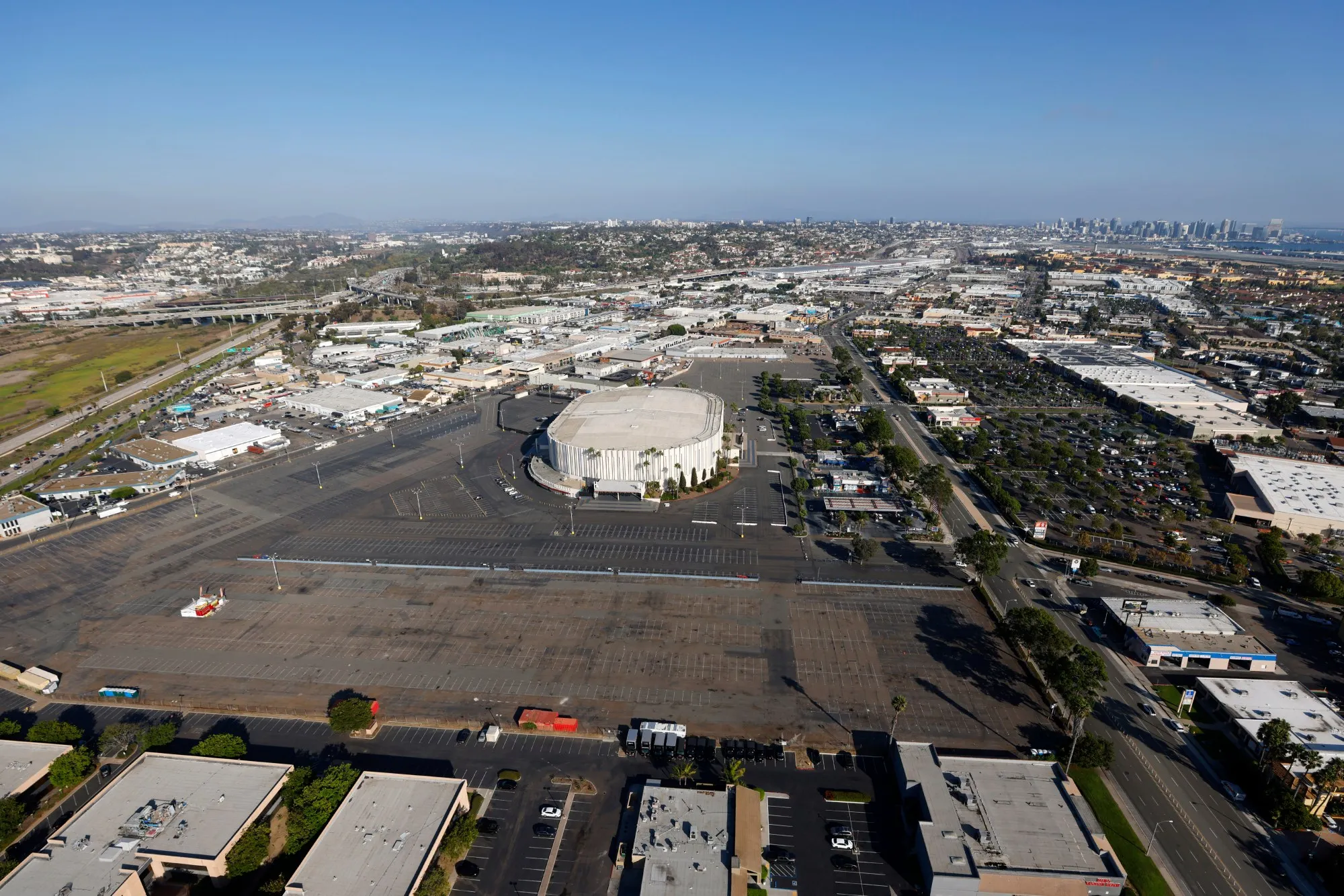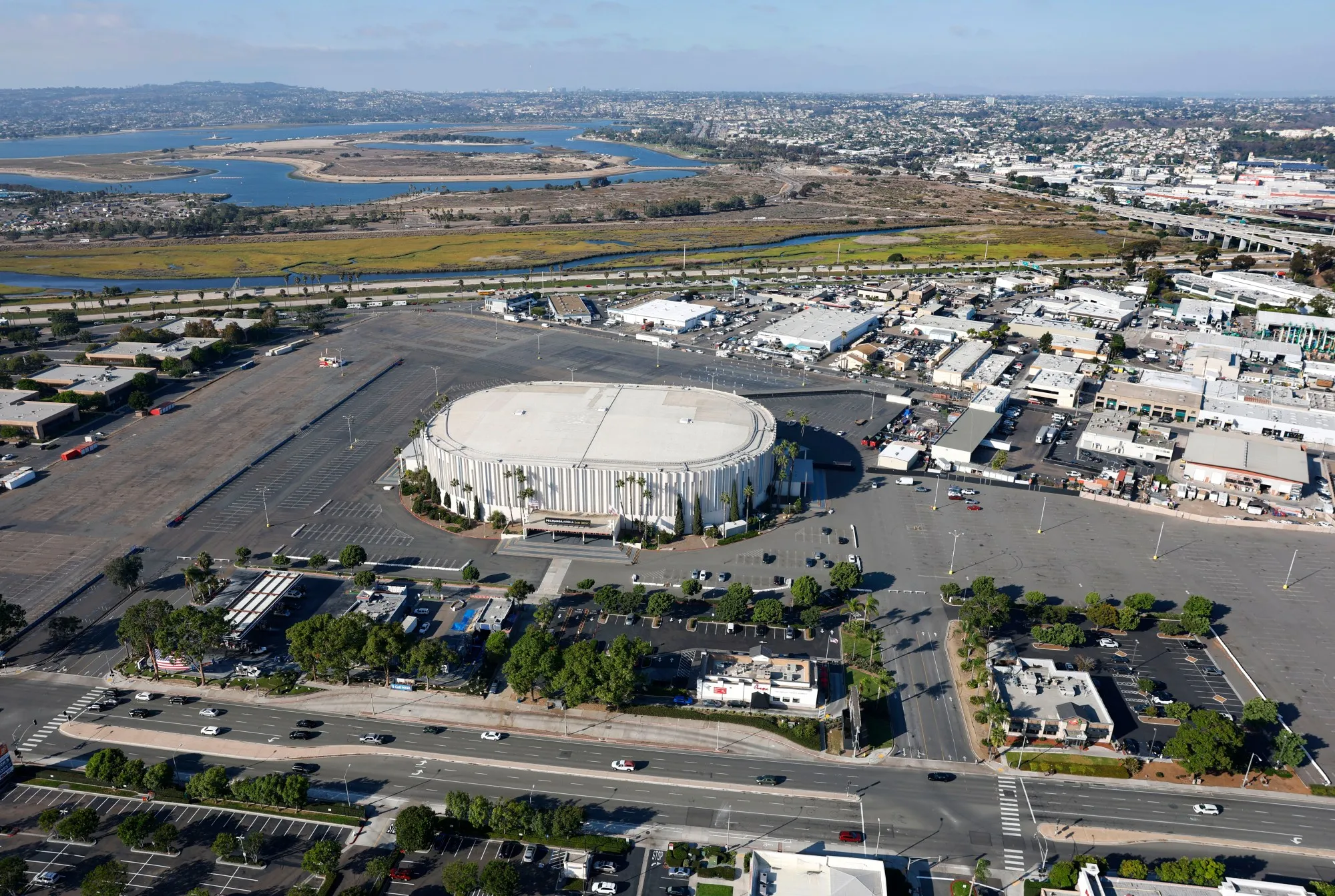






San Diego leaders have signaled a desire to swap the city’s expansive sports arena property for infrastructure improvements, an all-new entertainment venue and thousands of low-income apartments. But they are insisting on a consequential change to the terms of the proposed real estate transaction.
Read more Incumbent Patel showing advantages over Villanueva in North County’s 76th Assembly race
Friday, San Diego’s four-person Land Use & Housing Committee voted unanimously to advance a 105-year lease and redevelopment deal for the 48.5-acre property with master developer Midway Rising, LLC to the full council for approval.
The committee members also moved forward a resolution of intention to form an enhanced infrastructure financing district to reimburse the developer for hundreds of millions of dollars in on- and off-site infrastructure work.
“This is how we deliver the certainty of housing, especially affordable housing, the significant and front-loaded public infrastructure investments, the many local jobs that we’re going to create, and ultimately the retention of what is publicly owned land. It’s crucial that we revitalize the Midway area,” Councilmember and Committee Chair Kent Lee said. “Let me just be clear that the alternative that some have proposed, which is to do nothing … that is an alternative that none of us who believe in a vision of a growing city and a future of this city should accept.”
However, Lee’s motion to advance the items came with a request for city staff to revise the contract’s language to prevent the developer from skirting the requirement to build 2,000 new residential units for households earning 80% or less of the area median income, or what’s considered affordable housing.
That’s because the deal on the table does not currently require Midway Rising to deliver net, new affordable units, meaning the team could lease the sports arena property and use it as a receiver site to satisfy the low-income housing obligations of other projects in the area and still meet the 2,000-unit requirement.
“I … request that (city departments) work to revise the disposition and development agreement to prohibit any of the Midway Rising’s 2,000 affordable housing units from serving as receiver sites to satisfy another project’s affordable housing requirements, unless all other available funding options for gap financing have been pursued and exhausted,” Lee said.
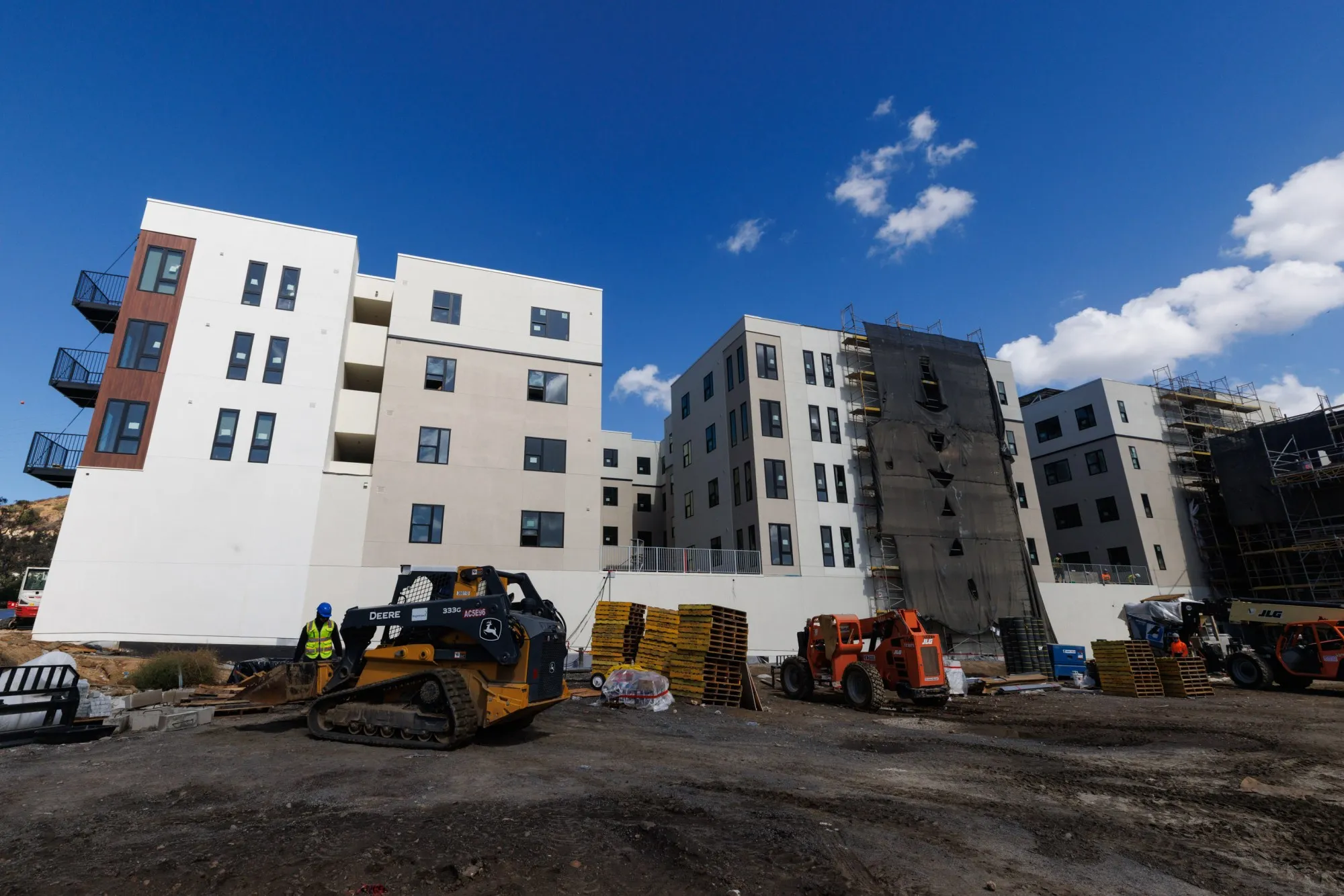
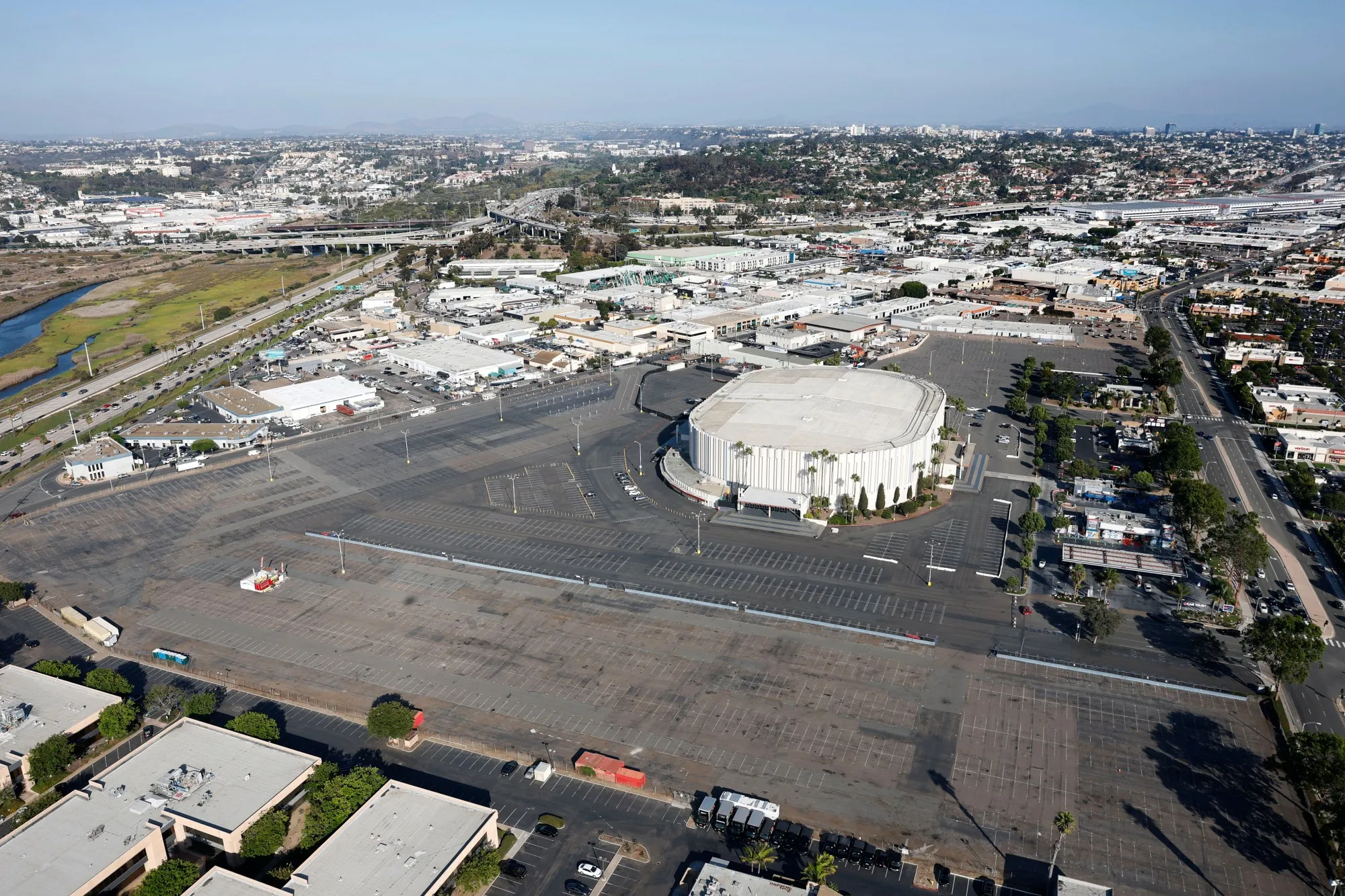
Midway Rising is planning to redevelop the city’s real estate at 3220, 3240, 3250 and 3500 Sports Arena Blvd. with 4,254 residential units, a 16,000-seat replacement arena, 130,000 square feet of commercial space, 8.1 acres of parks, and an additional 6.4 acres of plazas and public space. Midway Rising was selected in September 2022, largely because the land was being offered for lease under California’s Surplus Land Act, which prioritizes the production of affordable housing, and the team proposed to build more rent-restricted units than competitors.
San Diego expects to collect $896.3 million in rent over the lifetime of the proposed arrangement, charging rent as a small percentage of revenue generated by the project’s market-rate housing units and retail space, and eventually collecting a fee on tickets sold at the future arena. The net present value of the rental payments, or the current value of future dollars, is $23.2 million.
“Today’s unanimous vote reflects the significant progress we’ve made in advancing one of the most ambitious redevelopment opportunities in San Diego’s history,” San Diego Mayor Todd Gloria said in a statement. “From the beginning, my administration has worked to bring together the right partners, negotiate a responsible development framework and move this project toward reality.”
Midway Rising is composed of market-housing builder Zephyr, affordable housing developer Chelsea Investment Corp., and sports-and-entertainment venue operator Legends. The Kroenke Group, a subsidiary of billionaire Stan Kroenke’s real estate firm, is the entity’s lead investor and limited partner.
“We’re honored to receive a unanimous 4-0 vote in support of Midway Rising from the city’s Land Use & Housing Committee, and look forward to presenting this transformational project to full City Council in the weeks ahead,” Brad Termini, a project leader and the CEO of Zephyr, said in a statement.
The Midway Rising redevelopment deal is one of the largest in the city’s history.
The transaction, as proposed, is governed by a disposition and development agreement that would allow the city and the developer to enter into a series of subsequent agreements, starting with a 15-year “horizontal” ground lease. The initial period calls for the developer to front the cost of infrastructure improvements, such as utilities, parks, streets and parking. It would also ready16 to, 20 individual development pads for vertical construction.
The city then plans to lease individual development pads for market-rate housing and retail for 85 years. It will charge rent as a percentage of gross revenue, or 0.5% of revenue through year 55 and 2.5% thereafter. But rent is not due until the developer is made whole on its equity investment for each lease.
The city will also enter into a separate, 85-year lease agreement for the future entertainment venue and will charge rent on a per-ticket basis after the new arena has been in operation for 10 years. The fee will start at $1.50 per ticket in year 11 and grow by 3% each year. However, the developer will initially only pay 25% of the ticket charge to the city. The remaining 75% will accrue and be deferred until the developer hits a profitability threshold that it may never reach.
Committee members spoke approvingly of the project’s promised mix of affordable housing units, which are required to be spread across the property and built in five phases alongside the revenue-generating, market-rate units.
Read more A nearly $12B bond measure on November ballot promises help for affordable housing in San Diego
They are also anxious to reap the benefits of a $4.2-billion investment into a neighborhood often characterized as blighted.
“I want this to succeed,” Councilmember Sean Elo-Rivera said. “It will turn a site that’s dominated by asphalt into a neighborhood with homes, parks, shops, restaurants and places where people actually want to spend time. And this is the sort of investment that can support surrounding businesses and help drive the revitalization this area is waiting for.”
The city leaders said they appreciate that the project will create an estimated 23,000 construction jobs and 1,200 permanent jobs, and that it’s governed by a project labor agreement with prevailing wage requirements.
The committee members even spoke favorably of the enhanced infrastructure financing district, although it means the city will forgo its share of property tax growth in the area.
An EIFD is a type of tax increment financing district, where participating public agencies give their share of future property tax revenue generated by a project to a special district. The money then subsidizes the cost to build public facilities and other improvements.
With Friday’s vote, the city leaders expressed interest in the tax increment financing district. As proposed, the city and the county will form the special district to generate approximately $1.16 billion in revenue to reimburse the developer for project infrastructure costs, currently estimated at $462 million, according to an analysis by city consultant Keyser Marston Associates.
“I heard some of the concerns about current infrastructure. Very fair, and I would agree, current infrastructure is insufficient. That’s why we have the EIFD,” said Elo-Rivera. “The sports arena site is basically a fast lane for chemicals and toxins to pollute our river, beaches and bays. And instead, what we will have is a modern system that will capture and clean runoff and will make the entire city healthier. That’s a win, especially from an infrastructure perspective.”
Friday’s committee meeting included public testimony from 70 individuals and six organized groups, with a number of union representatives, project affiliates and beneficiaries of low-income housing projects speaking in support of Midway Rising.
The project also had its fair share of critics, with many opponents pointing to environmental concerns related to sea level rise and flooding, as well as highlighting risky deal terms.
“This is a bad deal for the city. It’s too much risk, too little return,” said Andrew Hollingworth, a member of Peninsula Community Planning Group.
The deal, he said, locks in an 85-year lease for the arena with terms more favorable to the developer, produces minimal rent on a present value basis, lacks sufficient parking and makes bad assumptions regarding the EIFD.
“This has degenerated into a jobs program for organized labor. It should be an economic development program and a housing program,” Hollingworth said.
Committee members, however, only took issue with the affordable housing loophole that could let the developer get credit for off-site units. The issue is also of significance to the city staffers who negotiated the transaction.
The deal needs to include language that prohibits other projects from putting their affordable units on the sports arena site, Christina Bibler, who heads San Diego’s Economic Development Department, told the Union-Tribune.
“The developer submitted their proposal, advocating that they would help the city meet its (state-mandated Regional Housing Needs Allocation) numbers,” Bibler said. “The city only gets credit when you have new units that are adding to the number that we are required to do by the state. So, there’s been no mistake on our side that this should have always been net new units.”
The full City Council is scheduled to take up the Midway Rising transaction on Nov. 9, Bibler said.