


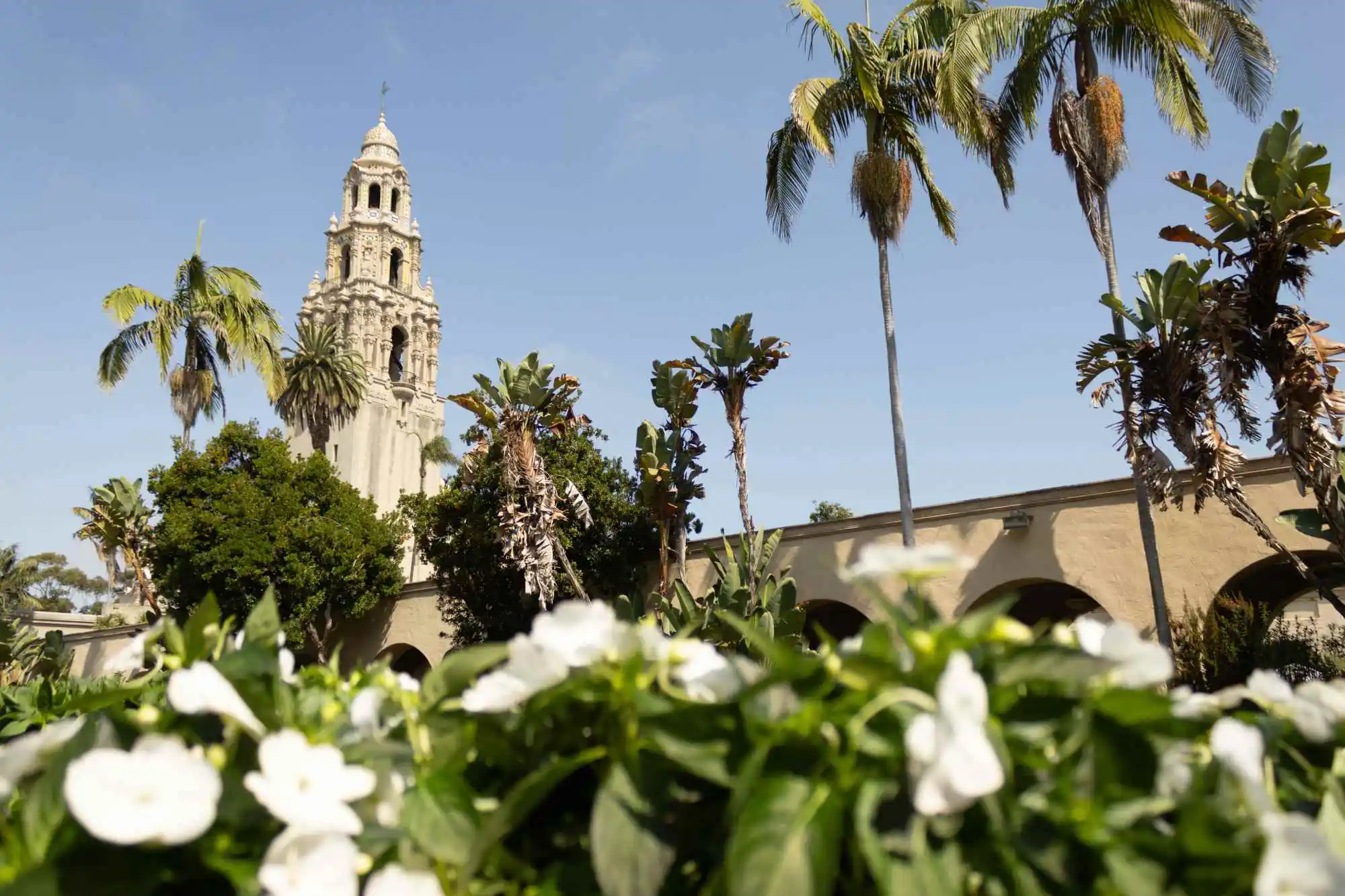
The city of San Diego is embarking on an estimated two-year planning effort to rethink the decades-old blueprint for Balboa Park and potentially make room for new, money-making attractions.
Read more Omar home search raises fears about election-season probes
Wednesday, the city announced the start of the Balboa Park Master Plan Update and launched a website for plan updates. The plan will serve as the long-term framework for the regional park with policies and land-use designations to preserve what’s important and allow for future development.
The city is also inviting people to participate in a short survey. The survey is described as the first step in a multi-year process that will include many more opportunities for public input on improvements.
The idea is to use the feedback from park goers and stakeholders to shape a future plan that is relatively undefined.
The only things set in stone appear to be the city’s high-level priorities, which include adding recreational elements, preserving historic and cultural assets, improving access and, perhaps mostly importantly, identifying funding sources to tackle an ever-growing list of park infrastructure and maintenance needs.
That means policy changes to explicitly allow for hotel and other commercial development on the park property are on the table.
“We have a heavy focus on long-term economic sustainability of the park, and so that is looking strategically at opportunities for revenue,” Heidi Vonblum, San Diego’s planning director, told the Union-Tribune. “The park is a public asset, and many of the uses of the park do not generate revenue … . There are other supportive uses that can really increase someone’s desire to spend time in the park, whether that be through hotel uses or restaurants or other commercial uses that generate revenue, and for that revenue to be used to directly invest back in Balboa Park and maintaining it to a level of excellence.”
The master planning exercise was set in motion more than two years ago, when San Diego Mayor Todd Gloria directed staff to seek grants for the effort. Since then, the city has secured $2 million in funding from Caltrans, SANDAG and the Prebys Foundation. The grant money will be used, in part, to pay consultant WRT Planning + Design, which will collaborate with staff on the update.
The effort starts with the survey and an in-the-works existing conditions report. The city will later produce an ideas report based on community engagement, and the ideas report will be followed by the release of a draft Balboa Park Master Plan Update document, likely late next year. The process is expected to culminate with City Council approval of a new plan in 2028, Vonblum said.
“Balboa Park is San Diego’s crown jewel, and caring for it requires a clear plan for action,” Gloria said in a statement. “The last comprehensive master plan was adopted in 1989; this update will help us set priorities, address aging infrastructure and preserve the historic, cultural and natural assets that make the park special.”
Balboa Park, set aside as a public park in 1868, is now a 1,200-acre civic landmark home to 21 different cultural institutions and museums, 17 specialized gardens and a few dozen other attractions, including the San Diego Zoo and the decaying Starlight Bowl.
The existing Balboa Park master plan was adopted in 1989 and was most recently amended in 2012. It is supplemented by precise plans for the Central Mesa and East Mesa.
The city has, since the collapse of the controversial Plaza de Panama project in 2019, sought to coalesce park stakeholders and advocates around a new vision and governance structure for the historic landmark.
Read more Questions swirl about new White House press secretary’s resume
To date, the focus has been on identifying park priorities.
That’s because the park includes 118 buildings in various conditions with a backlog of maintenance needs — roof repairs, replacement building systems, new bathrooms — previously pegged at around $203 million when last assessed in 2016.
When factoring in additional deterioration, increased costs and desired museum projects, the park’s improvement needs likely total between $500 million and $1 billion, Andy Field, director of Parks and Recreation, said.
In March 2025, city consultant AEA Consulting released the Balboa Park Prioritization Framework, which identified 61 projects and established a scoring system to rank them. The document handed over the job of ranking the projects to the city and did not address how projects could be funded.
“Everything kind of circles back to funding, and without the funding, the prioritization framework sits there ready to be used,” said Jon Richards, deputy director of Balboa Park.
That’s where the master plan update comes in.
“The funding component of the master plan will include ideas on how we address the deferred capital backlog that was identified back in the mid-2010s. That capital backlog, coupled with the prioritization, will help us understand how to go about fixing all the buildings in the park, all the different areas of the park that need that deferred maintenance repair,” Field said.
The city has not settled on the plan’s funding mechanism, but may look at generating transient occupancy tax dollars from hotels, sales tax dollars from eating and drinking establishments, and lease revenue from new attractions, Vonblum said.
“There is going to have to be a multi-pronged approach to fully fund Balboa Park to the level that I think most residents and stakeholders in particular want to see. So that will come through on-site revenue generation through the land uses. It will also come from philanthropical contributions, public-private partnerships, as well as other public funding measures,” the planning director said.
Housing is not an allowed land use on dedicated park land, per the city charter.
The proposition of hotels and other commercial development will likely receive pushback from people who view the revenue-generating uses as antithetical to the park’s purpose. In 2019, the city quickly walked away from its plan to seek bids for the redevelopment of Inspiration Point, on the eastern periphery of Balboa Park. At the time, the city was open to museums, hotels, restaurants and retail shops, but the solicitation drew the ire of some park advocates.
San Diegans may also still be reeling from the whiplash of recently imposed Balboa Park parking fees that, thanks to a settlement agreement, are set be eliminated at the end of the year.
The master planning effort is likely to dust up the parking drama once again.
“Fehr & Peers is doing the mobility analysis for the Balboa Park master plan, and they will comprehensively (look at) access for all modes of travel. That includes cars, and so that also includes parking,” Vonblum said. “(The analysis will) also look to increase multimodal access to the park as well. And as part of that strategy, the scope of work will also look at transportation demand management, which can include certain parking strategies. But they will all be analyzed and proposed through (the process) — with public feedback.”
San Diego is still developing its public engagement plan for the Balboa Park Master Plan Update process.
A draft of the engagement plan, which will be presented to the Balboa Park Committee in November, will identify how the city plans to reach out to park stakeholders, as well as current and future park users. The effort is expected to include outreach to planning groups in surrounding communities, including downtown San Diego, North Park and Barrio Logan.
Read more Report: Midway Rising transaction is ‘fair and reasonable’ despite risks