





Today’s column is the fifth in a series about the birds and animals that visit Secret Spring, a remote waterhole in the oak and pine forest of Palomar Mountain.
Read more Michael Smolens: Scripps studies point to possible relief and recovery from future El Niños
I laughed out loud when the out-of-focus image of a nosy bobcat popped up on the tiny viewing screen of the infrared trail camera that overlooks a small waterhole on Palomar Mountain.
Like a loveable house cat, this wild cousin is keenly aware of everything in his realm and just had to know what this unexpected object was.
The small trail camera had silently recorded his curiosity as he stuck his nose into the lens.
For nearly a year now, I have had a high-resolution digital camera capturing quality images of the wild visitors to Secret Spring, along with the nearby trail camera that provides a wider view of animal activity in the area.
Secret Spring is not a flowing creek, but a perennial pool of water formed by the overflow from a distant tank filled with spring water pumped from a nearby natural source.
Tucked into a grove of oaks and pines, the sheltered location provides a perfect spot for mountain birds, insects, butterflies and larger wildlife to find life-sustaining water.
In the quiet of the pine-scented woods, I was surprised at the amount of wildlife activity, both day and night.
I have spent many daytime hours just sitting, watching and photographing bird, insect and animal activity, but the high-resolution camera and infrared trail camera keep the night watch, since many of the visitors to Secret Spring are most active in the soft glow of starlight.
The bobcat is one of those crepuscular animals, active early and late in the day and at night. They are what I would call random visitors to the spring.
Unlike skunks and foxes that show up almost every night, the bobcat has a larger home territory of about six square miles, or nearly 4,000 acres.
That can vary of course, due to the availability of food and water, but the forests of San Diego are an abundant habitat with lots of available water and ample food for predators such as the bobcat, which is exclusively a meat eater.
Their primary food source is small rodents and mammals, such as rabbits, gophers, squirrels and mice, but also turkey and quail, bird eggs, larger insects and reptiles.
When “Bob” got his close-up cameo on his way to get a drink, he just needed to satisfy his cat-like curiosity, which included a detailed examination and sniffing of this strange object.
With his curiosity apparently satisfied, the cat pushed through the cluster of cattails to the small pool, crouched down and began lapping water before continuing his nocturnal routine that no doubt involved looking for the next meal.
Read more After years of silence, plan for polarizing Topgolf venue on San Diego Bay on path to approval
Unlike some of the more nocturnal creatures of San Diego’s chaparral fields, oak woodlands or forests, the bobcat is an animal you might also see during daytime hours.
Typically, they will dart away when startled but may just crouch down and watch if you are passing by.
I have encountered many bobcats during early morning hikes, and while enjoying one of my sit-and-see adventures was thrilled watching as one hunted. Nearby, I spotted a bobcat stalking a covey of quail feeding under a large oak.
With incredible patience and hyper focus, the cat crept closer, crouched down and flexed, ready to pounce when close enough to its prey. The cat’s vision was locked on target, and it moved almost imperceptibly, like an afternoon shadow crossing the meadow.
When within range it struck like a lightning bolt, capturing one of the birds that it carried off in its mouth, perhaps to kittens waiting for a meal in a nearby hollow log, rock pile or small cave.
The typical litter size for a bobcat is two to four kittens born in spring or early summer.
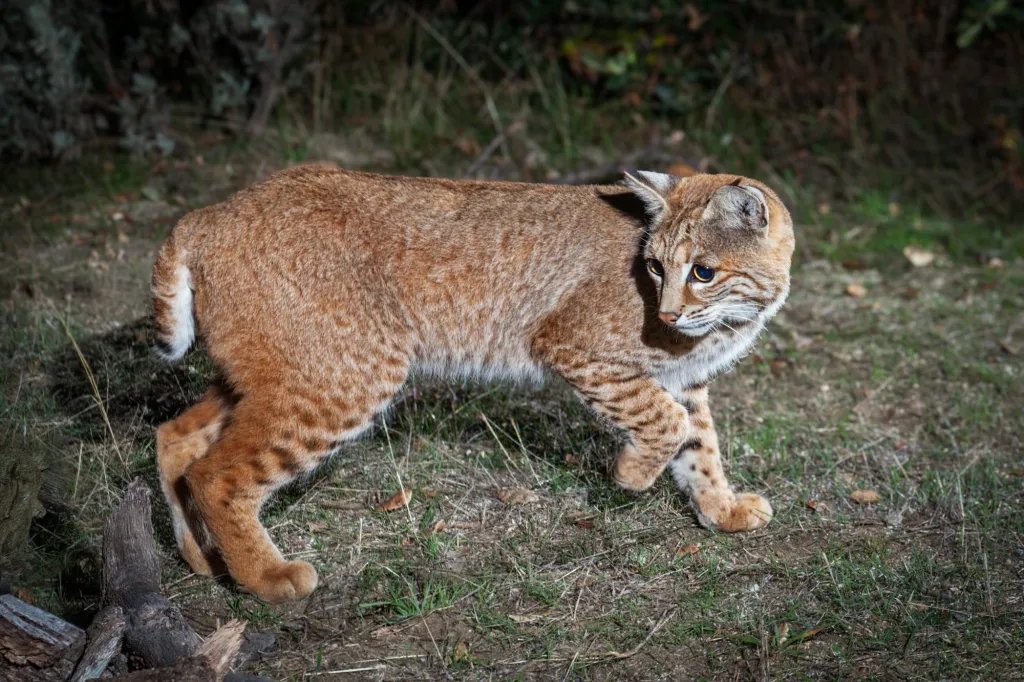
The bobcat is a beautiful animal, with a reddish-brown coat, brown to black spots and stripes, white belly, tufted ears and the namesake “bobbed” tail.
The soft pelt is prized for high fashion items, and some states do allow trapping of the animal for this purpose. Fortunately, bobcat trapping for pelts is banned in California.
The bobcat is somewhat larger than the 8- to 10-pound house cat, ranging from 15 to 35 pounds in size, and of course, has the stubby tail.
They are distant cousins of housecats with many of the same traits, such as curiosity, exceptional night vision and keen hearing, retractable claws, grooming methods, and the agility of an Olympian.
Both species of cat stalk and pounce on their prey. That might be a mouse, quail or rabbit for bobcats or your bare feet or a rolling ball for a housecat.
The bobcats at my home on Mt. Hoo have visited with Mea our watch cat who keeps a nightly vigil at the open bedroom screen door. Our trail cameras have captured encounters between Mea and passing bobcats.
The many photos I have captured of bobcats along with chance meetings in the woods have given me deep appreciation for these bold, beautiful, powerful, confident and curious creatures.
Next you will meet the southern mule deer, a graceful emblem of our California landscape.
Read more ‘Deeply disturbed’: A family confronts racist bullying, and history, in North County
Contact Ernie @ Packtrain.com or visit erniecowan.substack.com