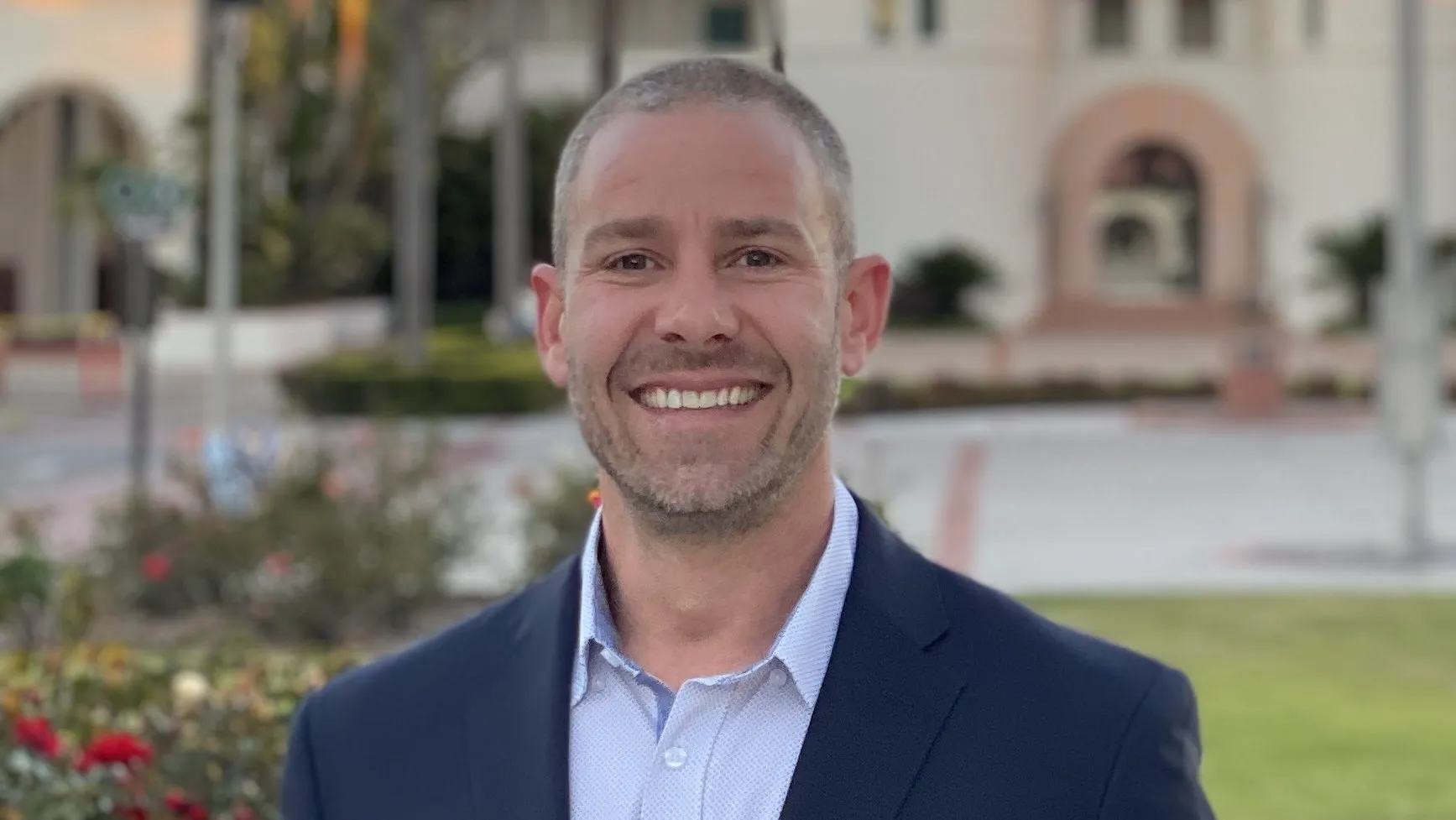




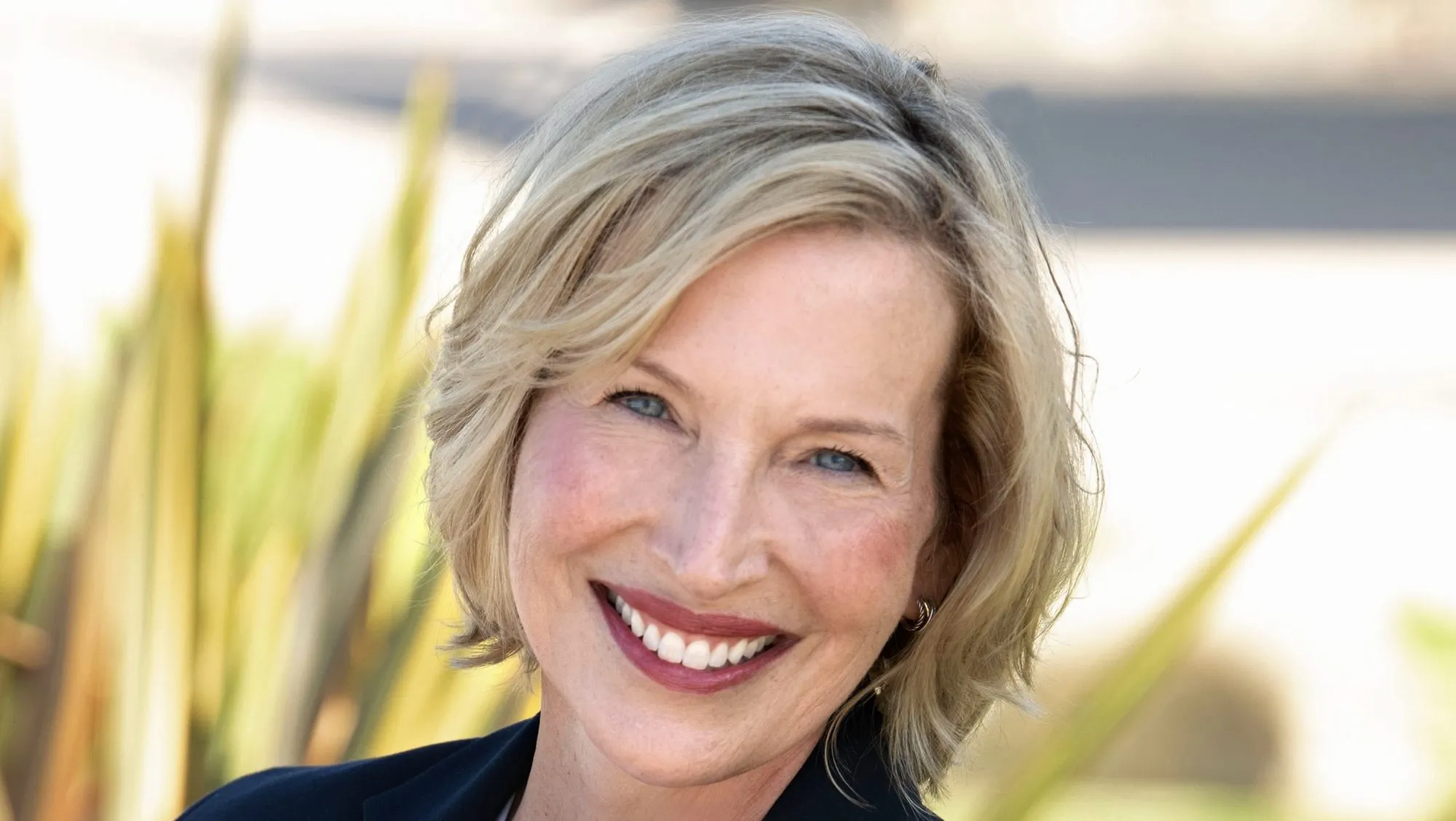
Rebecca King, an attorney and former member of Coronado’s Planning and Design Review Commission, is seeking a seat on the Coronado City Council. The mayor and four council members are directly elected by registered voters of Coronado.
Read more Q&A: Meet Kelly Purvis, candidate for Coronado City Council
The 56-year-old, who lives in Coronado, faces three others for two council seats.
A former deputy and assistant city attorney in Virginia, she first moved to Coronado after her husband, a Navy physician and surface warfare officer, was stationed at Naval Medical Center San Diego in 2007. The couple made Coronado their permanent home in 2018.
She said she has been committed to public service and community volunteering since arriving in “The Crown City.”
She is endorsed by two sitting council members, county Supervisor Paloma Aguirre, the Coronado Firefighters Association, a number of former city council members, Coronado School Board trustees and former Mayor Casey Tanaka.
City council races are nonpartisan.
The Union-Tribune emailed a series of questions to King and other candidates to help inform voters about their positions, priorities and plans if elected.
King said she used AI tools in responding to the Union-Tribune’s questions to assist her in condensing her answers to meet the 150-word limit, proofread for grammar and spelling, and fact-check her responses.
I’m running for Coronado City Council because I love this community. When I first crossed the Coronado Bridge in 2007, the beauty of this place took mybreath away. My love deepened as I walked my sons to school, the library, and the beach, meeting neighbors along the way. My family moved to Coronado permanently in 2018, following our retirement from the Navy. We have thrived here, and I’m running for city council to keep Coronado thriving.
My legal experience and civic engagement make me ready on day one to tackle the issues facing Coronado. I was a city attorney for Norfolk, Virginia, for 8 years, so I know how local government operates and how to build consensus among competing views. I have served on Coronado’s Design Review Commission and our school district’s Guiding Coalition, and volunteered for numerous Coronado nonprofits in the 11 years I’ve lived here.
Finding a permanent solution to the Tijuana River sewage and toxic runoff crisis that threatens public health and our economy is the top issue facing Coronado, and is my number one priority. Coronado should be a leader in regional efforts.
There are several issues under public safety Coronado faces: the cross-border pollution crisis and risks it poses to public health; the need for modern facilities for first responders; the need to amend and enforce our e-bike ordinance; and increased traffic and car accidents.
While Coronado must comply with state law, we must push for a fair RHNA with proper jobs and housing counts. The city should make every legal and fiscally responsible effort to protect our community’s character and advocate in Sacramento for more flexibility for built-out, high-density cities to comply with housing laws.
Request a full update on everything Coronado has done about the cross-border pollution crisis, including work with the County, neighboring cities, and non-profits, then plan next steps. Coronado should lead the push for Sacramento and Washington to declare states of emergency and to coordinate and fund a permanent fix to the pollution making residents sick and closing our beaches.
Amend Coronado’s e-bike ordinance to allow impoundment when an operator puts public safety at immediate and substantial risk. To get the bike back, the rider must prove they completed an e-bike safety course, and a minor must bring a parent. I would ensure we have enough police officers to enforce e-bike laws.
Review the guidelines and training that help city staff answer public records requests to ensure uniformity throughout the city. If not done recently, I would ask our city attorney to train department heads on the California Public Records Act.
Coronado should be a leader in the regional effort to find and fund a permanent fix to the cross-border sewage crisis. We must act collaboratively and strategically with the county, our state and federal elected representatives, other San Diego coastal cities, chambers of commerce, and nonprofit organizations to pressure our state and federal governments to declare this crisis an emergency, cut through bureaucratic red tape, and build and maintain the necessary infrastructure to stop and clean up the sewage and toxic sludge for good. The federal government has funded and overseen projects by states, local governments, and nonprofits to clean up binational waterways before; an example is the Great Lakes Restoration Initiative, for which the US has spent nearly $5 billion. The same should be done here. In the absence of action by Washington and Sacramento, I support the San Diego County’s Tijuana River Capture and Cleanup Initiative.
Read more Q&A: Meet Ricky Hoyt, candidate for Coronado City Council
The sewage crisis is Coronado’s top public safety issue. Residents, children, visitors, and Navy SEALs are exposed to harmful sewage and chemicals in the water and air. City Council must do everything in its power to end this public health crisis.
Coronado must modernize its aging public safety infrastructure, including its obsolete fire stations, more than 45 miles of underground sewer pipes (some 70 years old), and our storm water drains and pump stations so they can withstand severe storms and rising sea levels.
E-bikes are a real safety concern in Coronado. I would amend our e-bike ordinance to allow impoundment when an e-bike rider creates an immediate risk to public safety, while stepping up enforcement of both e-bike and motorized mobility device regulations, which carry fines up to $250. In order to meet all enforcement needs, the City must make sure to adequately staff and equip our police department.
When the City Council needs to hire a private entity to perform services, I would make sure all bid requests and contracts include a clause reminding vendors that their records and financials relating to city work are open to public inspection under the California Public Records Act (PRA).
I would review Coronado’s current guidelines across all departments to ensure uniformity and completeness in responding to public records requests. If not already happening, I would start regular PRA training for every department head or their designated PRA staff person.
Finally, I would post City Council agendas earlier to provide residents more than 2 business days to review the agenda packet.
Coronado should continue combining compassionate outreach with appropriate enforcement of laws that protect public health and safety. Homelessness is not a crime, and our goal should be to connect people with services that help them move toward stable housing.
The City’s Police Department should continue coordinating with county agencies, social-service providers, and organizations that provide shelter, behavioral-health services, substance-use treatment, and other assistance. Coronado is too small to duplicate the extensive services available regionally, so strong partnerships are essential.
At the same time, public spaces must remain safe and accessible to everyone. The City should address unlawful conduct consistently while recognizing that individuals experiencing homelessness have different circumstances and needs.
Coronado is fortunate to have a very small unhoused population, making individualized outreach possible. Success should be measured by connecting unhoused people with services and a path toward sustainable housing whenever possible.
To combat the affordable housing shortage, Coronado must comply with state housing law while preserving local control and without abandoning thoughtful planning, sound infrastructure decisions, or our unique, historic character.
Our certified 2021–2029 Housing Element identifies sites for the mandated 912-unit RHNA allocation, including 640 affordable units. The City should provide affordable housing preferences for our teachers, first responders, and city staff, allowing them to live where they work. We must preserve existing affordable units and encourage accessory dwelling units (ADUs) that fit our built-out community.
Furthermore, we must advocate in Sacramento for a housing-allocation process that considers Coronado’s density, unique geographic constraints, limited developable land, and existing Navy base housing.
Progress should be assessed by Coronado’s legal compliance, site identification (since no city can force development), affordable housing preservation, and new creation aligned with objective, historic design standards.
Read more Dogs bring calm and joy to students following shooting at Colorado high school