








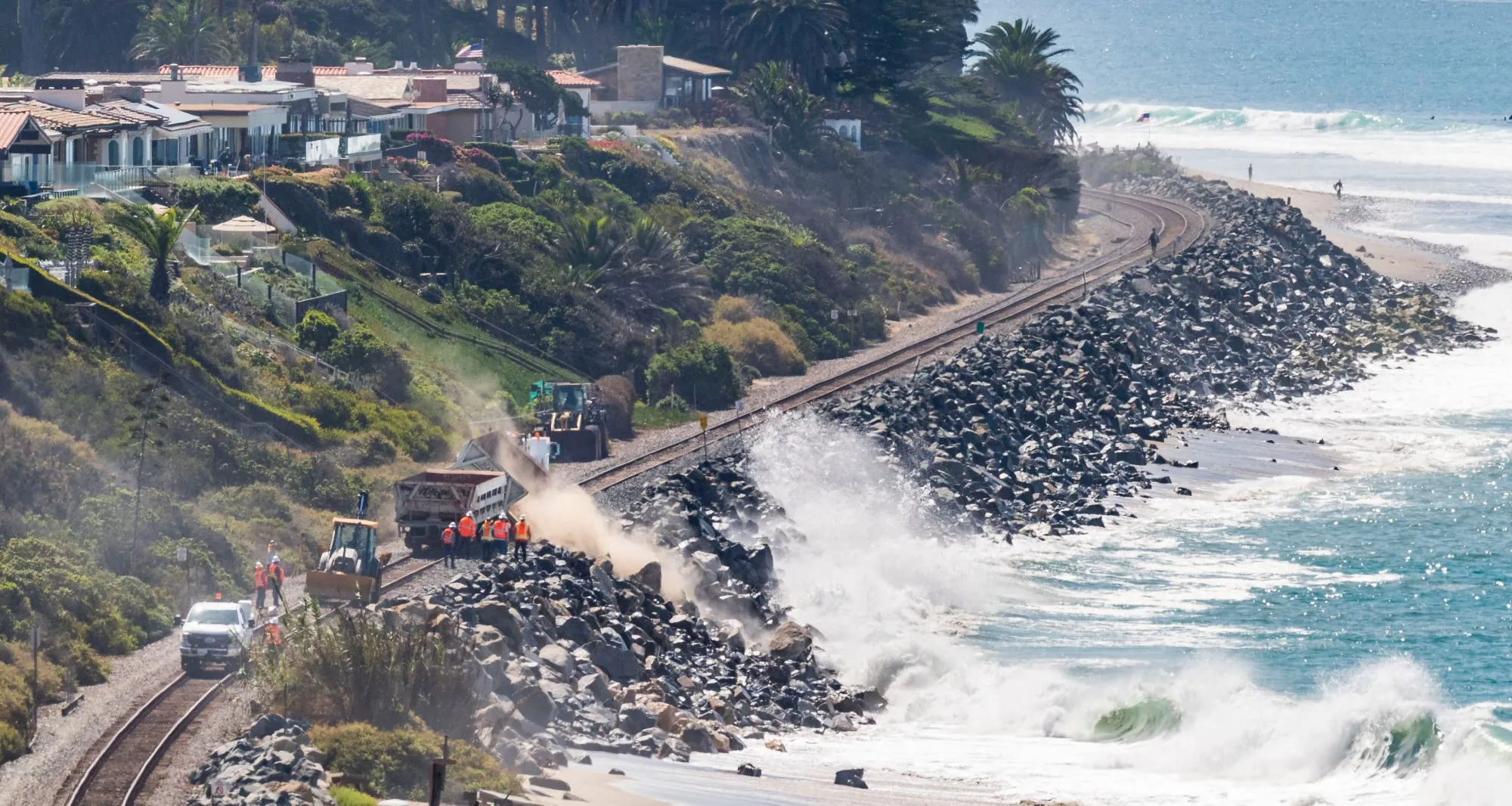
High surf shorted out railroad communications systems along the track south of the San Clemente Pier over the weekend, delaying several Metrolink and Amtrak trains on runs between San Diego, Orange County and Los Angeles.
Read more Some schools are extending admissions for students unenrolled by Howard University
Waves also eroded some of the gravel ballast beneath the track, which required Amtrak to cancel two Pacific Surfliner trains Saturday night while emergency repairs were made. Rail officials say the high surf will continue through Thursday and could bring more trouble.
“Recent high tides have resulted in some localized operational impacts along the coastal rail corridor in South Orange County,” said Brett Hawkins of Metrolink in an email Tuesday morning.
“Last Saturday, communications mechanisms that our signal system relies on experienced interference from water intrusion, requiring restricted speeds and flagging south of the San Clemente Pier Station, which caused numerous delays,” Hawkins said.
“Separately, after Metrolink service concluded on Saturday, crews identified isolated track erosion along the same stretch, resulting in a temporary closure of the Orange County and Inland Empire-Orange County lines between approximately 11 p.m. and 6 a.m.,” he said. “Crews performed emergency repair work overnight, replacing several truckloads of ballast to stabilize the impacted section of track.”
Amtrak issued an alert early Sunday morning to announce that it had cancelled two trains between Los Angeles and San Diego, one northbound and one southbound, because of “severe washout conditions.”
“Ongoing coastal conditions continue to affect operations in the area, resulting in additional delays,” said Olivia Irvin, senior public relations manager for Amtrak, in an email Tuesday.
“We are working closely with our railroad partners as they monitor conditions and support the safe movement of trains,” Irwin said.
Metrolink passenger trains operate in seven Southern California counties, coming as far south as the Oceanside Transit Center.
Three Metrolink trains through San Clemente were delayed by 45 to 75 minutes on Saturday, Hawkins said. None was canceled.
“High-tide conditions remain possible through this Thursday … and we are continuing to see operational impacts resulting in intermittent delays, including the final two Metrolink trains of the evening (Monday) and the first two trains of this (Tuesday) morning, all due to signal interference,” he said.
San Clemente is one of the few areas along the coastal rail route where the track runs along the beach near sea level.
Read more Lawsuit claims US civil rights agency has halted all federal-sector class complaints
King tides also eroded the railway ballast near San Clemente on June 16, causing an overnight track closure for repairs. Three Metrolink trains had their routes shortened, and ended or originated at the Laguna Niguel/Mission Viejo station instead of the Oceanside station.
“To ensure rail operations remain safe, we are monitoring the situation around the clock and have increased the frequency of track inspections ahead of each passenger train’s arrival,” Hawkins said.
“We’ve also proactively staged necessary equipment and materials nearby to ensure repairs are addressed as quickly and efficiently as possible when issues arise,” he said.
Metrolink, along with the Orange County Transportation Authority and other agencies, is pursuing both short-term and long-term options for preserving the seven miles of low-lying track near San Clemente.
The short-term solution is to replenish sand on eroded beaches and repair or enlarge the rock revetments that protect the tracks, planners say. A long-term possibility, and probably several decades in the future, is to reroute miles of track away from the coastline and closer to the Interstate 5 corridor between San Onofre State Beach and San Juan Capistrano.
The route is part of the 351-mile Los Angeles-San Diego-San Luis Obispo, or LOSSAN, corridor, which is San Diego’s only railroad connection to Los Angeles and the rest of the United States.
Another trouble spot for the corridor is in Del Mar, where about 1.7 miles of the route follows the edge of a fragile bluff high above the ocean.
The eroding bluff has been reinforced by a series of stabilization projects over more than 20 years, including construction work now underway.
The long-term solution there is to move the tracks off the bluff and into a tunnel to be drilled beneath Del Mar, possibly as soon as 2035. The plan is controversial and could face lawsuits before construction begins.
A North County Transit District official said Tuesday there has been no new damage from the waves at Del Mar. Coaster trains between Oceanside and San Diego were not affected.
Read more Trump administration demands hospitals share emergency room records