








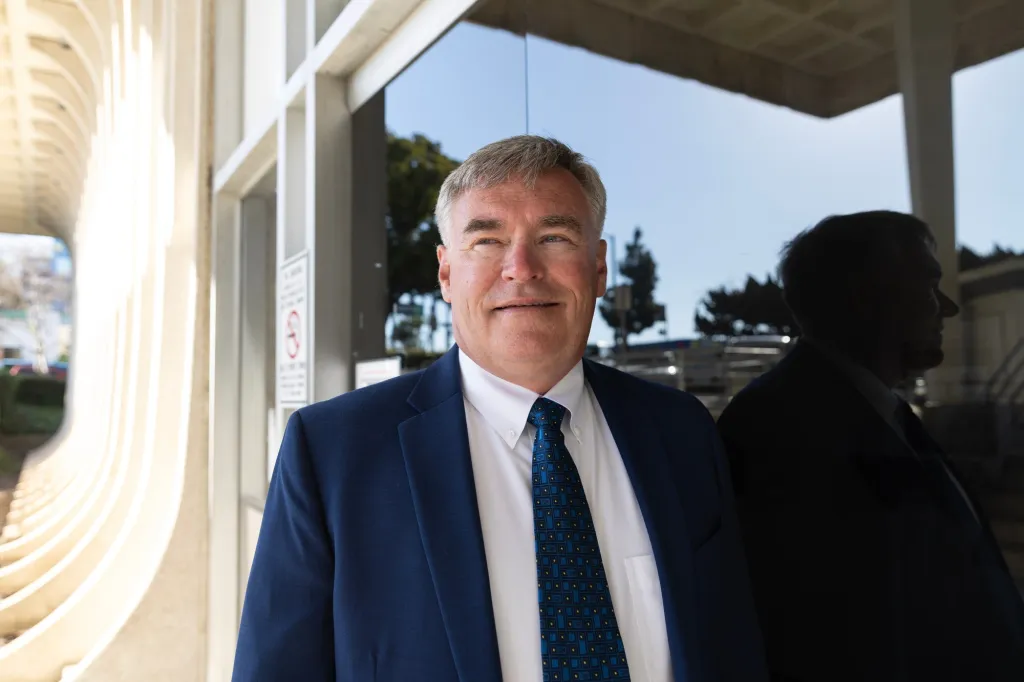
A Riverside County civil grand jury has released a report alleging fiscal mismanagement and repeated possible violations of state law by officials in the city of Banning, including during the tenure of Douglas Schulze, the newly hired city manager of National City.
Read more Michael Smolens: San Diego, California push subsidies for affordable housing
The report, made public June 24, found that the finances for Banning Electric Utility (BEU), the city-owned power provider, declined from a $31 million surplus in 2018 to a $9 million deficit by 2022 — a period that overlaps with Schulze’s tenure as Banning city manager, which ran from October 2018 to March 2025.
The , which does not mention Schulze or other officials by name, disclosed that multiple current and former city employees, as well as elected officials, said the BEU may have been illegally transferring funds to the city’s general fund in violation of state law (Propositions 26 and 218) even after Banning voters rejected Measure P in November 2018, a ballot measure that would have authorized limited transfers of electric utility revenue to support general city services.
Schulze said the transfers predated his arrival in October 2018, noting that the City Council had been performing these transfers for years and stopped once the ballot measure failed in November, though the Grand Jury expressed doubts that the practice ended then.
“The city was making these transfers from the electric utility to the general fund before my arrival,” Schulze said. “The city attorney (at the time) and I both told the council we could not continue to do that because it was potentially a violation of Prop 218, Prop 26. The last transfer was made in November, December of 2018.”
Officials for the Grand Jury could not be reached for comment.
After Schulze took over, he said his administration then moved to ensure any transfers between city funds were tied to actual services rendered and properly documented, not the blanket transfers that had been occurring before he arrived.
Financial records spanning 2018 through 2024 revealed additional concerns, according to the Grand Jury report, including irregular fund movements, cost allocation errors, compliance failures and weaknesses in internal financial controls.
Schulze attributed the ongoing utility deficit under his tenure in part to contracts he said were made by the former electric utility director without his or the City Council’s knowledge.
Schulze said he did not become aware of the contracts until invoices arrived for payment in 2023. He said he brought the matter to the council in open session later that year, where members ultimately voted to pay the outstanding bills despite the director having lacked authority to sign them.
Schulze said the full scope of the utility’s financial problems did not become clear until the hiring of an administrative services director, Lincoln Bogard. Schulze said Bogard uncovered past accounting errors that required correction, and “all that culminated in 2024 when we realized everything was upside down in the electric utility.”
Schulze said he subsequently opened an investigation into the utility director, placed him on administrative leave and terminated him in 2024.
A Banning city staff report dated Dec. 10, 2024 — authored by Schulze and prepared by Bogard — confirms the utility’s cash problems were identified and reported to the City Council in a special session in August 2023. A subsequent forensic investigation found no allegations of fraud, though it did identify procurement policy violations that the council retroactively approved.
The staff report also names the utility director and states that unrestricted cash balances in the electric utility decreased by more than $30 million during his tenure from 2018 through 2023. A lawsuit was filed by the utility director against the city in April 2024, according to Riverside Superior Court records, but has since been closed.
Schulze said the problems took time to surface in part because four finance directors cycled through the city in the years preceding Bogard’s hire.
The Grand Jury’s other findings include serious errors in the city’s cost allocation plan, a bond rating collapse on utility revenue bonds from A- in 2007 to B — currently classified as junk status by Standard & Poor’s — a utility billing crisis stemming from a failed software rollout that left residents double-billed or without accurate statements for months, chronic leadership turnover, and the city operating without a strategic plan.
“Past practices of the city management and City Council have left Banning with long-term financial insecurity,” the jurors said. “Systemic mismanagement and negligence have resulted in catastrophic billing failures, increased utility bills, large deficits in risk management, high staff turnover in key positions, and many other financial and administrative challenges.”
Read more Rescue teams in Venezuela cling to hope as US rebuffs criticisms of government earthquake response
The grand jury report also describes a pattern of broader institutional failures, including improper use of city-issued purchasing cards and persistent instability in senior leadership roles.
It further alleges that a former city manager directed staff to disregard a date-of-birth discrepancy during a pre-employment background check, resulting in the hire of an individual with a felony record including grand theft, burglary and forgery. According to the grand jury report, Banning’s own hiring policy bars individuals convicted of certain offenses — including robbery, burglary, theft and embezzlement — from city employment.
Schulze said he was the one who directed staff to overlook the discrepancy, but disputed that framing, arguing the hire was lawful under California’s Fair Chance Act, which bars employers from asking about or considering a job seeker’s conviction history before offering them a job. He said the employee — a homeless services director with a strong performance record — was well-suited for the role.
“That part really stood out as (the Grand Jury) just didn’t do their homework,” Schulze said. “Not only is it not illegal to hire someone that had a felony for certain jobs within a city, you cannot even ask the question until you’ve done a conditional offer letter.”
Schulze attributed many of the other issues outlined in the report — including the city’s deepening budget crisis, chronic staff turnover and broader administrative failures — to a deteriorating political environment within the city, particularly following a shift in council composition that he said created a hostile and disruptive work environment that pulled his focus from the organization’s core financial and operational needs.
“I’ll admit I made some mistakes,” Schulze said. “I’m not in a situation where I’m saying I can completely wash my hands of any blame or fault here. It was a toxic environment. It was a mess when I got there and we were working through those issues to try to resolve them until I departed.”
National City Mayor Ron Morrison said the council was aware of the Banning issues before hiring Schulze and was not alarmed by the grand jury report after reviewing it.
“We knew that stuff had come up,” Morrison said of Schulze’s tenure in Banning. “It does in every city and so it wasn’t anything spectacular. Every candidate we had, none of them were coming from anything that was a super stable situation, let me put it that way.”
Morrison said the council conducted an extensive vetting process that included consultant firm Ralph Anderson and Associates, staff screening through human resources and a background investigation on finalists, with uniformly positive references on Schulze.
“Everything about him came across well, and all of the people we talked to just basically had nothing but good things to say about him and his integrity,” Morrison said.
National City Councilmember Marcus Bush said he supported the hire and was not prepared to reverse course, citing National City’s own pressing financial challenges.
“We’re not going to fire him because of what happened in his past with Riverside when we got our own budget crisis going on,” Bush said.
Schulze was appointed unanimously by the National City Council on June 17. His three-year contract sets his base salary at $300,000 annually.
Schulze’s hire closed a turbulent three-year period in which six individuals cycled through the city manager’s office following the May 2023 departure of Brad Ralston. His intended permanent replacement, Armando Vergara, died of a heart attack two days after being hired. Ben Martinez followed, serving first as interim before being hired permanently in December 2023, then pushed out in April 2025. Three interim appointments followed before Schulze was selected.
The City of Banning issued a press release June 25 acknowledging the grand jury report, disputing certain characterizations and pledging a detailed formal response within the prescribed 60-day timeline. Banning Mayor Richard Royce said the current council had already been working to address the problems outlined in the report before it was published.
Read more Fire shelters are a key defense for firefighters. But they don’t guarantee survival
“We’re not just acknowledging the problem,” Royce said. “We’re solving it.”